
Aconitum henryi E.Pritz.
Cited as Kew's World Checklist cites it, Aconitum henryi E.Pritz.: GBIF's backbone key for this page carries the name with another author, E.Pritz. ex Diels.


 5 photographs ›
Summary
Aconitum henryi is a species of flowering plant in the buttercup family known by the common name Sparks variety monkshood.
Quoted from Wikipedia, "Aconitum henryi", CC BY-SA 4.0.
About the genus · Aconitum
Aconitum, also known as aconite, monkshood, wolfsbane, devil's helmet, or blue rocket, is a genus of over 250 species of flowering plants belonging to the family Ranunculaceae. These herbaceous, frequently toxic perennial plants are chiefly native to the mountainous parts of the Northern Hemisphere in North America, Europe, and Asia, growing in the moisture-retentive but well-draining soils of mountain meadows.
Quoted from Wikipedia, "Aconitum", CC BY-SA 4.0.
Cultivation
Climate across the habitat
Natural habitat
How this section is made
Photographs


Photographs: Rob Hille, Public domain, via Wikimedia Commons (3); Danny S., CC BY-SA 4.0, via Wikimedia Commons.
Related
Other Aconitum 52 in the reference
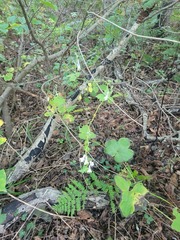 Aconitum alboviolaceum Whitish-purple monk’shood Photo: CC BY, Dmitriy Bochkov
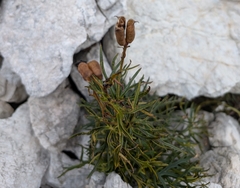 Aconitum angustifolium Ranunculaceae Photo: CC0, author not stated
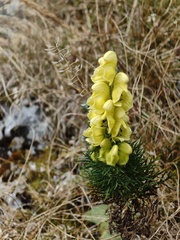 Aconitum anthora Yellow monkshood Photo: CC BY-SA, xulescu_g
 Aconitum axilliflorum Ranunculaceae Photo: CC BY, Repina Tatyana
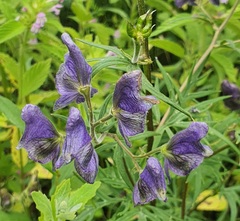 Aconitum baicalense Ranunculaceae Photo: CC BY, Urgamal Magsar
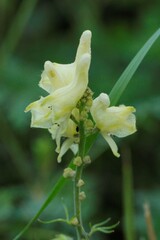 Aconitum barbatum Yellow monk’shood Photo: CC BY, Иван Пристрем Aconitum brevicalcaratum Ranunculaceae
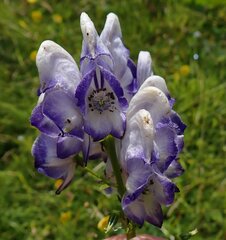 Aconitum × cammarum Hybrid monkshood Photo: CC BY, Jon Mortin
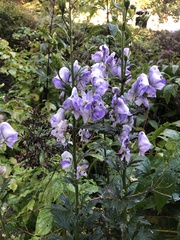 Aconitum carmichaelii Carmichael's monkshood Photo: CC0, author not stated
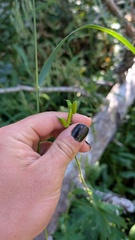 Aconitum columbianum Columbia monkshood Photo: CC0, author not stated Aconitum crassiflorum Ranunculaceae Aconitum decipiens Ranunculaceae all 53 ›
Names & registers
Also known as Aconitum henryi var. compositum; Aconitum henryi var. henryi; Aconitum henryi var. pilocarpum; Aconitum liouii; Aconitum shensiense and 2 more. (GBIF Backbone)
The record
Every figure here is derived from public data by a stated rule and names its source; nothing about this species is written for its page by a person or by AI, apart from the marked, credited quotations. How →
Where this page came from built 2026-10-21
gbif.species answeredasked 2026-10-21GBIF's key 7787264 is Aconitum henryi E.Pritz. ex Diels; the page links Kew's Aconitum henryi E.Pritz., and the name is cited as Kew cites itgbif.synonyms answeredasked 2026-10-21gbif.vernacular answeredasked 2026-10-21names fetched 2026-10-21wcvp.distribution answeredas of 2026-06-04gbif.occurrences answeredasked 2026-10-21GBIF occurrence download https://doi.org/10.15468/dl.hbdw64, of 2026-10-21; 1 record of GBIF's key 7277244, Aconitum henryi E.Pritz. (Kew's file holds it as Aconitum henryi E.Pritz. (accepted)): GBIF occurrence search APIclimate nothing to reportasked 2026-10-21only 1 distinct land cell of the climate grid holds an in-range record placed to within 10 km; three are needed for an envelopewikidata answeredasked 2026-10-21found by its label; its IPNI identifier 707424-1 is Kew's for Aconitum henryi E.Pritz.wikipedia answeredasked 2026-10-21inat.taxon not askedinat.photos.wild not askedinat.photos.cultivated not askedgbif.media nothing to reportasked 2026-10-21commons answeredasked 2026-10-21openalex not askednot yet asked for this reference; a later fill takes the papers from OpenAlex's snapshotEvery source is recorded as having answered, reported nothing, refused, failed, not been asked, or answered twice where one answer is taken (“not taken: two items answered”), and, for a source asked when this page was built, when: the figures are as the source held them that day; a source read from a file (Kew's World Checklist, a GBIF download) says "as of" the file's day instead; a row carried from an earlier build of the page names that build instead. Only “nothing to report” is ever shown as an absence. Records came from 14 datasets via GBIF.org; each carries its own licence.