Example ⟳ +
An example collection, so you can see what this page does. Nothing added here is kept: leaving deletes it.

Acorus calamus L.

Sweet-flag; Flag-root; Myrtle-flag; European sweetflag
Acoraceae · Kazakhstan

No habitat climate
Sow seed
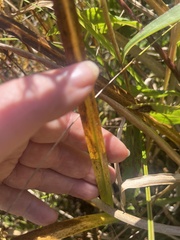
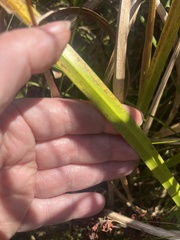
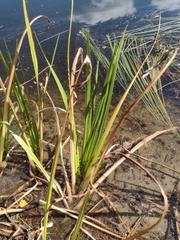
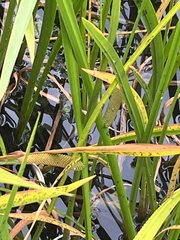
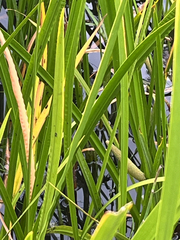
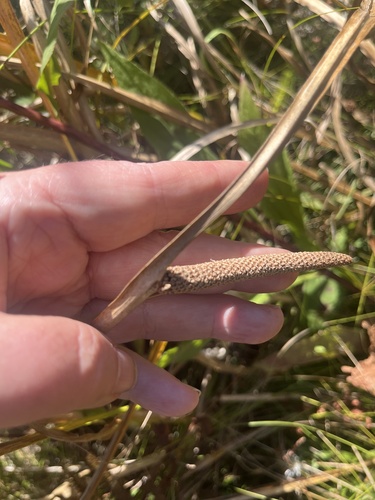
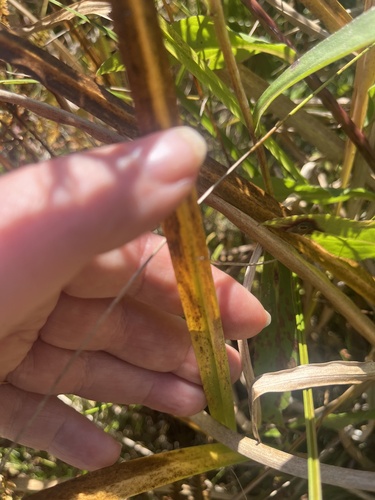
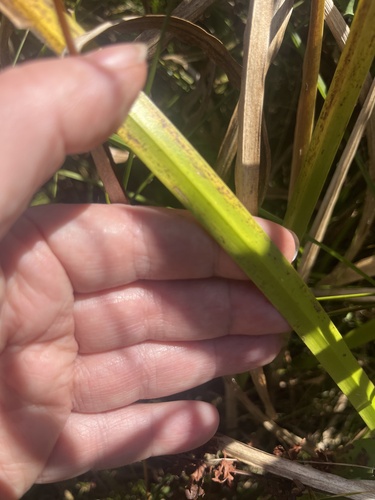
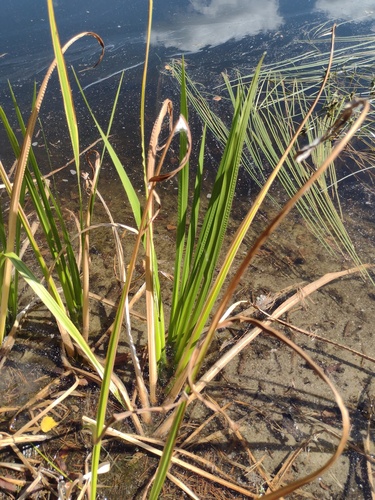
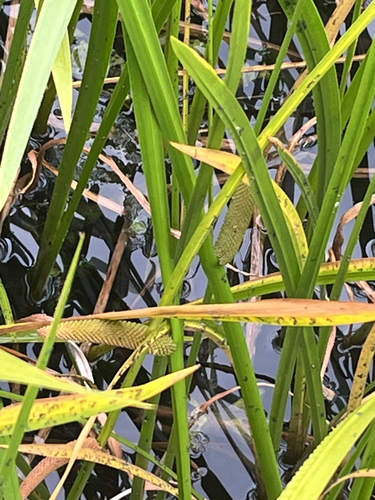
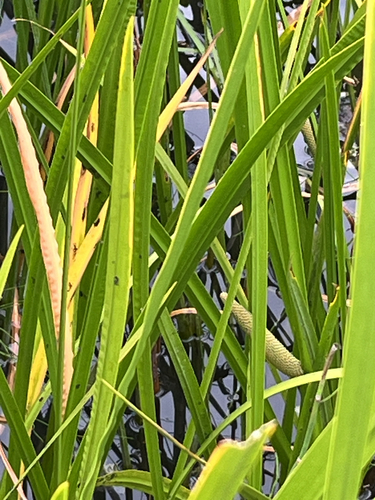
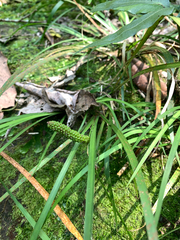
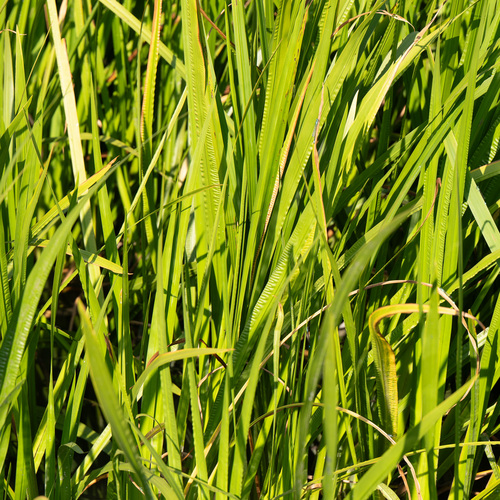
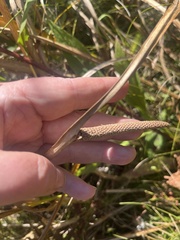
Acorus calamus, photograph author not stated, no rights reservedAcorus calamus, photograph author not stated, no rights reservedAcorus calamus, photograph author not stated, no rights reservedAcorus calamus, photograph (c) Bartosz Czołczyński, some rights reserved (CC BY)Acorus calamus, photograph (c) Lena Struwe, some rights reserved (CC BY-SA)Acorus calamus, photograph (c) Lena Struwe, some rights reserved (CC BY-SA) 72 photographs ›

Summary

Acorus calamus (also called sweet flag, sway or muskrat root, among many other common names) is a species of flowering plant. It is a tall wetland monocot of the family Acoraceae, in the genus Acorus. Although used in traditional medicine over centuries to treat digestive disorders and pain, it has no clinical evidence of safety or efficacy and may be toxic if ingested, and so has been commercially banned for use in food in the United States.

Quoted from Wikipedia, "Acorus calamus", CC BY-SA 4.0.

Cultivation

Nothing derived: no habitat climate for this species.

Climate across the habitat

No habitat climate can be derived: Only 1 distinct land cell of the climate grid holds an in-range record placed to within 10 km; three are needed for an envelope. 2 of the 3 in-range records are placed to worse than 10 km, or to no stated accuracy and fewer than three decimals or by something other than a person's observation, and cannot place a climate cell, though they count for the map and its marker.

Natural habitat

Native range as published by WCVP.
Openly licensed records inside the range, framed on where they fall.
NativeKazakhstan · introduced: Denmark, Finland, Føroyar, Great Britain, Iceland, Ireland, Norway, Svalbard, Sweden, Austria, Belgium, Czechoslovakia, Germany, Hungary, Netherlands, Poland, Switzerland, France, Albania, Bulgaria, Italy, Romania, Sicilia, Turkey-in-Europe, Yugoslavia, Belarus, Baltic States, Krym, Central European Russia, East European Russia, North European Russia, South European Russia, Northwest European Russia, Ukraine, Cape Provinces, Free State, Altay, Kirgizistan, Uzbekistan, North Caucasus, Transcaucasus, Turkey, Manchuria, China North-Central, Korea, Assam, Bangladesh, East Himalaya, Nepal, Pakistan, West Himalaya, Andaman Is., Jawa, New Guinea, New Brunswick, Nova Scotia, Ontario, Québec, Colorado, Oregon, Illinois, Iowa, Kansas, Minnesota, Missouri, Nebraska, Oklahoma, Wisconsin, Connecticut, Indiana, Maine, Massachusetts, Michigan, New Hampshire, New Jersey, New York, Ohio, Pennsylvania, Rhode I., Vermont, West Virginia, California, Texas, Alabama, Arkansas, Delaware, Georgia, Kentucky, Louisiana, Maryland, Mississippi, North Carolina, South Carolina, Tennessee, Virginia, District of Columbia · regions are the level-3 units of the World Geographical Scheme for Recording Plant Distributions, as Kew's World Checklist records ranges, some under historical names such as Yugoslavia or Czechoslovakia (how).
Kew's description“perennial or rhizomatous geophyte” · “temperate” · quoted from WCVP, RBG Kew (CC BY 4.0); not derived here
Evidence usedThe map marker rests on all 3 georeferenced records inside the native range; the map shows only the 2 openly licensed ones, which alone would put the marker in the same place. 1703 records outside the WCVP native range not used. Under a dozen records behind the map. No climate across the range is derived for this species. 2 in-range records are placed to worse than 10 km, or with no stated accuracy (admitted only as a person's observation to three decimals), and stay on the map but off the climate.

Photographs

Photographs: author not stated, no rights reserved · CC0 (3); (c) Bartosz Czołczyński, some rights reserved (CC BY); (c) Lena Struwe, some rights reserved (CC BY-SA) (2).

Other Acorus 2 in the reference

Names & registers

Also known as Acorus aromaticus; Acorus vulgaris; Calamus aromaticus. (GBIF Backbone)

The record

Family
Acoraceae
Described by
L.
Native to
Kazakhstan
Wild records
3 in range · 2 open

Every figure here is derived from public data by a stated rule and names its source; nothing about this species is written for its page by a person or by AI, apart from the marked, credited quotations. How →

Where this page came from built 2026-10-21
GBIF species record gbif.species answeredasked 2026-10-21
GBIF synonyms gbif.synonyms answeredasked 2026-10-21
GBIF common names gbif.vernacular answeredasked 2026-10-21names fetched 2026-10-21
WCVP native range wcvp.distribution answeredas of 2026-06-04
GBIF occurrence records gbif.occurrences answeredas of 2026-10-21GBIF occurrence download https://doi.org/10.15468/dl.hbdw64, of 2026-10-21; 25 records within 1 km of a botanic garden, herbarium or zoo left out (10 at a botanic garden or arboretum, 3 at a herbarium, 12 at a zoo; Wikidata's list)
Habitat climate climate nothing to reportasked 2026-10-21only 1 distinct land cell of the climate grid holds an in-range record placed to within 10 km; three are needed for an envelope
Wikidata wikidata answeredasked 2026-10-21
Wikipedia wikipedia answeredasked 2026-10-21
iNaturalist photographs, wild inat.photos.wild answeredasked 2026-10-22from iNaturalist's open data of 2026-09-27: research-grade observations with an open-licence photograph, the 24 whose photographs iNaturalist received last (the open data holds no votes); filled 2026-10-22
iNaturalist photographs, cultivated inat.photos.cultivated not asked
GBIF media gbif.media answeredasked 2026-10-21
OpenAlex papers openalex not askednot yet asked for this reference; a later fill takes the papers from OpenAlex's snapshot

Every source is recorded as having answered, reported nothing, refused, failed, not been asked, or answered twice where one answer is taken (“not taken: two items answered”), and, for a source asked when this page was built, when: the figures are as the source held them that day; a source read from a file (Kew's World Checklist, a GBIF download) says "as of" the file's day instead; a row carried from an earlier build of the page names that build instead. Only “nothing to report” is ever shown as an absence. Records came from 161 datasets via GBIF.org; each carries its own licence.

Cultifolio

Opening your plants…