
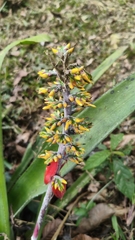
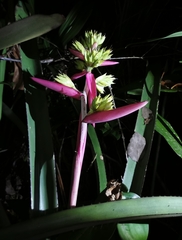
 2 photographs ›
Summary
Aechmea mulfordii, the living vase bromelia, is native to the states of Pernambuco and Bahia in eastern Brazil. Most of the other plants in this genus are epiphytic, which means that they live up in the branches of the trees and exist mainly on the moisture and nutrients they obtain from the air. However, Aechmea mulfordii is a large terrestrial plant, growing near the sea level on sand dunes.
Quoted from Wikipedia, "Aechmea mulfordii", CC BY-SA 4.0.
About the genus · Aechmea
Aechmea is a genus of flowering plants in the family Bromeliaceae. The name comes from the Greek aichme, meaning "spear". Suggested pronunciations include EEK-me-ə and eek-MEE-ə. More on Wikipedia ›
Quoted from Wikipedia, "Aechmea", CC BY-SA 4.0.
Cultivation
Climate across the habitat
Natural habitat
How this section is made
Photographs

Photographs: David J. Stang, CC BY-SA 4.0, via Wikimedia Commons.
Related
Other Aechmea 91 in the reference
 Aechmea angustifolia Bromeliaceae Photo: CC BY, Natan Gabriel
 Aechmea aquilega Bromeliaceae Photo: CC BY, Jason Berger
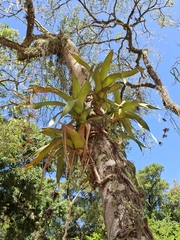 Aechmea bambusoides Bromeliaceae Photo: CC BY, Fabricio Carvalho da Silva
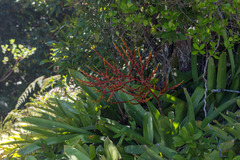 Aechmea blanchetiana Orangeade Bromeliad Photo: CC BY, Facundo Chieffo
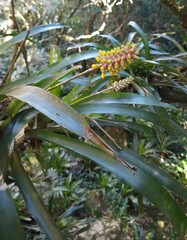 Aechmea blumenavii Bromeliaceae Photo: CC0, author not stated
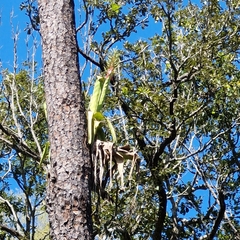 Aechmea bracteata Vase bromeliad Photo: CC BY, Diego Maldonado de la Torre
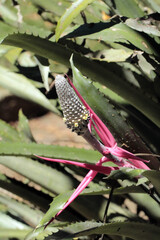 Aechmea bromeliifolia Bromeliaceae Photo: CC0, author not stated
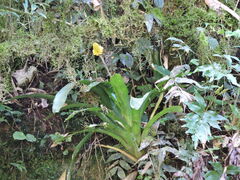 Aechmea calyculata Bromeliaceae Photo: CC BY, Fabrício Mil Homens Riella
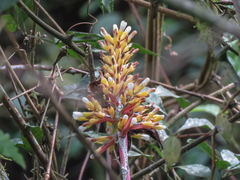 Aechmea candida White Bromeliad Photo: CC BY, Diogo Luiz
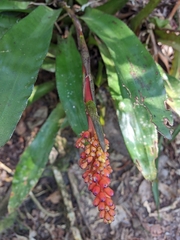 Aechmea capixabae Bromeliaceae Photo: CC BY, Martin Vallejos Aechmea cariocae Bromeliaceae all 92 ›
Names & registers
Also known as Gravisia fosteriana. (GBIF Backbone)
The record
Every figure here is derived from public data by a stated rule and names its source; nothing about this species is written for its page by a person or by AI, apart from the marked, credited quotations. How →
Where this page came from built 2026-10-21
gbif.species answeredasked 2026-10-21gbif.synonyms answeredasked 2026-10-21gbif.vernacular answeredasked 2026-10-21names fetched 2026-10-21wcvp.distribution answeredas of 2026-06-04gbif.occurrences answeredas of 2026-10-21GBIF occurrence download https://doi.org/10.15468/dl.hbdw64, of 2026-10-21; 2 records within 1 km of a botanic garden, herbarium or zoo left out (2 at a botanic garden or arboretum; Wikidata's list)climate nothing to reportasked 2026-10-213 in-range records, none placed to within 10 kmwikidata answeredasked 2026-10-21wikipedia answeredasked 2026-10-21inat.photos.wild nothing to reportasked 2026-10-22from iNaturalist's open data of 2026-09-27: research-grade observations with an open-licence photograph, the 24 whose photographs iNaturalist received last (the open data holds no votes); filled 2026-10-22inat.photos.cultivated not askedgbif.media nothing to reportasked 2026-10-21commons answeredasked 2026-10-21openalex not askednot yet asked for this reference; a later fill takes the papers from OpenAlex's snapshotEvery source is recorded as having answered, reported nothing, refused, failed, not been asked, or answered twice where one answer is taken (“not taken: two items answered”), and, for a source asked when this page was built, when: the figures are as the source held them that day; a source read from a file (Kew's World Checklist, a GBIF download) says "as of" the file's day instead; a row carried from an earlier build of the page names that build instead. Only “nothing to report” is ever shown as an absence. Records came from 2 datasets via GBIF.org; each carries its own licence.