
Aeonium × mascaense Bramwell
A hybrid: A. decorum × A. haworthii, the parents Kew's World Checklist states for it (WCVP, RBG Kew).


 12 photographs ›
About the genus · Aeonium
Aeonium, the tree houseleeks, is a genus of about 35 species of succulent, subtropical plants of the family Crassulaceae. Many species are popular in horticulture. The genus name comes from the ancient Greek αἰώνιος / aiōnios (ageless). More on Wikipedia ›
Quoted from Wikipedia, "Aeonium", CC BY-SA 4.0.
Cultivation
Grouped as a cactus or succulent, listed under the genus Aeonium in the archetype table, and Kew describes it as “succulent subshrub”.
How this section is made
Each card states this species' habitat figures with their sources, and what two fixed rules read from them; nothing here says what the plant does, wants or tolerates. The rules · the terms.
Group. Listed under the genus Aeonium in the archetype table, and Kew describes it as “succulent subshrub”. A group is taken only where Kew's description of the species agrees with the table's listing. The table gives no figure and no prose; the cold floor is the habitat's alone.
Climate across the habitat
Natural habitat
Photographs


Photographs: James Steakley, CC BY-SA 3.0, via Wikimedia Commons; This illustration was made by Citron, CC BY-SA 3.0, via Wikimedia Commons; Krzysztof Ziarnek, Kenraiz, CC BY-SA 3.0, via Wikimedia Commons (2); Consultaplantas, CC BY-SA 4.0, via Wikimedia Commons (2).
Related
Other Aeonium 39 in the reference
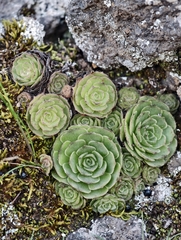 Aeonium aizoon Crassulaceae Photo: CC BY, Ben Jobson
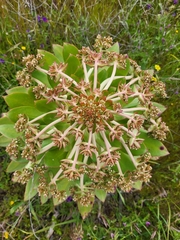 Aeonium appendiculatum Crassulaceae Photo: CC BY, Jacek Pietruszewski
 Aeonium arboreum Tree aeonium Photo: CC BY, Daniel Cahen
 Aeonium aureum Crassulaceae Photo: CC BY, Christina s.l.
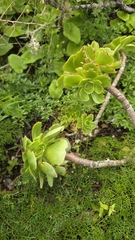 Aeonium balsamiferum Balsam aeonium Photo: CC BY, Christoph Moning Aeonium × burchardii Crassulaceae Aeonium calderense Crassulaceae
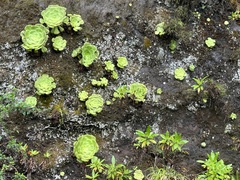 Aeonium canariense Canary Aeonium Photo: CC BY, Cody Hinchliff
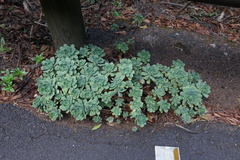 Aeonium castello-paivae Castello-Paiva-Aeonium Photo: CC BY, Connor Connolly-Moyls
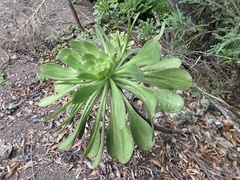 Aeonium ciliatum Crassulaceae Photo: CC0, author not stated
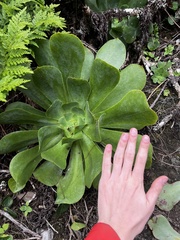 Aeonium cuneatum Tenerife Aeonium Photo: CC BY, Alex Stuart
 Aeonium davidbramwellii Crassulaceae Photo: CC0, author not stated all 40 ›
Names & registers
The record
Every figure here is derived from public data by a stated rule and names its source; nothing about this species is written for its page by a person or by AI, apart from the marked, credited quotations. How →
Where this page came from built 2026-10-21
gbif.species answeredasked 2026-10-21gbif.synonyms answeredasked 2026-10-21gbif.vernacular answeredasked 2026-10-21names fetched 2026-10-21wcvp.distribution answeredas of 2026-06-04Kew's entry lists no native regiongbif.occurrences answeredas of 2026-10-21GBIF occurrence download https://doi.org/10.15468/dl.hbdw64, of 2026-10-21climate nothing to reportasked 2026-10-21native range not verified: no WCVP distribution with native status for this name, so records cannot be told from cultivation and no habitat climate is derivedwikidata answeredasked 2026-10-21wikipedia nothing to reportasked 2026-10-21inat.taxon not askedinat.photos.wild not askedinat.photos.cultivated not askedgbif.media nothing to reportasked 2026-10-21commons answeredasked 2026-10-21openalex not askednot yet asked for this reference; a later fill takes the papers from OpenAlex's snapshotEvery source is recorded as having answered, reported nothing, refused, failed, not been asked, or answered twice where one answer is taken (“not taken: two items answered”), and, for a source asked when this page was built, when: the figures are as the source held them that day; a source read from a file (Kew's World Checklist, a GBIF download) says "as of" the file's day instead; a row carried from an earlier build of the page names that build instead. Only “nothing to report” is ever shown as an absence. Records came from 1 datasets via GBIF.org; each carries its own licence.