Allium ellisii Hook.f.
Photographs not checked
iNaturalist was skipped (not asked) when this page was built. Not asked, or not answered, is not "none": nothing here claims there is none. Why the site says it this way.About the genus · Allium
Allium is a large genus of monocotyledonous flowering plants with 1112 accepted species, making Allium the largest genus in the family Amaryllidaceae and among the largest plant genera in the world. Many of the species are edible, and some have a long history of cultivation and human consumption such as the onion, garlic, scallions, shallots, leeks, and chives.
Quoted from Wikipedia, "Allium", CC BY-SA 4.0.
Cultivation
Grouped as a bulb, tuber or caudex, listed under the family Amaryllidaceae in the archetype table, and Kew describes it as “bulbous geophyte”.
How this section is made
Each card states this species' habitat figures with their sources, and what two fixed rules read from them; nothing here says what the plant does, wants or tolerates. The rules · the terms.
Group. Listed under the family Amaryllidaceae in the archetype table, and Kew describes it as “bulbous geophyte”. A group is taken only where Kew's description of the species agrees with the table's listing. The table gives no figure and no prose; the cold floor is the habitat's alone.
Climate across the habitat
Natural habitat
How this section is made
Photographs
Related
Other Allium 241 in the reference
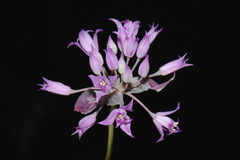 Allium acuminatum Tapertip onion Photo: CC BY-SA, Brian Finzel
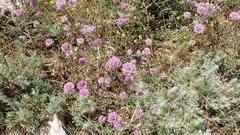 Allium acutiflorum Amaryllidaceae Photo: CC BY, Nicola Crockford
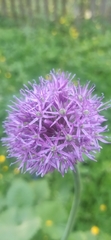 Allium aflatunense Amaryllidaceae Photo: CC0, author not stated
 Allium akaka Amaryllidaceae Photo: CC BY-SA, C T Johansson Allium alexeianum Amaryllidaceae
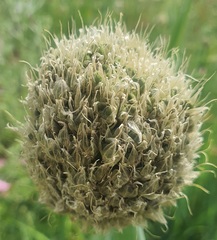 Allium altaicum Altai onion Photo: CC BY, Urgamal Magsar
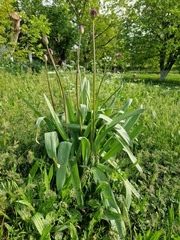 Allium altissimum Amaryllidaceae Photo: CC BY, Wolfgang Ahlmer
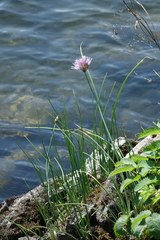 Allium altyncolicum Altynkol Chive Photo: CC BY, Oleg Kosterin
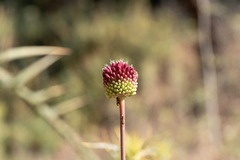 Allium amethystinum Amethyst Garlic Photo: CC BY, Eleftherios Katsillis
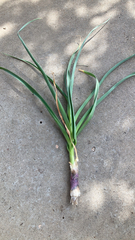 Allium ampeloprasum Wild Leek Photo: CC BY, Felix Blesch Allium amphibolum Amaryllidaceae
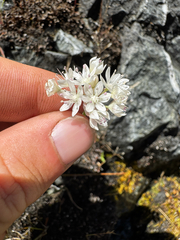 Allium amplectens Slim-leaved onion Photo: CC BY, Parker James Lloyd all 242 ›
Names & registers
The record
Every figure here is derived from public data by a stated rule and names its source; nothing about this species is written for its page by a person or by AI, apart from the marked, credited quotations. How →
Where this page came from built 2026-10-21
gbif.species answeredasked 2026-10-21gbif.synonyms answeredasked 2026-10-21gbif.vernacular answeredasked 2026-10-21names fetched 2026-10-21wcvp.distribution answeredas of 2026-06-04gbif.occurrences answeredas of 2026-10-21GBIF occurrence download https://doi.org/10.15468/dl.hbdw64, of 2026-10-21climate nothing to reportasked 2026-10-214 in-range records, none placed to within 10 kmwikidata answeredasked 2026-10-21wikipedia nothing to reportasked 2026-10-21inat.photos.wild nothing to reportasked 2026-10-22from iNaturalist's open data of 2026-09-27: research-grade observations with an open-licence photograph, the 24 whose photographs iNaturalist received last (the open data holds no votes); filled 2026-10-22inat.photos.cultivated not askedgbif.media nothing to reportasked 2026-10-21commons nothing to reportasked 2026-10-21openalex not askednot yet asked for this reference; a later fill takes the papers from OpenAlex's snapshotEvery source is recorded as having answered, reported nothing, refused, failed, not been asked, or answered twice where one answer is taken (“not taken: two items answered”), and, for a source asked when this page was built, when: the figures are as the source held them that day; a source read from a file (Kew's World Checklist, a GBIF download) says "as of" the file's day instead; a row carried from an earlier build of the page names that build instead. Only “nothing to report” is ever shown as an absence. Records came from 2 datasets via GBIF.org; each carries its own licence.