Arctostaphylos franciscana Eastw.
Franciscan manzanita; San Francisco manzanita
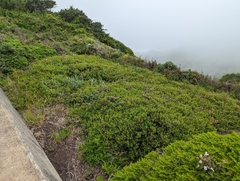
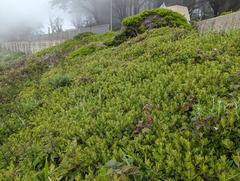
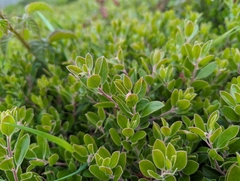 65 photographs ›
Summary
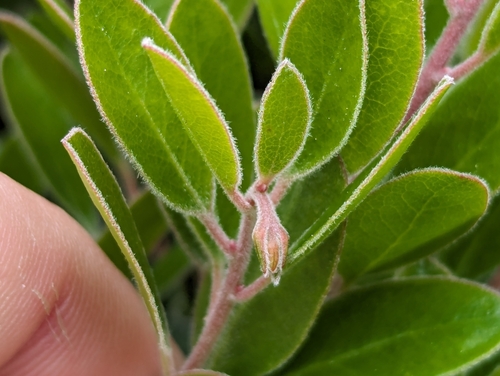
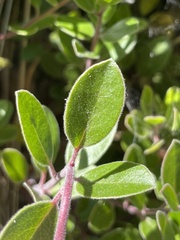
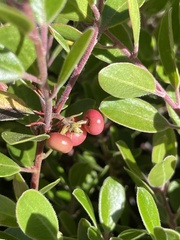
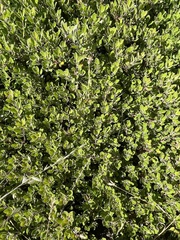
Arctostaphylos franciscana, known by the common name Franciscan manzanita, is a species of manzanita. It was named by Alice Eastwood in 1905 who was the first to identify the organism as a unique species. It is native to the city of San Francisco and it is a low-growing, spreading-to-ascending evergreen shrub in the heath family Ericaceae. The name is derived from the Spanish word manzanita, which means “little apple” because of the small, apple shaped berries that grow from the plant.
Quoted from Wikipedia, "Arctostaphylos franciscana", CC BY-SA 4.0.
About the genus · Arctostaphylos
Arctostaphylos is a genus of plants within the family Ericaceae. Many plants within the genus Arctostaphylos are also commonly called manzanitas(/ˌmænzəˈniːtəz/) or bearberries. There are 107 taxa within Arctostaphylos, 106 of which are found in the California Floristic Province. More on Wikipedia ›
Quoted from Wikipedia, "Arctostaphylos", CC BY-SA 4.0.
Cultivation
Climate across the habitat
Natural habitat
Photographs
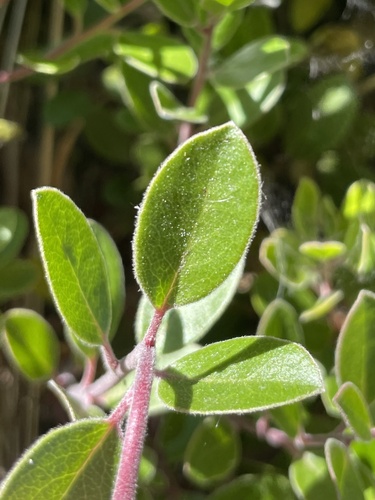
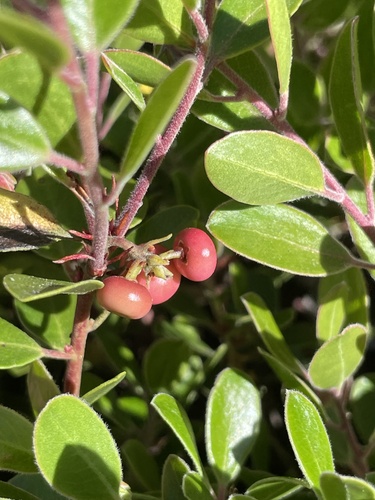
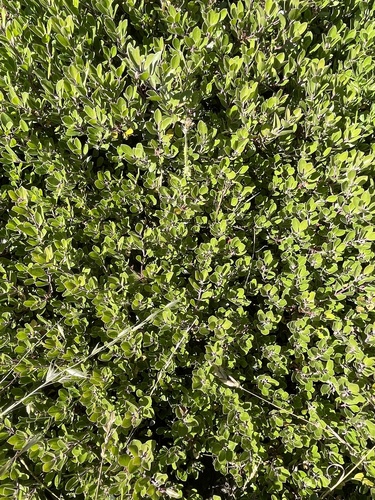
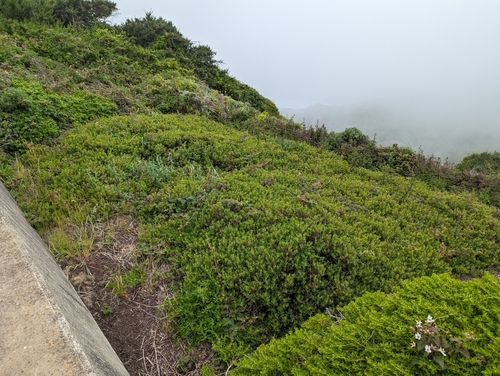
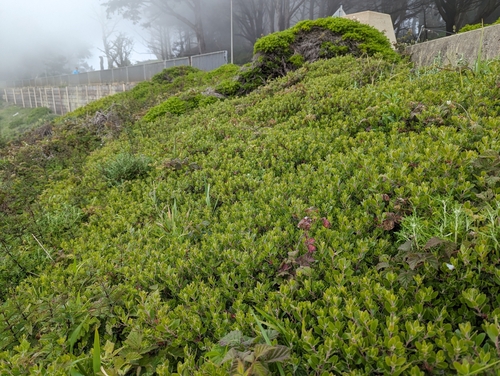
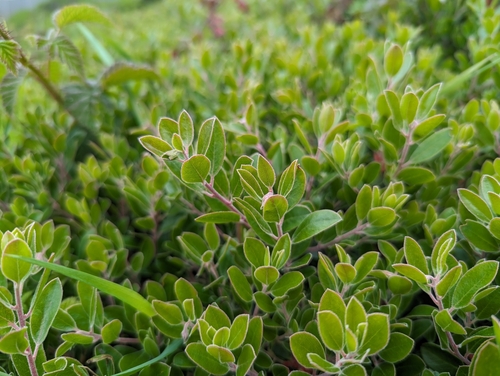
Photographs: (c) Rajan Rao, some rights reserved (CC BY) (3); (c) Alexander Wentworth, some rights reserved (CC BY) (3).
Related
Other Arctostaphylos 50 in the reference
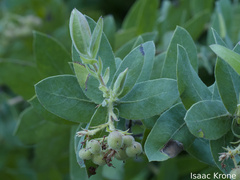 Arctostaphylos andersonii Santa Cruz manzanita Photo: CC BY, Isaac Krone
 Arctostaphylos auriculata Mount Diablo manzanita Photo: CC BY, er-birds Arctostaphylos australis Australian manzanita
 Arctostaphylos bakeri Baker's manzanita Photo: CC BY, Alexander Wentworth
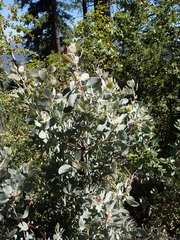 Arctostaphylos canescens Hoary manzanita Photo: CC0, author not stated
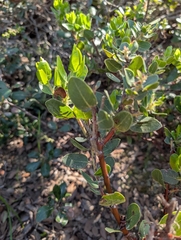 Arctostaphylos catalinae Santa Catalina Island manzanita Photo: CC BY, Aaron Kreisberg
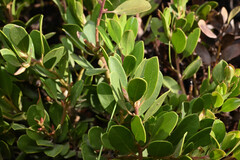 Arctostaphylos × coloradensis Colorado manzanita Photo: CC BY, Anders Hastings
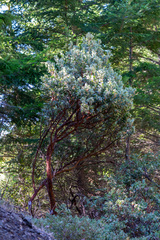 Arctostaphylos columbiana Columbia manzanita Photo: CC0, author not stated
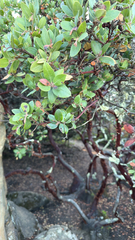 Arctostaphylos crustacea Brittleleaf manzanita Photo: CC BY, harrii
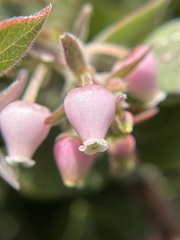 Arctostaphylos cruzensis Arroyo de la Cruz manzanita Photo: CC0, author not stated
 Arctostaphylos densiflora Vine Hill manzanita Photo: CC BY, Madeleine Claire
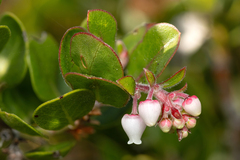 Arctostaphylos edmundsii Little Sur manzanita Photo: CC BY-SA, Nicholas Wei all 51 ›
Names & registers
Also known as Arctostaphylos hookeri subsp. franciscana; Arctostaphylos uva-ursi var. franciscana; Uva-ursi franciscana. (GBIF Backbone)
The record
Every figure here is derived from public data by a stated rule and names its source; nothing about this species is written for its page by a person or by AI, apart from the marked, credited quotations. How →
Where this page came from built 2026-10-21
gbif.species answeredasked 2026-10-21gbif.synonyms answeredasked 2026-10-21gbif.vernacular answeredasked 2026-10-21names fetched 2026-10-21wcvp.distribution answeredas of 2026-06-04Kew's entry lists no native regiongbif.occurrences answeredas of 2026-10-21GBIF occurrence download https://doi.org/10.15468/dl.hbdw64, of 2026-10-21; 11 records within 1 km of a botanic garden, herbarium or zoo left out (10 at a botanic garden or arboretum, 1 at a zoo; Wikidata's list)climate nothing to reportasked 2026-10-21native range not verified: no WCVP distribution with native status for this name, so records cannot be told from cultivation and no habitat climate is derivedwikidata answeredasked 2026-10-21wikipedia answeredasked 2026-10-21inat.photos.wild answeredasked 2026-10-22from iNaturalist's open data of 2026-09-27: research-grade observations with an open-licence photograph, the 24 whose photographs iNaturalist received last (the open data holds no votes); filled 2026-10-22inat.photos.cultivated not askedgbif.media answeredasked 2026-10-21none of the photographs on this page is credited to GBIF: those shown are other sources', and GBIF's were the same photographs or were set aside by the photograph rulesopenalex not askednot yet asked for this reference; a later fill takes the papers from OpenAlex's snapshotEvery source is recorded as having answered, reported nothing, refused, failed, not been asked, or answered twice where one answer is taken (“not taken: two items answered”), and, for a source asked when this page was built, when: the figures are as the source held them that day; a source read from a file (Kew's World Checklist, a GBIF download) says "as of" the file's day instead; a row carried from an earlier build of the page names that build instead. Only “nothing to report” is ever shown as an absence. Records came from 7 datasets via GBIF.org; each carries its own licence.