
Berberis gracilipes Oliv.
English names not checked: Wikidata's common names were not read for this page.


 6 photographs ›
Summary
Berberis gracilipes is a shrub in the family Berberidaceae, first described in 1887. It is endemic to China, native to the Sichuan and Yunnan Provinces.
Quoted from Wikipedia, "Berberis gracilipes", CC BY-SA 4.0.
About the genus · Berberis
Berberis, commonly known as barberry, is a large genus of deciduous and evergreen shrubs from 1–5 m tall, found throughout temperate and subtropical regions of the world. Species diversity is greatest in South America and Asia, but native species also appear in Europe, Africa, and North America.
Quoted from Wikipedia, "Berberis", CC BY-SA 4.0.
Cultivation
Climate across the habitat
Natural habitat
This species has no GBIF key of its own. Its records are GBIF's under the key of the name Kew's World Checklist holds as this plant: 7300405 (Mahonia gracilipes (Oliv.) Fedde, 97 records). No name was matched to GBIF; the keys are read from Kew's synonymy. How.
How this section is made
Photographs


Photographs: peganum from Small Dole, England, CC BY-SA 2.0, via Wikimedia Commons (3); Daderot, CC0, via Wikimedia Commons (2).
Related
Other Berberis 135 in the reference
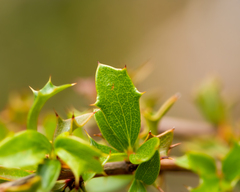 Berberis actinacantha Berberidaceae Photo: CC BY-SA, Nicolás Villaseca Merino
 Berberis aemulans Berberidaceae Photo: Public domain, Charles Sprague Sargent (1841-1927)
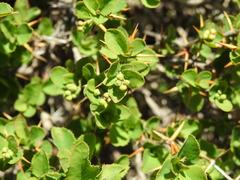 Berberis aetnensis Berberidaceae Photo: CC BY, Yves Bas
 Berberis aggregata Clustered barberry Photo: CC BY, Ola Vestre Berberis alpina Berberidaceae
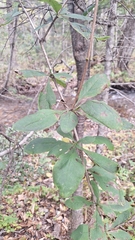 Berberis amurensis Amur barberry Photo: CC BY, Violetta Dzizyurova
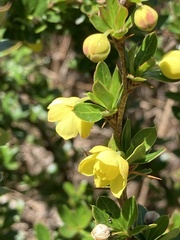 Berberis angulosa Berberidaceae Photo: CC0, author not stated
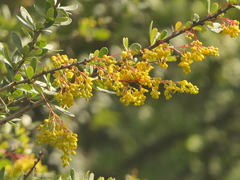 Berberis aristata Indian barberry Photo: CC BY, Sagnik Dutta Roy
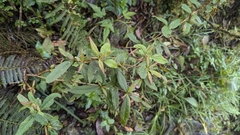 Berberis aristatoserrulata Berberidaceae Photo: CC BY, Cheng-Te Hsu
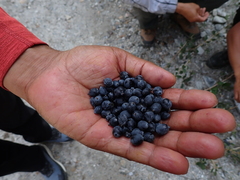 Berberis asiatica Berberidaceae Photo: CC BY, Patricia Rose Berberis atrocarpa Berberidaceae
 Berberis beaniana Berberidaceae Photo: CC BY-SA, Krzysztof Ziarnek, Kenraiz all 136 ›
Names & registers
Also known as Mahonia gracilipes; Mahonia gracilipes var. rhombicus; Mahonia subtriplinervis; Berberis subtriplinervis. (WCVP, RBG Kew)
The record
Every figure here is derived from public data by a stated rule and names its source; nothing about this species is written for its page by a person or by AI, apart from the marked, credited quotations. How →
Where this page came from built 2026-10-22
kew.names answeredas of 2026-06-04Kew's entry Berberis gracilipes Oliv. (plant_name_id 2673837), read from Kew's names filegbif.species not askedGBIF's backbone holds no one accepted species of this name, and a name it holds only as another species' synonym is not taken for this one, so GBIF's records were not askedgbif.synonyms not askedGBIF's backbone holds no one accepted species of this name, and a name it holds only as another species' synonym is not taken for this one, so GBIF's records were not askedgbif.vernacular not askedGBIF's backbone holds no one accepted species of this name, and a name it holds only as another species' synonym is not taken for this one, so GBIF's records were not askedwcvp.distribution answeredas of 2026-06-04gbif.occurrences answeredas of 2026-10-21this species has no GBIF key of its own; its records are read under GBIF's keys for the names Kew's file holds as this plant, never by a name matched; GBIF occurrence download https://doi.org/10.15468/dl.hbdw64, of 2026-10-21; 97 records of GBIF's key 7300405, Mahonia gracilipes (Oliv.) Fedde (Kew's file holds it as Mahonia gracilipes (Oliv.) Fedde (synonym under Berberis gracilipes Oliv.)): the GBIF download; 4 records within 1 km of a botanic garden, herbarium or zoo left out (4 at a botanic garden or arboretum; Wikidata's list)climate nothing to reportasked 2026-10-2215 in-range records, none placed to within 10 kmwikidata answeredasked 2026-10-22found by Kew's IPNI identifier 106696-1, POWO 106696-1wikipedia answeredasked 2026-10-22inat.taxon not askedinat.photos.wild not askedinat.photos.cultivated not askedgbif.media not askedGBIF's backbone holds no one accepted species of this name, and a name it holds only as another species' synonym is not taken for this one, so GBIF's records were not askedcommons answeredasked 2026-10-22openalex not askednot yet asked for this reference; a later fill takes the papers from OpenAlex's snapshotEvery source is recorded as having answered, reported nothing, refused, failed, not been asked, or answered twice where one answer is taken (“not taken: two items answered”), and, for a source asked when this page was built, when: the figures are as the source held them that day; a source read from a file (Kew's World Checklist, a GBIF download) says "as of" the file's day instead; a row carried from an earlier build of the page names that build instead. Only “nothing to report” is ever shown as an absence. Records came from 4 datasets via GBIF.org; each carries its own licence.