

 3 photographs ›
Summary
Buddleja delavayi is a Chinese species discovered by Forrest in the Tali Range above Dali (2000 – 2500 m elevation), Yunnan, in 1910; it is also found in Xizang (Tibet). The species was named for l'Abbé Delavay, the French missionary and plant collector, by Gagnepain in 1912. The shrub is of interest to the botanist because of its unique (within the genus) resting buds and the different types of inflorescence produced through the year.
Quoted from Wikipedia, "Buddleja delavayi", CC BY-SA 4.0.
About the genus · Buddleja
Buddleja is a genus comprising over 140 species of flowering plants endemic to Asia, Africa, and the Americas. The generic name bestowed by Linnaeus posthumously honoured Adam Buddle (1662–1715), an English botanist and rector, at the suggestion of William Houstoun. Houstoun sent the first plants to become known to science as buddleja to England from the Caribbean about 15 years after Buddle's death. More on Wikipedia ›
Quoted from Wikipedia, "Buddleja", CC BY-SA 4.0.
Cultivation
Climate across the habitat
Natural habitat
How this section is made
Photographs


Photographs: Ptelea, CC BY-SA 4.0, via Wikimedia Commons (2).
Related
Other Buddleja 37 in the reference
 Buddleja albiflora Scrophulariaceae Photo: CC BY-SA, Claude Dancette
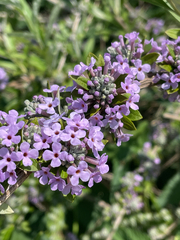 Buddleja alternifolia Alternate-leaved Butterfly-bush Photo: CC0, author not stated
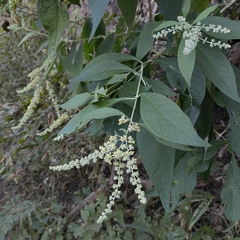 Buddleja americana Scrophulariaceae Photo: CC BY-SA, Matteo Cassella
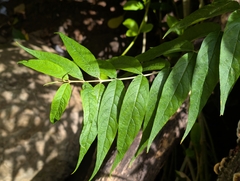 Buddleja asiatica Dog tail Photo: CC0, author not stated
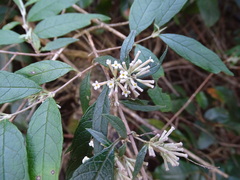 Buddleja auriculata Weeping Sagewood Photo: CC BY, Shaun Swanepoel
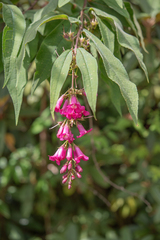 Buddleja colvilei Scrophulariaceae Photo: CC BY, Morten Ross
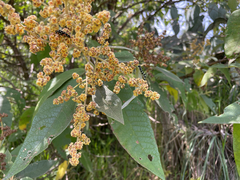 Buddleja cordata Scrophulariaceae Photo: CC BY, Carlos Muñoz-Amezcua
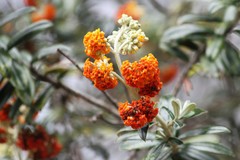 Buddleja coriacea Scrophulariaceae Photo: CC BY, capacoscar
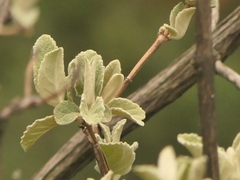 Buddleja crispa Himalayan butterfly bush Photo: CC BY, Sagnik Dutta Roy
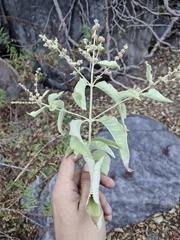 Buddleja crotonoides Scrophulariaceae Photo: CC BY, Abraham Sánchez Romero
 Buddleja curviflora Scrophulariaceae Photo: CC BY-SA, 阿橋 HQ
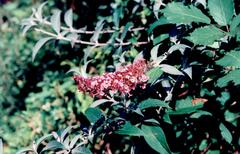 Buddleja davidii Butterfly-bush Photo: CC BY, zebedeugalinha all 38 ›
Names & registers
Also known as Buddleja glabrescens; Buddleja heliophila; Buddleja heliophila var. angustifolia; Buddleja heliophila var. pubescens. (GBIF Backbone)
The record
Every figure here is derived from public data by a stated rule and names its source; nothing about this species is written for its page by a person or by AI, apart from the marked, credited quotations. How →
Where this page came from built 2026-10-21
gbif.species answeredasked 2026-10-21gbif.synonyms answeredasked 2026-10-21gbif.vernacular answeredasked 2026-10-21names fetched 2026-10-21wcvp.distribution answeredas of 2026-06-04gbif.occurrences answeredas of 2026-10-21GBIF occurrence download https://doi.org/10.15468/dl.hbdw64, of 2026-10-21climate nothing to reportasked 2026-10-2114 in-range records, none placed to within 10 kmwikidata answeredasked 2026-10-21wikipedia answeredasked 2026-10-21inat.photos.wild nothing to reportasked 2026-10-22from iNaturalist's open data of 2026-09-27: research-grade observations with an open-licence photograph, the 24 whose photographs iNaturalist received last (the open data holds no votes); filled 2026-10-22inat.photos.cultivated not askedgbif.media nothing to reportasked 2026-10-21commons answeredasked 2026-10-21openalex not askednot yet asked for this reference; a later fill takes the papers from OpenAlex's snapshotEvery source is recorded as having answered, reported nothing, refused, failed, not been asked, or answered twice where one answer is taken (“not taken: two items answered”), and, for a source asked when this page was built, when: the figures are as the source held them that day; a source read from a file (Kew's World Checklist, a GBIF download) says "as of" the file's day instead; a row carried from an earlier build of the page names that build instead. Only “nothing to report” is ever shown as an absence. Records came from 8 datasets via GBIF.org; each carries its own licence.