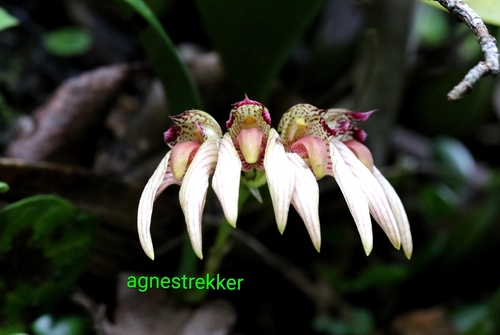
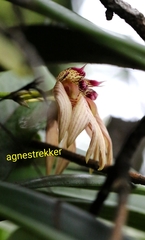
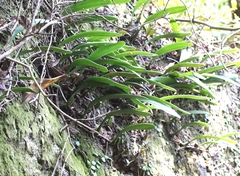


 6 photographs ›
Summary
Bulbophyllum bicolor is a species of orchid in the genus Bulbophyllum. It is found only in Hong Kong and isolated parts of southeast China and northern Vietnam.
Quoted from Wikipedia, "Bulbophyllum bicolor", CC BY-SA 4.0.
Cultivation
Grouped as an orchid, listed under the genus Bulbophyllum in the archetype table, and Kew describes it as “pseudobulbous lithophyte”.
How this section is made
Each card states this species' habitat figures with their sources, and what two fixed rules read from them; nothing here says what the plant does, wants or tolerates. The rules · the terms.
Group. Listed under the genus Bulbophyllum in the archetype table, and Kew describes it as “pseudobulbous lithophyte”. A group is taken only where Kew's description of the species agrees with the table's listing. The table gives no figure and no prose; the cold floor is the habitat's alone.
Climate across the habitat
Natural habitat
How this section is made
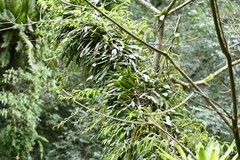
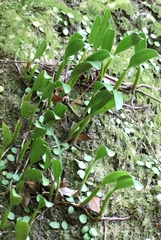
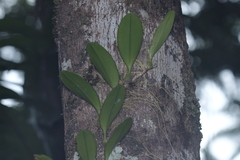
Photographs
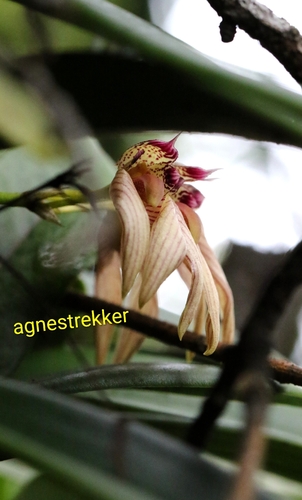


Photographs: author not stated, no rights reserved · CC0 (2); Chritian Aparecido Demetrio, CC BY-SA 3.0, via Wikimedia Commons (2); Greg Steenbeeke, CC BY-SA 2.0, via Wikimedia Commons.
Related
Other Bulbophyllum 130 in the reference
 Bulbophyllum acutiflorum Orchidaceae Photo: CC BY-SA, Yercaud-elango
 Bulbophyllum affine Orchidaceae Photo: CC BY, 曾昱承 Yu-Cheng Zeng Bulbophyllum alticola Orchidaceae
 Bulbophyllum ambrosia Orchidaceae Photo: CC0, author not stated
 Bulbophyllum amplebracteatum Orchidaceae Photo: CC BY, snotch from Sapporo, Hokkaido, Japan Bulbophyllum andersonii Orchidaceae
 Bulbophyllum annandalei Orchidaceae Photo: CC BY-SA, Vonrothbart
 Bulbophyllum apodum Orchidaceae Photo: CC BY-SA, Rudolphous
 Bulbophyllum arfakianum Orchidaceae Photo: CC BY-SA, Orchi
 Bulbophyllum auratum Orchidaceae Photo: CC BY-SA, dwittkower
 Bulbophyllum baileyi Fruit fly orchid Photo: CC BY, quirino
 Bulbophyllum barbigerum Orchidaceae Photo: CC BY-SA, Michael Wolf all 131 ›
Names & registers
Also known as Cirrhopetalum bicolor; Phyllorchis bicolor; Phyllorkis bicolor. (GBIF Backbone)
The record
Every figure here is derived from public data by a stated rule and names its source; nothing about this species is written for its page by a person or by AI, apart from the marked, credited quotations. How →
Where this page came from built 2026-10-21
gbif.species answeredasked 2026-10-21gbif.synonyms answeredasked 2026-10-21gbif.vernacular answeredasked 2026-10-21names fetched 2026-10-21wcvp.distribution answeredas of 2026-06-04gbif.occurrences answeredas of 2026-10-21GBIF occurrence download https://doi.org/10.15468/dl.hbdw64, of 2026-10-21climate nothing to reportasked 2026-10-218 in-range records, none placed to within 10 kmwikidata answeredasked 2026-10-21wikipedia answeredasked 2026-10-21inat.photos.wild answeredasked 2026-10-22from iNaturalist's open data of 2026-09-27: research-grade observations with an open-licence photograph, the 24 whose photographs iNaturalist received last (the open data holds no votes); filled 2026-10-22inat.photos.cultivated not askedgbif.media nothing to reportasked 2026-10-21commons answeredasked 2026-10-21openalex not askednot yet asked for this reference; a later fill takes the papers from OpenAlex's snapshotEvery source is recorded as having answered, reported nothing, refused, failed, not been asked, or answered twice where one answer is taken (“not taken: two items answered”), and, for a source asked when this page was built, when: the figures are as the source held them that day; a source read from a file (Kew's World Checklist, a GBIF download) says "as of" the file's day instead; a row carried from an earlier build of the page names that build instead. Only “nothing to report” is ever shown as an absence. Records came from 4 datasets via GBIF.org; each carries its own licence.