

 3 photographs ›
Summary
Cercis racemosa, the chain-flowered redbud, is a species of flowering plant in the family Fabaceae. It is native to central and southern China. A open-habit tree reaching 8 to 15 m (26 to 49 ft), it is found in dense forests, and on mountain slopes, but it is also adaptable enough to human disturbances to be found near roads and villages, typically at elevations from 1,000 to 1,900 m (3,300 to 6,200 ft). It flowers in May. More on Wikipedia ›
Quoted from Wikipedia, "Cercis racemosa", CC BY-SA 4.0.
About the genus · Cercis
Cercis is a genus of flowering plants in the subfamily Cercidoideae of the pea family Fabaceae. It contains small deciduous trees or large shrubs commonly known for the Judas tree in Europe or as redbuds in the USA. They are characterised by simple, rounded to heart-shaped leaves and pinkish-red flowers borne in the early spring on bare leafless shoots, on both branches and trunk ("cauliflory"). More on Wikipedia ›
Quoted from Wikipedia, "Cercis", CC BY-SA 4.0.
Cultivation
Climate across the habitat
Natural habitat
How this section is made
Photographs


Photographs: Krzysztof Golik, CC BY-SA 4.0, via Wikimedia Commons (2).
Related
Other Cercis 8 in the reference
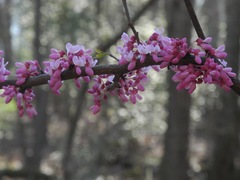 Cercis canadensis Eastern redbud Photo: CC BY, Michael J. Papay
 Cercis chinensis Chinese redbud Photo: CC BY, mister_bumble
 Cercis chingii Fabaceae Photo: Public domain, Stickpen
 Cercis glabra Smooth redbud Photo: Public domain, Joshnadler
 Cercis griffithii Griffith's redbud Photo: CC BY, Nasser Halaweh
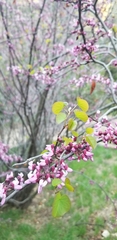 Cercis occidentalis California redbud Photo: CC BY, Andrew Pogany
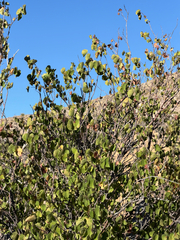 Cercis orbiculata Arizona redbud Photo: CC BY, CK2AZ
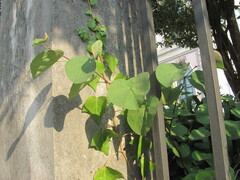 Cercis siliquastrum Judas-tree Photo: CC BY, zebedeugalinha
Names & registers
The record
Every figure here is derived from public data by a stated rule and names its source; nothing about this species is written for its page by a person or by AI, apart from the marked, credited quotations. How →
Where this page came from built 2026-10-21
gbif.species answeredasked 2026-10-21gbif.synonyms answeredasked 2026-10-21gbif.vernacular answeredasked 2026-10-21names fetched 2026-10-21wcvp.distribution answeredas of 2026-06-04gbif.occurrences answeredas of 2026-10-21GBIF occurrence download https://doi.org/10.15468/dl.hbdw64, of 2026-10-21; 1 record within 1 km of a botanic garden, herbarium or zoo left out (1 at a botanic garden or arboretum; Wikidata's list)climate nothing to reportasked 2026-10-2122 in-range records, none placed to within 10 kmwikidata answeredasked 2026-10-21wikipedia answeredasked 2026-10-21inat.photos.wild nothing to reportasked 2026-10-22from iNaturalist's open data of 2026-09-27: research-grade observations with an open-licence photograph, the 24 whose photographs iNaturalist received last (the open data holds no votes); filled 2026-10-22inat.photos.cultivated not askedgbif.media nothing to reportasked 2026-10-21commons answeredasked 2026-10-21openalex not askednot yet asked for this reference; a later fill takes the papers from OpenAlex's snapshotEvery source is recorded as having answered, reported nothing, refused, failed, not been asked, or answered twice where one answer is taken (“not taken: two items answered”), and, for a source asked when this page was built, when: the figures are as the source held them that day; a source read from a file (Kew's World Checklist, a GBIF download) says "as of" the file's day instead; a row carried from an earlier build of the page names that build instead. Only “nothing to report” is ever shown as an absence. Records came from 10 datasets via GBIF.org; each carries its own licence.