Chamaedorea atrovirens Mart.
Photographs not checked
iNaturalist was skipped (not asked) when this page was built. Not asked, or not answered, is not "none": nothing here claims there is none. Why the site says it this way.About the genus · Chamaedorea
Chamaedorea is a genus of 107 species of palms, native to subtropical and tropical regions of the Americas. They are small palms, growing to 0.3–6 m tall with slender, cane-like stems, growing in the understory in rainforests, and often spreading by means of underground runners, forming clonal colonies. The leaves are pinnate, with one to numerous leaflets. More on Wikipedia ›
Quoted from Wikipedia, "Chamaedorea", CC BY-SA 4.0.
Cultivation
Grouped as a tropical foliage plant, listed under the genus Chamaedorea in the archetype table, and Kew describes it as “shrub”, “seasonally dry tropical”.
How this section is made
Each card states this species' habitat figures with their sources, and what two fixed rules read from them; nothing here says what the plant does, wants or tolerates. The rules · the terms.
Group. Listed under the genus Chamaedorea in the archetype table, and Kew describes it as “shrub”, “seasonally dry tropical”. A group is taken only where Kew's description of the species agrees with the table's listing. The table gives no figure and no prose; the cold floor is the habitat's alone.
Climate across the habitat
Natural habitat
Photographs
Related
Other Chamaedorea 27 in the reference
 Chamaedorea alternans Arecaceae Photo: CC BY-SA, User:Carstor
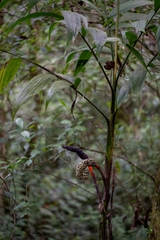 Chamaedorea arenbergiana Arecaceae Photo: CC BY, José Javier Barrios Flores Chamaedorea brachypoda Arecaceae
 Chamaedorea cataractarum Cascade palm Photo: CC BY, Forest & Kim Starr
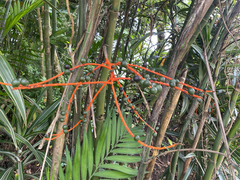 Chamaedorea costaricana Costa Rican bamboo palm Photo: CC BY, Pat Hall
 Chamaedorea elatior Arecaceae Photo: CC BY-SA, KATHERINE WAGNER-REISS
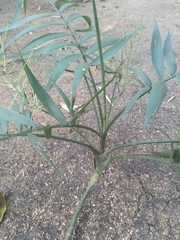 Chamaedorea elegans Parlor palm Photo: CC BY, josebarrientos
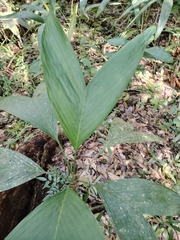 Chamaedorea ernesti-augusti Arecaceae Photo: CC BY, josebarrientos
 Chamaedorea geonomiformis Arecaceae Photo: CC BY, Neptalí Ramírez Marcial
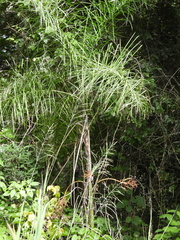 Chamaedorea glaucifolia Arecaceae Photo: CC BY, Liliana Ramírez-Freire Chamaedorea graminifolia Arecaceae
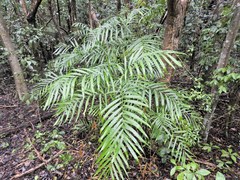 Chamaedorea hooperiana Arecaceae Photo: CC BY, Tom Field all 28 ›
Names & registers
Also known as Nunnezharia atrovirens; Nunnezharoa atrovirens; Vadia atrovirens. (GBIF Backbone)
The record
Every figure here is derived from public data by a stated rule and names its source; nothing about this species is written for its page by a person or by AI, apart from the marked, credited quotations. How →
Where this page came from built 2026-10-21
gbif.species answeredasked 2026-10-21gbif.synonyms answeredasked 2026-10-21gbif.vernacular answeredasked 2026-10-21names fetched 2026-10-21wcvp.distribution answeredas of 2026-06-04gbif.occurrences nothing to reportasked 2026-10-21climate nothing to reportasked 2026-10-21no georeferenced record inside the rangewikidata answeredasked 2026-10-21wikipedia nothing to reportasked 2026-10-21Wikipedia redirects Chamaedorea atrovirens to Chamaedoreainat.photos.wild nothing to reportasked 2026-10-22from iNaturalist's open data of 2026-09-27: research-grade observations with an open-licence photograph, the 24 whose photographs iNaturalist received last (the open data holds no votes); filled 2026-10-22inat.photos.cultivated not askedgbif.media nothing to reportasked 2026-10-21commons nothing to reportasked 2026-10-21openalex not askednot yet asked for this reference; a later fill takes the papers from OpenAlex's snapshotEvery source is recorded as having answered, reported nothing, refused, failed, not been asked, or answered twice where one answer is taken (“not taken: two items answered”), and, for a source asked when this page was built, when: the figures are as the source held them that day; a source read from a file (Kew's World Checklist, a GBIF download) says "as of" the file's day instead; a row carried from an earlier build of the page names that build instead. Only “nothing to report” is ever shown as an absence.