


 5 photographs ›
At a glance
- Jan
- Feb
- Mar
- Apr
- May
- Jun
- Jul
- Aug
- Sep
- Oct
- Nov
- Dec
From few records: 8 records in 8 grid cells. The records.
About the genus · Clinopodium
Clinopodium is a genus of flowering plants in the family Lamiaceae, in the subtribe Menthinae. Clinopodium belongs to a large and complex group of genera including many New World mints such as Hedeoma, Monarda, and Pycnanthemum, and this group is in turn a sister clade to Mentha. The genus name Clinopodium is derived from the Latin clinopodion, from the Ancient Greek κλινοπόδιον (klinopódion), from κλίνη (klínē) "bed" and πόδιον (pódion) "little foot". More on Wikipedia ›
Quoted from Wikipedia, "Clinopodium", CC BY-SA 4.0.
Cultivation
Seasons
The rain rule reads no short rainy season: 70% of the median year's rain (748 mm of 1,020 mm) takes 8 months, March to August and November to December. Mean temperature moves 18.2 °C between the warmest and coldest month. Months are the habitat's, northern hemisphere; shifted six months for a southern-hemisphere collection: September to February and May to June.
Rain
1,020 mm in the median year at the habitat, 748 mm of it March to August and November to December. Wettest month May at 116 mm, driest month October at 59 mm. Across the grid cells of the range the year's total runs 887 mm to 3,190 mm, the 10th to 90th percentile of each cell's own year. The median of the cells' own yearly totals, 1,013 mm, is the year's rain at the top of the page; the 1,020 mm here is the median year's, the twelve monthly medians added, which the rain rule reads. Habitat calendar, northern hemisphere; median year across the grid cells of the range, CHELSA.
Light
Open sky over the habitat: 10 to 42 mol/m²/day across the year (daily light integral, median year across the grid cells of the range, CHELSA; the lowest 10th-percentile month across the cells is 8, the highest 90th-percentile month 44).
Warmth and air
Coldest: the 1st-percentile night over 44 years at a typical spot in the range is -10.5 °C, the absolute minimum -18.7 °C, 3,329 frost nights in 44 years, 75.7 a year (NASA POWER daily minima). Warmest: the 99th-percentile day is 36.0 °C. Monthly means: the coldest month's mean nightly low -4.6 °C in January (across the grid cells of the range -6.9 °C to -0.9 °C), the warmest month's mean daily high 21.6 °C in July and August (median year across the grid cells of the range, CHELSA). Cold floor: -10.5 °C, which is the 1st-percentile night over 44 years at a typical spot in the range (NASA POWER).
Relative humidity at the habitat: 57 to 62% across the year (monthly means, median year across the grid cells of the range, CHELSA). A figure about the air, saying nothing about how the plant takes water.
How this section is made
Each card states this species' habitat figures with their sources, and what two fixed rules read from them; nothing here says what the plant does, wants or tolerates. The rules · the terms.
Seasons. Read from the median year of CHELSA monthly rainfall and mean temperature across the grid cells of the range: the rain rule takes the smallest set of months carrying 70% of the rain and calls it winter when its mean is more than half a degree below the year's, summer when more than that above, and neither in between; the temperature rule, used only under 120 mm, names the cooler six months when they are at least a degree cooler than the other six. Months are shifted for the other hemisphere only where the temperature curve moves 4 °C or more and the habitat lies 10° or more from the equator. A reading of the curves, not an observation of the plant.
Rain. CHELSA monthly precipitation, median year across the grid cells of the range. The rain that falls where the species is recorded; nothing about how the plant takes water.
Light. CHELSA shortwave radiation at each envelope cell, a daily-mean flux taken to a daily total and converted at 2.07 mol of PAR per MJ. The sky over the habitat, measured; what reaches a plant under a rock, a shrub or a shade cloth is not.
Temperature. NASA POWER daily minima and maxima over 44 years at a typical spot in the range, lapse-corrected -281 m to its elevation; CHELSA monthly means, median year across the grid cells of the range. The cold floor is the 1st-percentile night named in its sentence. Not a measured survival limit for any plant in a pot.
Humidity. CHELSA relative humidity, median year across the grid cells of the range.
Climate across the habitat
From few records: this habitat climate is read from 8 records in 8 grid cells; a page says so under 12 records or 5 cells, and shows the figures as read.
Habitat months, northern hemisphere
Mean daily high from 3 °C in Jan and Feb to 22 °C in Jul and Aug; mean nightly low from -5 °C in Jan to 13 °C in Jul and Aug. The cold quarter, Dec to Feb, is the three months around the coldest month's mean nightly low. 1,020 mm of rain in the median year (the twelve monthly medians added), the wettest month May. The bands show the 10th to 90th percentile across 8 habitat cells. Over 44 years at a typical spot in the range (NASA POWER) the absolute minimum was -18.7 °C and the 99th-percentile day 36.0 °C; neither is dated to a month. Beneath: daily light integral and relative humidity through the year, each on its own scale.
Figures by month
| Figure | Jan | Feb | Mar | Apr | May | Jun | Jul | Aug | Sep | Oct | Nov | Dec |
|---|---|---|---|---|---|---|---|---|---|---|---|---|
| Day °C | 3 / 2–6 | 3 / 2–7 | 6 / 6–10 | 11 / 10–14 | 16 / 15–19 | 20 / 18–23 | 22 / 21–26 | 22 / 21–26 | 18 / 17–22 | 13 / 13–17 | 8 / 7–11 | 4 / 3–7 |
| Night °C | -5 / -7–-1 | -4 / -7–-1 | -2 / -4–1 | 2 / 1–6 | 7 / 6–10 | 10 / 9–14 | 13 / 11–17 | 13 / 11–17 | 9 / 8–13 | 6 / 4–9 | 1 / -1–4 | -3 / -5–0 |
| Rain mm | 71 / 60–322 | 72 / 60–297 | 77 / 68–294 | 80 / 66–266 | 116 / 96–178 | 111 / 92–132 | 87 / 62–109 | 87 / 69–131 | 70 / 50–245 | 59 / 52–352 | 84 / 67–439 | 106 / 84–461 |
| DLI | 13 / 10–13 | 18 / 15–19 | 25 / 23–26 | 32 / 31–33 | 38 / 36–38 | 41 / 40–43 | 42 / 40–44 | 37 / 36–38 | 28 / 27–30 | 19 / 18–21 | 13 / 11–14 | 10 / 8–11 |
| RH % | 61 / 58–62 | 61 / 58–62 | 60 / 58–61 | 59 / 58–59 | 59 / 57–60 | 58 / 56–59 | 57 / 53–58 | 57 / 53–58 | 58 / 57–59 | 60 / 58–62 | 61 / 60–62 | 62 / 60–64 |
How this section is made
Natural habitat
How this section is made
Photographs


Photographs: Krzysztof Ziarnek, Kenraiz, CC BY-SA 4.0, via Wikimedia Commons (4).
Related
Similar habitat climate The 6 nearest by mean daily high, mean nightly low and rain, month by month. How.
 Geranium phaeum Dusky crane's-bill Photo: CC BY, Daniel Cahen
 Prunella grandiflora Large-flowered Selfheal Photo: CC BY, Jason Grant
 Ranunculus lanuginosus Ranunculaceae Photo: CC BY, Oleksandr Shynder
 Bupleurum longifolium Long-leaved Hare's-ear Photo: CC BY, Flavien Saboureau
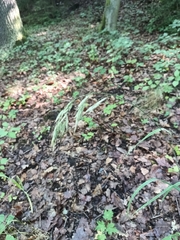 Bromus benekenii Lesser Hairy-brome Photo: CC BY, Vladimír Fuka
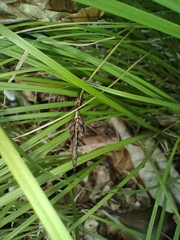 Carex montana Soft-leaved Sedge Photo: CC BY, Vladimír Fuka
Other Clinopodium 30 in the reference
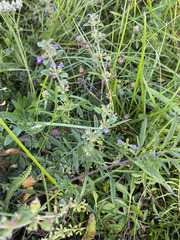 Clinopodium acinos Basil thyme Photo: CC0, author not stated
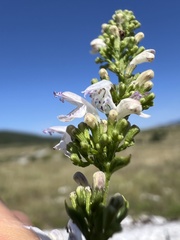 Clinopodium album Lamiaceae Photo: CC0, author not stated
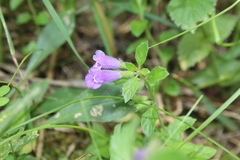 Clinopodium alpinum Rock Thyme Photo: CC BY, Edmundas Greimas
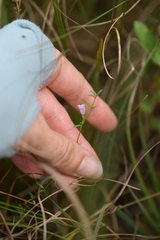 Clinopodium arkansanum Low calamint Photo: CC BY, Katie Kucera
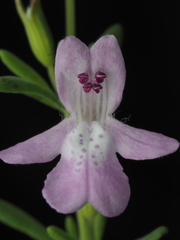 Clinopodium ashei Ashe's calamint Photo: CC BY, carter
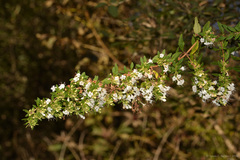 Clinopodium bolivianum Inca muña Photo: CC BY, Tomás Carranza Perales
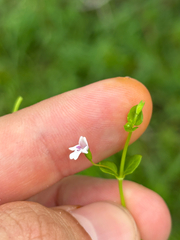 Clinopodium brownei Browne's savory Photo: CC0, author not stated
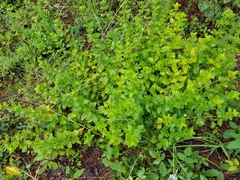 Clinopodium carolinianum Georgia calamint Photo: CC BY, Leila Dasher
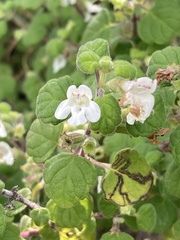 Clinopodium chandleri San Miguel calamint Photo: CC BY, Adam J. Searcy
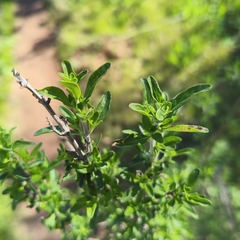 Clinopodium chilense Chilean Calamint Photo: CC0, author not stated
 Clinopodium chinense Chinese Clinopodium Photo: CC BY, Ben Costamagna
 Clinopodium coccineum Scarlet calamint Photo: CC0, author not stated all 31 ›
Names & registers
Also known as Calamintha origanifolia; Micromeria dalmatica; Micromeria origanifolia; Satureja dalmatica; Satureja origanifolia and 1 more. (GBIF Backbone)
The record
Every figure here is derived from public data by a stated rule and names its source; nothing about this species is written for its page by a person or by AI, apart from the marked, credited quotations. How →
Where this page came from built 2026-10-21
gbif.species answeredasked 2026-10-21gbif.synonyms answeredasked 2026-10-21gbif.vernacular answeredasked 2026-10-21names fetched 2026-10-21wcvp.distribution answeredas of 2026-06-04gbif.occurrences answeredas of 2026-10-21GBIF occurrence download https://doi.org/10.15468/dl.hbdw64, of 2026-10-21; 1 record within 1 km of a botanic garden, herbarium or zoo left out (1 at a botanic garden or arboretum; Wikidata's list)climate answeredasked 2026-10-21climate.extremes answeredasked 2026-10-21NASA POWER (MERRA-2) daily 1981–2024, cell 41.50_25.000, lapse-corrected -281 m at 6.5 °C/kmwikidata answeredasked 2026-10-21wikipedia nothing to reportasked 2026-10-21inat.taxon not askedinat.photos.wild not askedinat.photos.cultivated not askedgbif.media nothing to reportasked 2026-10-21commons answeredasked 2026-10-21openalex not askednot yet asked for this reference; a later fill takes the papers from OpenAlex's snapshotEvery source is recorded as having answered, reported nothing, refused, failed, not been asked, or answered twice where one answer is taken (“not taken: two items answered”), and, for a source asked when this page was built, when: the figures are as the source held them that day; a source read from a file (Kew's World Checklist, a GBIF download) says "as of" the file's day instead; a row carried from an earlier build of the page names that build instead. Only “nothing to report” is ever shown as an absence. Records came from 10 datasets via GBIF.org; each carries its own licence.