Corydalis omeiana (C.Y.Wu & H.Chuang) Z.Y.Su & Lidén
Photographs not checked
iNaturalist was skipped (not asked) when this page was built. Not asked, or not answered, is not "none": nothing here claims there is none. Why the site says it this way.Summary
Corydalis omeiana is a species of flowering plant in the family Papaveraceae, native to central Sichuan province of China. It has gained the Royal Horticultural Society's Award of Garden Merit.
Quoted from Wikipedia, "Corydalis omeiana", CC BY-SA 4.0.
About the genus · Corydalis
Corydalis is a genus of about 540 species of annual and perennial herbaceous plants in the family Papaveraceae, native to the temperate Northern Hemisphere and the high mountains of tropical eastern Africa. They are most diverse in China and the Himalayas, with at least 357 species in China. Corydalis species are the only dicots having only a single cotyledon.
Quoted from Wikipedia, "Corydalis", CC BY-SA 4.0.
Cultivation
Climate across the habitat
Natural habitat
How this section is made
Photographs
Related
Other Corydalis 90 in the reference
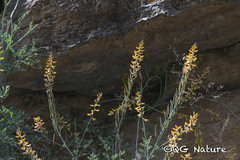 Corydalis adunca Papaveraceae Photo: CC BY, Wang.QG Corydalis afghanica Papaveraceae Corydalis aitchisonii Papaveraceae
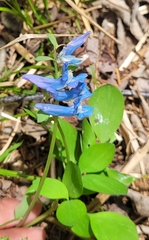 Corydalis ambigua Small corydalis Photo: CC BY, Pavel Smirnov
 Corydalis angustifolia Papaveraceae Photo: CC BY, Denis Ibaev
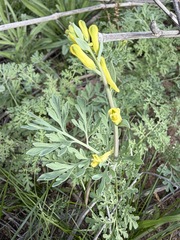 Corydalis aurea Golden corydalis Photo: CC BY, Matt Berger
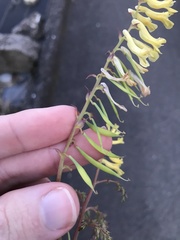 Corydalis balansae Papaveraceae Photo: CC0, author not stated
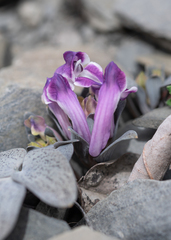 Corydalis benecincta Papaveraceae Photo: CC BY, Morten Ross Corydalis blanda Papaveraceae
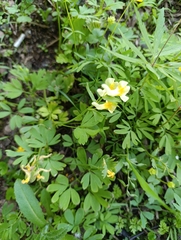 Corydalis bracteata Large-bracted corydalis Photo: CC BY, Marina E.
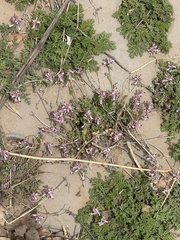 Corydalis bungeana Bunge’s corydalis Photo: CC BY, Jane Charlen
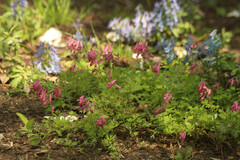 Corydalis buschii Busch's corydalis Photo: CC BY, Andrew Bazdyrev all 91 ›
Names & registers
Also known as Corydalis flexuosa subsp. omeiana; Corydalis flexuosa var. omeiana. (GBIF Backbone)
The record
Every figure here is derived from public data by a stated rule and names its source; nothing about this species is written for its page by a person or by AI, apart from the marked, credited quotations. How →
Where this page came from built 2026-10-21
gbif.species answeredasked 2026-10-21gbif.synonyms answeredasked 2026-10-21gbif.vernacular answeredasked 2026-10-21names fetched 2026-10-21wcvp.distribution answeredas of 2026-06-04gbif.occurrences answeredas of 2026-10-21GBIF occurrence download https://doi.org/10.15468/dl.hbdw64, of 2026-10-21climate nothing to reportasked 2026-10-21only 1 distinct land cell of the climate grid holds an in-range record placed to within 10 km; three are needed for an envelopewikidata answeredasked 2026-10-21wikipedia answeredasked 2026-10-21inat.taxon not askedinat.photos.wild not askedinat.photos.cultivated not askedgbif.media nothing to reportasked 2026-10-21commons nothing to reportasked 2026-10-21openalex not askednot yet asked for this reference; a later fill takes the papers from OpenAlex's snapshotEvery source is recorded as having answered, reported nothing, refused, failed, not been asked, or answered twice where one answer is taken (“not taken: two items answered”), and, for a source asked when this page was built, when: the figures are as the source held them that day; a source read from a file (Kew's World Checklist, a GBIF download) says "as of" the file's day instead; a row carried from an earlier build of the page names that build instead. Only “nothing to report” is ever shown as an absence. Records came from 5 datasets via GBIF.org; each carries its own licence.