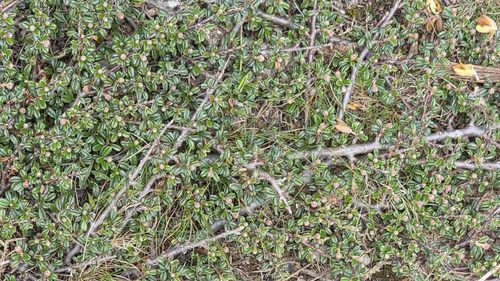
Cotoneaster integrifolius (Roxb.) G.Klotz
Entire-leaved cotoneaster; Rockspray; Fringed Cotoneaster; Tibetan Cotoneaster
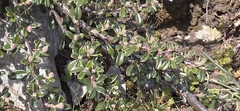
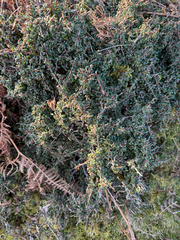
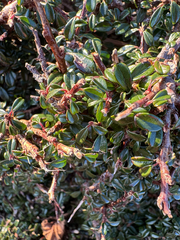
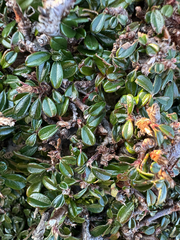
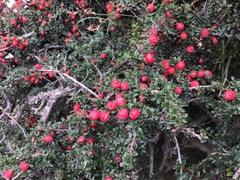
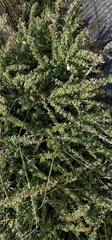 20 photographs ›
Summary
Cotoneaster integrifolius, the entire-leaved cotoneaster, is a species of Cotoneaster that is a low growing shrub. It has been grown as an ornamental plant in gardens and public rock gardens. It has been introduced to Ireland, but has become naturalised. It produces a red berry-like pome fruit that are an important food source for birds that disperse the seeds in their droppings. More on Wikipedia ›
Quoted from Wikipedia, "Cotoneaster integrifolius", CC BY-SA 4.0.
About the genus · Cotoneaster
Cotoneaster is a genus of flowering plants in the rose family, Rosaceae, native to the Palaearctic region, with a strong concentration of diversity in the genus in the mountains of southwestern China and the Himalayas. They are related to hawthorns (Crataegus), firethorns (Pyracantha), photinias (Photinia), and rowans (Sorbus).
Quoted from Wikipedia, "Cotoneaster", CC BY-SA 4.0.
Cultivation
Climate across the habitat
Natural habitat
Photographs
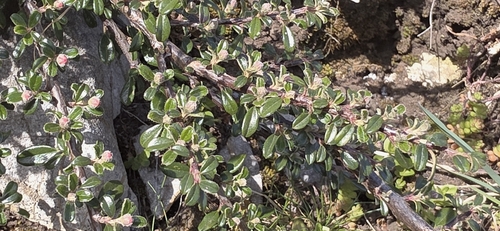
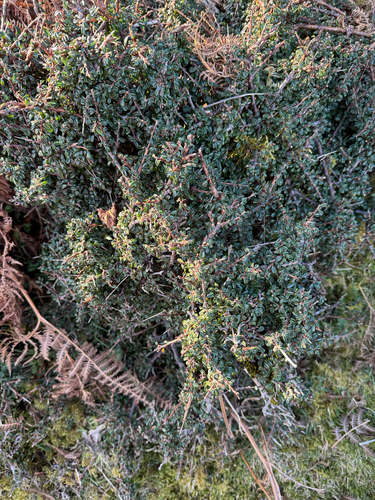
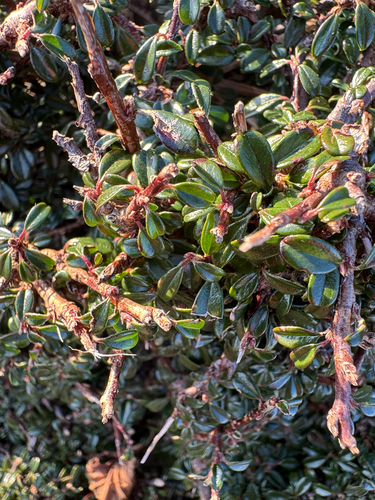
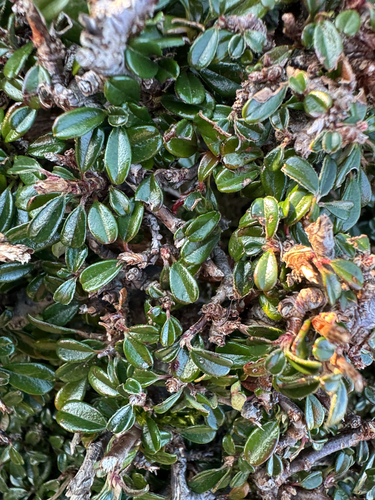
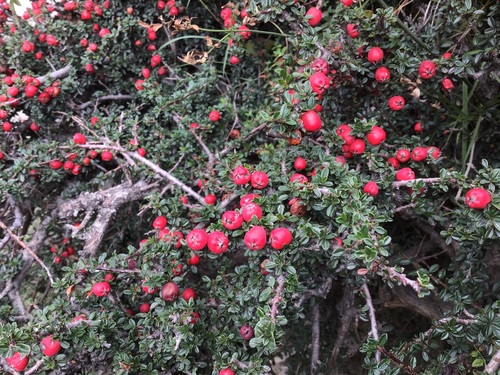

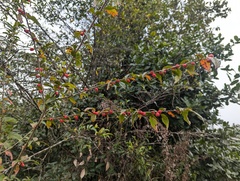
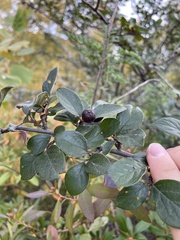
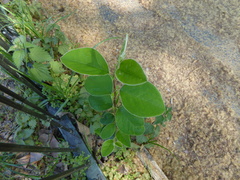
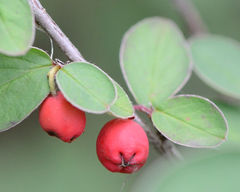
Photographs: (c) Barry Stewart, some rights reserved (CC BY); (c) Rosy Thomson, some rights reserved (CC BY) (3); (c) 王天明, some rights reserved (CC BY); (c) Phill Robinson, some rights reserved (CC BY).
Related
Other Cotoneaster 101 in the reference
 Cotoneaster acuminatus Acuminate cotoneaster Photo: CC BY, Sagnik Dutta Roy
 Cotoneaster acutifolius Peking cotoneaster Photo: CC BY, Jane Charlen
 Cotoneaster adpressus Creeping cotoneaster Photo: CC BY, Remi Aleksander Nielsen
 Cotoneaster affinis Purpleberry cotoneaster Photo: CC BY, jamie-aa
 Cotoneaster alaunicus Rosaceae Photo: CC BY, Fyodor Pudovikov
 Cotoneaster ambiguus Ambiguous Cotoneaster Photo: CC BY-SA, Jens Kristiansen
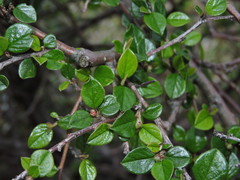 Cotoneaster apiculatus Cranberry cotoneaster Photo: CC BY, Jacy Chen
 Cotoneaster armenus Rosaceae Photo: CC BY-SA, Krzysztof Ziarnek, Kenraiz
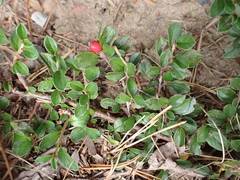 Cotoneaster ascendens Ascending Cotoneaster Photo: CC0, author not stated Cotoneaster beimashanensis Rosaceae Cotoneaster bradyi Brady's Cotoneaster
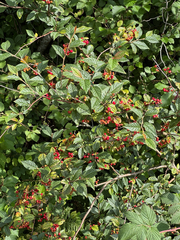 Cotoneaster bullatus Hollyberry cotoneaster Photo: CC BY, Rosy Thomson all 102 ›
Names & registers
Also known as Caragana integrifolia; Cotoneaster brandisii; Cotoneaster brevirameus; Cotoneaster buxifolius var. lanatus; Cotoneaster buxifolius var. marginatus and 17 more. (GBIF Backbone)
Under another author Cotoneaster microphyllus Lodd. and Cotoneaster microphyllus T.T.Yu is an older name of this species, not Cotoneaster microphyllus, a species of the reference. (GBIF Backbone)
The record
Every figure here is derived from public data by a stated rule and names its source; nothing about this species is written for its page by a person or by AI, apart from the marked, credited quotations. How →
Where this page came from built 2026-10-21
gbif.species answeredasked 2026-10-21gbif.synonyms answeredasked 2026-10-21gbif.vernacular answeredasked 2026-10-21names fetched 2026-10-21wcvp.distribution answeredas of 2026-06-04gbif.occurrences answeredas of 2026-10-21GBIF occurrence download https://doi.org/10.15468/dl.hbdw64, of 2026-10-21; 17 records within 1 km of a botanic garden, herbarium or zoo left out (14 at a botanic garden or arboretum, 1 at a herbarium, 2 at a zoo; Wikidata's list)climate nothing to reportasked 2026-10-21only 1 distinct land cell of the climate grid holds an in-range record placed to within 10 km; three are needed for an envelopewikidata answeredasked 2026-10-21wikipedia answeredasked 2026-10-21inat.photos.wild answeredasked 2026-10-22from iNaturalist's open data of 2026-09-27: research-grade observations with an open-licence photograph, the 24 whose photographs iNaturalist received last (the open data holds no votes); filled 2026-10-22inat.photos.cultivated not askedgbif.media answeredasked 2026-10-21openalex not askednot yet asked for this reference; a later fill takes the papers from OpenAlex's snapshotEvery source is recorded as having answered, reported nothing, refused, failed, not been asked, or answered twice where one answer is taken (“not taken: two items answered”), and, for a source asked when this page was built, when: the figures are as the source held them that day; a source read from a file (Kew's World Checklist, a GBIF download) says "as of" the file's day instead; a row carried from an earlier build of the page names that build instead. Only “nothing to report” is ever shown as an absence. Records came from 58 datasets via GBIF.org; each carries its own licence.