Crassothonna agaatbergensis Swanepoel
Photographs not checked
iNaturalist was skipped (not asked) when this page was built. Not asked, or not answered, is not "none": nothing here claims there is none. Why the site says it this way.Summary
Crassothonna agaatbergensis is a species of the genus Crassothonna in the family Asteraceae, and is found only in the northern part of the Skeleton Coast (Namib Desert) in the Kaokoveld Centre of Endemism, northwestern Namibia.
Quoted from Wikipedia, "Crassothonna agaatbergensis", CC BY-SA 4.0.
About the genus · Crassothonna
Crassothonna is a genus of flowering plants belonging to the family Asteraceae. The species assigned to Crassothonna are hairless herbaceous or woody plants with alternate, simple, cylindrical to globose, succulent, green to bluish or greyish leaves. The flowerheads may consist of only yellow disc florets or combine central yellow disc florets with yellow or in one species white ray florets around the margin. More on Wikipedia ›
Quoted from Wikipedia, "Crassothonna", CC BY-SA 4.0.
Cultivation
Climate across the habitat
Natural habitat
Photographs
Related
Other Crassothonna 14 in the reference
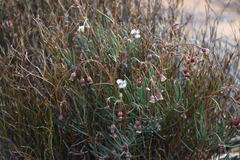 Crassothonna alba Asteraceae Photo: CC BY-SA, Tony Rebelo
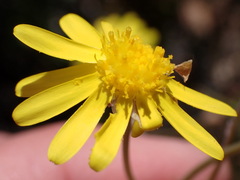 Crassothonna cacalioides Asteraceae Photo: CC BY-SA, Nicola van Berkel
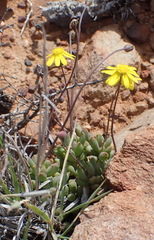 Crassothonna capensis Little Pickles Photo: CC BY-SA, Nicola van Berkel
 Crassothonna clavifolia Asteraceae Photo: CC BY-SA, Andrew Hankey
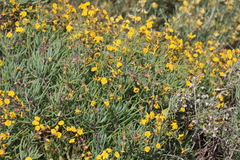 Crassothonna cylindrica Asteraceae Photo: CC BY-SA, Tony Rebelo
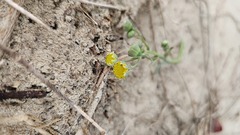 Crassothonna discoidea Asteraceae Photo: CC0, author not stated
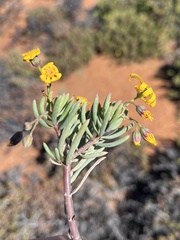 Crassothonna floribunda Asteraceae Photo: CC BY-SA, Dave U Crassothonna moniliformis Asteraceae
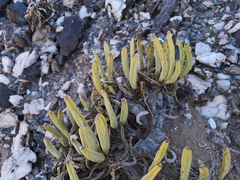 Crassothonna opima Asteraceae Photo: CC BY-SA, leandra-k_89
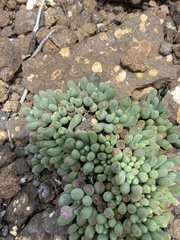 Crassothonna patula Asteraceae Photo: CC BY-SA, Janine Steytler
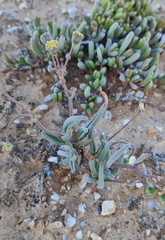 Crassothonna protecta Asteraceae Photo: CC BY, Andreas Schneider
 Crassothonna rechingeri Asteraceae Photo: CC BY-SA, Tony Rebelo all 15 ›
Names & registers
The record
Every figure here is derived from public data by a stated rule and names its source; nothing about this species is written for its page by a person or by AI, apart from the marked, credited quotations. How →
Where this page came from built 2026-10-21
gbif.species answeredasked 2026-10-21gbif.synonyms answeredasked 2026-10-21gbif.vernacular answeredasked 2026-10-21names fetched 2026-10-21wcvp.distribution answeredas of 2026-06-04gbif.occurrences nothing to reportasked 2026-10-21climate nothing to reportasked 2026-10-21no georeferenced record inside the rangewikidata answeredasked 2026-10-21wikipedia answeredasked 2026-10-21inat.photos.wild nothing to reportasked 2026-10-22from iNaturalist's open data of 2026-09-27: research-grade observations with an open-licence photograph, the 24 whose photographs iNaturalist received last (the open data holds no votes); filled 2026-10-22inat.photos.cultivated not askedgbif.media nothing to reportasked 2026-10-21commons nothing to reportasked 2026-10-21openalex not askednot yet asked for this reference; a later fill takes the papers from OpenAlex's snapshotEvery source is recorded as having answered, reported nothing, refused, failed, not been asked, or answered twice where one answer is taken (“not taken: two items answered”), and, for a source asked when this page was built, when: the figures are as the source held them that day; a source read from a file (Kew's World Checklist, a GBIF download) says "as of" the file's day instead; a row carried from an earlier build of the page names that build instead. Only “nothing to report” is ever shown as an absence.