
Crinum thaianum J.Schulze
Onion Plant; Thai Water Onion; Water Onion


 12 photographs ›
Summary
Crinum thaianum, also called the Thai onion plant or water onion, or Phlap Phueng Than, is an emergent plant species, endemic to the coastal plain of Ranong and Phang Nga Provinces, Thailand. Its natural habitat is to grow along the banks of flowing, medium- to fast-running streams, where its roots and bulb are submerged in the sediment, while its leaves grow long in the current and can access fresh air at the surface. When in bloom, the flower is an umbel of large, showy blossoms above the waterline. These growth habits make it a popular addition for tropical aquaria, and it is sold in many regions to be used specifically for growth within displays of tropical fish. More on Wikipedia ›
Quoted from Wikipedia, "Crinum thaianum", CC BY-SA 4.0.
About the genus · Crinum
Crinum is a genus of about 180 species of perennial plants that have large showy flowers on leafless stems, and develop from bulbs. They are found in seasonally moist areas, including marshes, swamps, depressions and along the sides of streams and lakes in tropical and subtropical areas worldwide.
Quoted from Wikipedia, "Crinum", CC BY-SA 4.0.
Cultivation
Grouped as a bulb, tuber or caudex, listed under the family Amaryllidaceae in the archetype table, and Kew describes it as “bulbous geophyte or helophyte”.
How this section is made
Each card states this species' habitat figures with their sources, and what two fixed rules read from them; nothing here says what the plant does, wants or tolerates. The rules · the terms.
Group. Listed under the family Amaryllidaceae in the archetype table, and Kew describes it as “bulbous geophyte or helophyte”. A group is taken only where Kew's description of the species agrees with the table's listing. The table gives no figure and no prose; the cold floor is the habitat's alone.
Climate across the habitat
Natural habitat
How this section is made
Photographs


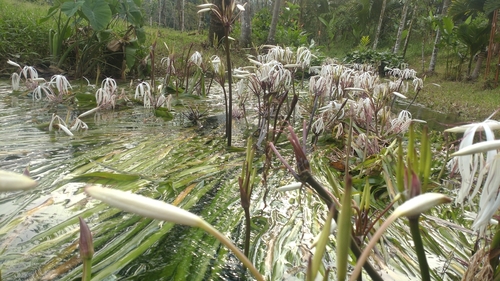

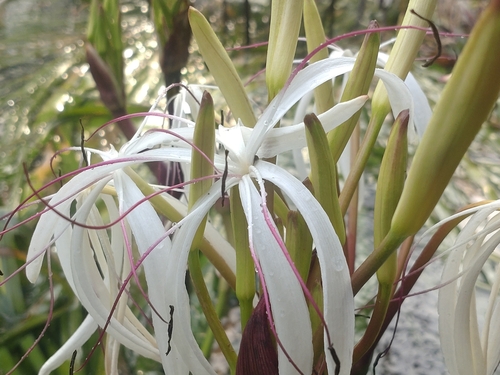
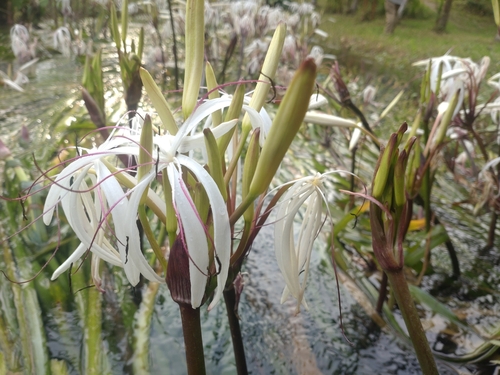
Photographs: (c) Utain Pummarin, some rights reserved (CC BY) (6).
Related
Other Crinum 22 in the reference
 Crinum × amabile Amaryllidaceae Photo: CC BY, Raúl A. Ruiz M.
 Crinum americanum Seven sisters Photo: CC BY, Jody Shugart
 Crinum amoenum Amaryllidaceae Photo: CC BY, desertnaturalist
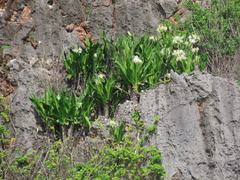 Crinum asiaticum Poisonbulb Photo: CC BY, ian_mcallan Crinum balfourii Amaryllidaceae
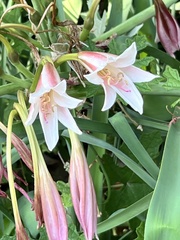 Crinum bulbispermum Hardy swamplily Photo: CC0, author not stated
 Crinum calamistratum Amaryllidaceae Photo: CC0, Daderot
 Crinum campanulatum Albany Swamplily Photo: CC BY, Henry de Lange
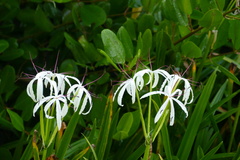 Crinum erubescens Amaryllidaceae Photo: CC0, author not stated Crinum firmifolium Amaryllidaceae
 Crinum flaccidum Darling Lily Photo: CC BY-SA, Ruth Palsson
 Crinum graminicola Grass Crinum Photo: CC0, author not stated all 23 ›
Names & registers
The record
Every figure here is derived from public data by a stated rule and names its source; nothing about this species is written for its page by a person or by AI, apart from the marked, credited quotations. How →
Where this page came from built 2026-10-22
gbif.species answeredasked 2026-10-22gbif.synonyms answeredasked 2026-10-22gbif.vernacular answeredasked 2026-10-22names fetched 2026-10-22wcvp.distribution answeredas of 2026-06-04gbif.occurrences answeredas of 2026-10-21GBIF occurrence download https://doi.org/10.15468/dl.hbdw64, of 2026-10-21climate nothing to reportasked 2026-10-2219 in-range records, none placed to within 10 kmwikidata answeredasked 2026-10-22wikipedia answeredasked 2026-10-22inat.photos.wild answeredasked 2026-10-22from iNaturalist's open data of 2026-09-27: research-grade observations with an open-licence photograph, the 24 whose photographs iNaturalist received last (the open data holds no votes); filled 2026-10-22inat.photos.cultivated not askedgbif.media answeredasked 2026-10-22none of the photographs on this page is credited to GBIF: those shown are other sources', and GBIF's were the same photographs or were set aside by the photograph rulesopenalex not askednot yet asked for this reference; a later fill takes the papers from OpenAlex's snapshotEvery source is recorded as having answered, reported nothing, refused, failed, not been asked, or answered twice where one answer is taken (“not taken: two items answered”), and, for a source asked when this page was built, when: the figures are as the source held them that day; a source read from a file (Kew's World Checklist, a GBIF download) says "as of" the file's day instead; a row carried from an earlier build of the page names that build instead. Only “nothing to report” is ever shown as an absence. Records came from 4 datasets via GBIF.org; each carries its own licence.