Echinopsis spinibarbis (Otto ex Pfeiff.) A.E.Hoffm.
English names not checked: Wikidata's common names were not read for this page.
Photographs not checked
iNaturalist and GBIF media were skipped (not asked) when this page was built. Not asked, or not answered, is not "none": nothing here claims there is none. Why the site says it this way.Summary
Echinopsis spinibarbis, or quisco, is a species of cactus found in Chile.
Quoted from Wikipedia, "Echinopsis spinibarbis", CC BY-SA 4.0.
About the genus · Echinopsis
Echinopsis is a genus of cacti native to South America, sometimes known as hedgehog cactus, sea-urchin cactus or Easter lily cactus. As of November 2025, Plants of the World Online used a broad circumscription of the genus, resulting in about 80 accepted species, ranging from large and treelike types to small globose cacti. The name derives from echinos hedgehog or sea urchin, and opsis appearance, a reference to these plants' dense coverings of spines.
Quoted from Wikipedia, "Echinopsis", CC BY-SA 4.0.
Cultivation
Grouped as a cactus or succulent, listed under the genus Echinopsis in the archetype table, and Kew describes it as “succulent subshrub or shrub”.
How this section is made
Each card states this species' habitat figures with their sources, and what two fixed rules read from them; nothing here says what the plant does, wants or tolerates. The rules · the terms.
Group. Listed under the genus Echinopsis in the archetype table, and Kew describes it as “succulent subshrub or shrub”. A group is taken only where Kew's description of the species agrees with the table's listing. The table gives no figure and no prose; the cold floor is the habitat's alone.
Climate across the habitat
Natural habitat
This species has no GBIF key of its own. Its records are GBIF's under the key of the name Kew's World Checklist holds as this plant: 3951615 (Trichocereus spinibarbis (Otto ex Pfeiff.) F.Ritter, 0 records). No name was matched to GBIF; the keys are read from Kew's synonymy. How.
Photographs
Related
Other Echinopsis 48 in the reference
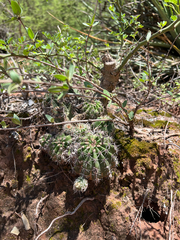 Echinopsis albispinosa Cactaceae Photo: CC BY, Kay Urban
 Echinopsis ancistrophora Cactaceae Photo: CC BY-SA, Pete Cupial-Jones
 Echinopsis angelesiae Cactaceae Photo: CC0, Daderot
 Echinopsis arachnacantha Cactaceae Photo: CC BY, Paul Kaluschke
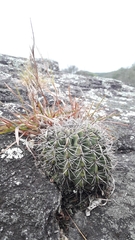 Echinopsis aurea Cactaceae Photo: CC0, author not stated
 Echinopsis backebergii Cactaceae Photo: CC BY, Paul Kaluschke
 Echinopsis bridgesii Cactaceae Photo: CC BY, msscacti
 Echinopsis bruchii Cactaceae Photo: CC BY, Yazz'
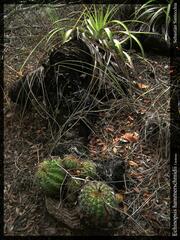 Echinopsis calochlora Cactaceae Photo: CC0, author not stated
 Echinopsis calorubra Cactaceae Photo: CC BY-SA, Michael Wolf
 Echinopsis camarguensis Cactaceae Photo: CC BY-SA, Frank Vincentz
 Echinopsis cardenasiana Cactaceae Photo: CC BY-SA, Pete Cupial-Jones all 49 ›
Names & registers
Also known as Cereus spinibarbis; Eulychnia spinibarbis; Echinocereus spinibarbis; Trichocereus spinibarbis. (WCVP, RBG Kew)
The record
Every figure here is derived from public data by a stated rule and names its source; nothing about this species is written for its page by a person or by AI, apart from the marked, credited quotations. How →
Where this page came from built 2026-10-22
kew.names answeredas of 2026-06-04Kew's entry Echinopsis spinibarbis (Otto ex Pfeiff.) A.E.Hoffm. (plant_name_id 2783653), read from Kew's names filegbif.species not askedGBIF's backbone holds no one accepted species of this name, and a name it holds only as another species' synonym is not taken for this one, so GBIF's records were not askedgbif.synonyms not askedGBIF's backbone holds no one accepted species of this name, and a name it holds only as another species' synonym is not taken for this one, so GBIF's records were not askedgbif.vernacular not askedGBIF's backbone holds no one accepted species of this name, and a name it holds only as another species' synonym is not taken for this one, so GBIF's records were not askedwcvp.distribution answeredas of 2026-06-04gbif.occurrences nothing to reportasked 2026-10-22this species has no GBIF key of its own; its records are read under GBIF's keys for the names Kew's file holds as this plant, never by a name matched; 0 records of GBIF's key 3951615, Trichocereus spinibarbis (Otto ex Pfeiff.) F.Ritter (Kew's file holds it as Trichocereus spinibarbis (Otto ex Pfeiff.) F.Ritter (synonym under Echinopsis spinibarbis (Otto ex Pfeiff.) A.E.Hoffm.)): GBIF occurrence search APIclimate nothing to reportasked 2026-10-22no georeferenced record inside the rangewikidata answeredasked 2026-10-22found by Kew's IPNI identifier 947197-1, POWO 947197-1wikipedia answeredasked 2026-10-22inat.taxon not askedinat.photos.wild not askedinat.photos.cultivated not askedgbif.media not askedGBIF's backbone holds no one accepted species of this name, and a name it holds only as another species' synonym is not taken for this one, so GBIF's records were not askedcommons nothing to reportasked 2026-10-22openalex not askednot yet asked for this reference; a later fill takes the papers from OpenAlex's snapshotEvery source is recorded as having answered, reported nothing, refused, failed, not been asked, or answered twice where one answer is taken (“not taken: two items answered”), and, for a source asked when this page was built, when: the figures are as the source held them that day; a source read from a file (Kew's World Checklist, a GBIF download) says "as of" the file's day instead; a row carried from an earlier build of the page names that build instead. Only “nothing to report” is ever shown as an absence.