
Erysimum caboverdeanum (A.Chev.) Sunding
Cape Verde Wallflower
Cited as Kew's World Checklist cites it, Erysimum caboverdeanum (A.Chev.) Sunding: GBIF's backbone key for this page carries the name with another author, (Chev.) Sunding.

 3 photographs ›
Summary
Erysimum caboverdeanum is a species of flowering plants of the family Brassicaceae. The species is endemic to Cape Verde. It is listed as a critically endangered plant by the IUCN. The species was first described by Auguste Chevalier in 1935 as Matthiola caboverdeana; it was placed into the genus Erysimum by Per Øgle Sunding in 1974. More on Wikipedia ›
Quoted from Wikipedia, "Erysimum caboverdeanum", CC BY-SA 4.0.
Cultivation
Climate across the habitat
Natural habitat
How this section is made
Photographs


Photographs: James Steakley, CC BY-SA 3.0, via Wikimedia Commons; Krzysztof Ziarnek, Kenraiz, CC BY-SA 4.0, via Wikimedia Commons.
Related
Other Erysimum 36 in the reference
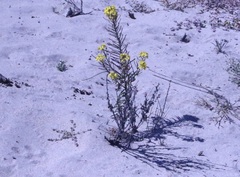 Erysimum ammophilum San Francisco wallflower Photo: CC BY, lazarus
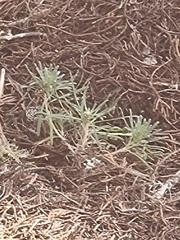 Erysimum arbuscula Brassicaceae Photo: CC BY, Vítor Jorge
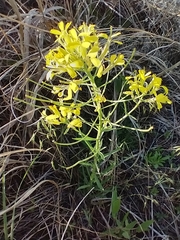 Erysimum asperum Western wallflower Photo: CC BY, Tom Norton
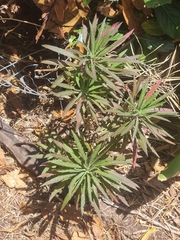 Erysimum bicolor Brassicaceae Photo: CC BY, Vítor Jorge
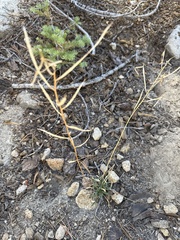 Erysimum capitatum Western wallflower Photo: CC BY, Dena
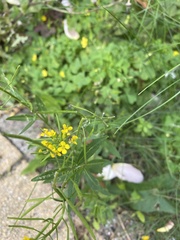 Erysimum cheiranthoides Treacle mustard Photo: CC BY, Илья Руденко
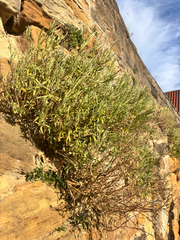 Erysimum × cheiri Wallflower Photo: CC0, author not stated
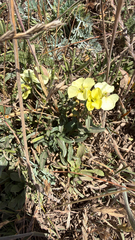 Erysimum concinnum Curly wallflower Photo: CC0, author not stated
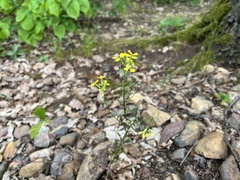 Erysimum crepidifolium Brassicaceae Photo: CC BY, Pavel Kacl
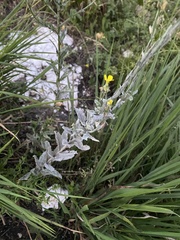 Erysimum cuspidatum Brassicaceae Photo: CC BY, Наталья Пикалова
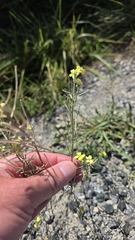 Erysimum diffusum Diffuse wallflower Photo: CC BY, Christoph Moning
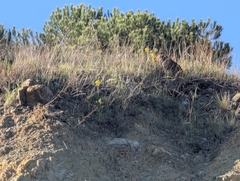 Erysimum franciscanum San Francisco wallflower Photo: CC BY, Alexander Wentworth all 37 ›
Names & registers
Also known as Cheiranthus caboverdeanus; Matthiola caboverdeana. (GBIF Backbone)
The record
Every figure here is derived from public data by a stated rule and names its source; nothing about this species is written for its page by a person or by AI, apart from the marked, credited quotations. How →
Where this page came from built 2026-10-22
gbif.species answeredasked 2026-10-22GBIF's key 3048276 is Erysimum caboverdeanum (Chev.) Sunding; the page links Kew's Erysimum caboverdeanum (A.Chev.) Sunding, and the name is cited as Kew cites itgbif.synonyms answeredasked 2026-10-22gbif.vernacular answeredasked 2026-10-22names fetched 2026-10-22wcvp.distribution answeredas of 2026-06-04gbif.occurrences answeredas of 2026-10-21GBIF occurrence download https://doi.org/10.15468/dl.hbdw64, of 2026-10-21climate nothing to reportasked 2026-10-227 in-range records, none placed to within 10 kmwikidata answeredasked 2026-10-22wikipedia answeredasked 2026-10-22inat.photos.wild nothing to reportasked 2026-10-22from iNaturalist's open data of 2026-09-27: research-grade observations with an open-licence photograph, the 24 whose photographs iNaturalist received last (the open data holds no votes); filled 2026-10-22inat.photos.cultivated not askedgbif.media nothing to reportasked 2026-10-22commons answeredasked 2026-10-22openalex not askednot yet asked for this reference; a later fill takes the papers from OpenAlex's snapshotEvery source is recorded as having answered, reported nothing, refused, failed, not been asked, or answered twice where one answer is taken (“not taken: two items answered”), and, for a source asked when this page was built, when: the figures are as the source held them that day; a source read from a file (Kew's World Checklist, a GBIF download) says "as of" the file's day instead; a row carried from an earlier build of the page names that build instead. Only “nothing to report” is ever shown as an absence. Records came from 2 datasets via GBIF.org; each carries its own licence.