Eugenia fajardensis (Krug & Urb.) Urb.
English names not checked: Wikidata's common names were not read for this page.
Photographs not checked
iNaturalist and GBIF media were skipped (not asked) when this page was built. Not asked, or not answered, is not "none": nothing here claims there is none. Why the site says it this way.GBIF's records not checked. GBIF's backbone holds no one accepted species of this name, and a name it holds only as another species' synonym is not taken for this one, so GBIF's records were not asked. So this page has no points on its map, no map marker, no habitat climate, no cultivation sheet and no species of nearest climate; the range is Kew's. Not a statement that none exist. How.
Summary
Eugenia fajardensis (also called guayabote de costa, or Fajardo guayabacón) is a species of plant endemic to Puerto Rico. Today it is limited to the northeastern corner of the island, specifically in the municipality of Fajardo within the Northeast Ecological Corridor, and to the island-municipalities of Vieques and Culebra. First discovered by German botanist Paul Sintenis between 1884 and 1887, it remained largely forgotten due, partly, to the fact that Sintenis' first set of his Puerto Rican collections was mostly destroyed at Dahlem (Berlin) during the Second World War. In 2005 Puerto Rican botanists Juan Carlos Trejo, with Miguel Vives, Marcos Caraballo and Tomás Carlo "re-discovered" the species in Vieques Island.
Quoted from Wikipedia, "Eugenia fajardensis", CC BY-SA 4.0.
About the genus · Eugenia
Eugenia is a genus of flowering plants in the myrtle family Myrtaceae. It has a worldwide, although highly uneven, distribution in tropical and subtropical regions. The bulk of the approximately 1,100 species occur in the New World tropics, especially in the eastern Brazil's northern Andes, the Caribbean, and the Atlantic Forest. More on Wikipedia ›
Quoted from Wikipedia, "Eugenia", CC BY-SA 4.0.
Cultivation
Climate across the habitat
Natural habitat
Photographs
Related
Similar habitat climate Not checked: GBIF's records were not asked (why, under the name), and the nearest habitat climates are read from the climate they give.
Other Eugenia 45 in the reference
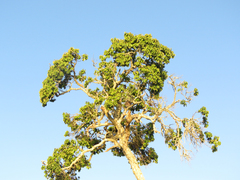 Eugenia astringens Myrtaceae Photo: CC BY, Diogo Luiz
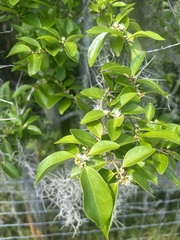 Eugenia axillaris White stopper Photo: CC BY, Kristály Cravens-Liszak
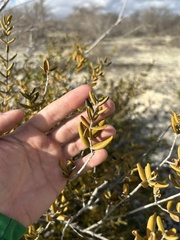 Eugenia azeda Myrtaceae Photo: CC BY, Thomaz de Carvalho Callado
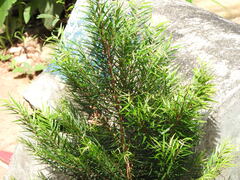 Eugenia biflora Blackrodwood Photo: CC BY, Alexis López Hernández
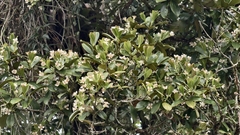 Eugenia brasiliensis Grumichama Photo: CC BY, fmunoz
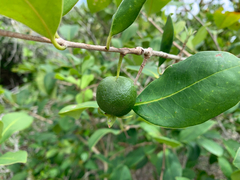 Eugenia bunchosiifolia Myrtaceae Photo: CC BY, Gabriel Jovêncio Ribeiro
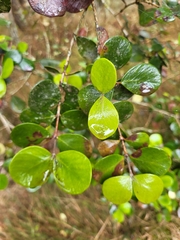 Eugenia buxifolia Myrtaceae Photo: CC BY, Jacek Pietruszewski
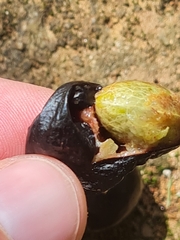 Eugenia candolleana Rainforest Plum Photo: CC0, author not stated
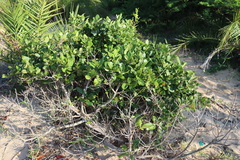 Eugenia capensis Dune myrtle Photo: CC BY-SA, Tony Rebelo
 Eugenia capuli Myrtaceae Photo: CC BY, Juan Cruzado Cortés
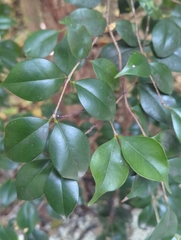 Eugenia confusa Redberry stopper Photo: CC BY, Tom Field Eugenia copacabanensis Myrtaceae all 46 ›
Names & registers
Also known as Eugenia fragrans var. fajardensis. (WCVP, RBG Kew)
The record
Every figure here is derived from public data by a stated rule and names its source; nothing about this species is written for its page by a person or by AI, apart from the marked, credited quotations. How →
Where this page came from built 2026-10-22
kew.names answeredas of 2026-06-04Kew's entry Eugenia fajardensis (Krug & Urb.) Urb. (plant_name_id 75178), read from Kew's names filegbif.species not askedGBIF's backbone holds no one accepted species of this name, and a name it holds only as another species' synonym is not taken for this one, so GBIF's records were not askedgbif.synonyms not askedGBIF's backbone holds no one accepted species of this name, and a name it holds only as another species' synonym is not taken for this one, so GBIF's records were not askedgbif.vernacular not askedGBIF's backbone holds no one accepted species of this name, and a name it holds only as another species' synonym is not taken for this one, so GBIF's records were not askedgbif.occurrences not askedGBIF's backbone holds no one accepted species of this name, and a name it holds only as another species' synonym is not taken for this one, so GBIF's records were not askedwcvp.distribution answeredas of 2026-06-04climate not askedGBIF's backbone holds no one accepted species of this name, and a name it holds only as another species' synonym is not taken for this one, so GBIF's records were not asked, and the habitat climate is read only from themwikidata answeredasked 2026-10-22found by Kew's IPNI identifier 98379-2, POWO 98379-2wikipedia answeredasked 2026-10-22inat.photos.wild not askedinat.photos.cultivated not askedgbif.media not askedGBIF's backbone holds no one accepted species of this name, and a name it holds only as another species' synonym is not taken for this one, so GBIF's records were not askedcommons nothing to reportasked 2026-10-22openalex not askednot yet asked for this reference; a later fill takes the papers from OpenAlex's snapshotEvery source is recorded as having answered, reported nothing, refused, failed, not been asked, or answered twice where one answer is taken (“not taken: two items answered”), and, for a source asked when this page was built, when: the figures are as the source held them that day; a source read from a file (Kew's World Checklist, a GBIF download) says "as of" the file's day instead; a row carried from an earlier build of the page names that build instead. Only “nothing to report” is ever shown as an absence.