 75 photographs ›
At a glance
- Jan, under 5 mm of rain
- Feb, under 5 mm of rain
- Mar
- Apr
- May
- Jun, shaded
- Jul, shaded
- Aug, shaded
- Sep, shaded
- Oct
- Nov
- Dec
Summary
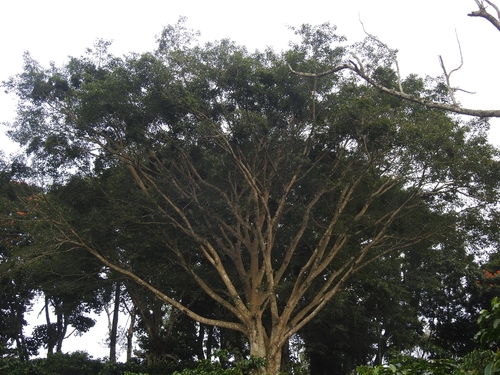
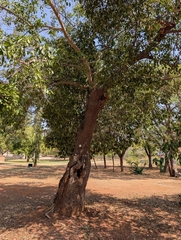
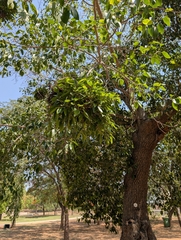
Ficus amplissima, also known as the Indian bat tree, Indian bat fig, Pimpri, Pipri (Piparee), Pipali or Bilibasari mara (in the Kannada language) is a tree species of flowering plants that belongs to Moraceae, the fig or mulberry family. It is native to Central and southern Peninsular India, Sri Lanka and Maldives, having a significant distribution throughout Western Ghats of India. It is most commonly planted to provide shade in coffee plantations due to its dense and wide foliage. The ripened figs attract many birds, especially during the spring.
Quoted from Wikipedia, "Ficus amplissima", CC BY-SA 4.0.
About the genus · Ficus
Ficus is a genus of about 850 species of woody trees, shrubs, vines, epiphytes and hemiepiphytes in the family Moraceae. Collectively known as fig trees or figs, they are native throughout the tropics with a few species extending into the semi-warm temperate zone. Many Ficus species are grown for their fruits, though only two species, the common fig and sycamore fig, are cultivated to any extent, with common fig being the type species and by far the most important. More on Wikipedia ›
Quoted from Wikipedia, "Ficus", CC BY-SA 4.0.
Cultivation
Grouped as a tropical foliage plant, listed under the genus Ficus in the archetype table, and Kew describes it as “tree”, “seasonally dry tropical”.
Seasons
The rain rule reads a rainy season with no name: 70% of the median year's rain (1,079 mm of 1,338 mm) falls in June to September, whose mean temperature, 25.3 °C, is within half a degree of the year's, 24.8 °C, so it is neither the cooler nor the warmer part of the year. Months are the habitat's, northern hemisphere; shifted six months for a southern-hemisphere collection: December to March.
Rain
1,338 mm in the median year at the habitat, 1,079 mm of it June to September. Wettest month July at 389 mm, driest months (2 at 3 mm); 2 months under 5 mm. Across the grid cells of the range the year's total runs 820 mm to 3,813 mm, the 10th to 90th percentile of each cell's own year. The median of the cells' own yearly totals, 1,378 mm, is the year's rain at the top of the page; the 1,338 mm here is the median year's, the twelve monthly medians added, which the rain rule reads. Habitat calendar, northern hemisphere; median year across the grid cells of the range, CHELSA.
Light
Open sky over the habitat: 24 to 45 mol/m²/day across the year (daily light integral, median year across the grid cells of the range, CHELSA; the lowest 10th-percentile month across the cells is 20, the highest 90th-percentile month 47).
Warmth and air
Coldest: the 1st-percentile night over 44 years at a typical spot in the range is 10.8 °C, the absolute minimum 7.5 °C, no frost in 44 years (NASA POWER daily minima). Warmest: the 99th-percentile day is 43.0 °C. Monthly means: the coldest month's mean nightly low 15.4 °C in January (across the grid cells of the range 12.6 °C to 18.2 °C), the warmest month's mean daily high 33.9 °C in April (median year across the grid cells of the range, CHELSA). Cold floor: 10.8 °C, which is the 1st-percentile night over 44 years at a typical spot in the range (NASA POWER).
Relative humidity at the habitat: 48 to 71% across the year (monthly means, median year across the grid cells of the range, CHELSA). A figure about the air, saying nothing about how the plant takes water.
How this section is made
Each card states this species' habitat figures with their sources, and what two fixed rules read from them; nothing here says what the plant does, wants or tolerates. The rules · the terms.
Seasons. Read from the median year of CHELSA monthly rainfall and mean temperature across the grid cells of the range: the rain rule takes the smallest set of months carrying 70% of the rain and calls it winter when its mean is more than half a degree below the year's, summer when more than that above, and neither in between; the temperature rule, used only under 120 mm, names the cooler six months when they are at least a degree cooler than the other six. Months are shifted for the other hemisphere only where the temperature curve moves 4 °C or more and the habitat lies 10° or more from the equator. A reading of the curves, not an observation of the plant.
Rain. CHELSA monthly precipitation, median year across the grid cells of the range. The rain that falls where the species is recorded; nothing about how the plant takes water.
Light. CHELSA shortwave radiation at each envelope cell, a daily-mean flux taken to a daily total and converted at 2.07 mol of PAR per MJ. The sky over the habitat, measured; what reaches a plant under a rock, a shrub or a shade cloth is not.
Temperature. NASA POWER daily minima and maxima over 44 years at a typical spot in the range, lapse-corrected +3 m to its elevation; CHELSA monthly means, median year across the grid cells of the range. The cold floor is the 1st-percentile night named in its sentence. Not a measured survival limit for any plant in a pot.
Humidity. CHELSA relative humidity, median year across the grid cells of the range.
Group. Listed under the genus Ficus in the archetype table, and Kew describes it as “tree”, “seasonally dry tropical”. A group is taken only where Kew's description of the species agrees with the table's listing. The table gives no figure and no prose; the cold floor is the habitat's alone.
Climate across the habitat
Habitat months, northern hemisphere
Mean daily high from 27 °C in Jul, Aug and Dec to 34 °C in Apr; mean nightly low from 15 °C in Jan to 23 °C in May and Jun. The cold quarter, Dec to Feb, is the three months around the coldest month's mean nightly low. 1,338 mm of rain in the median year (the twelve monthly medians added), the wettest month Jul. The bands show the 10th to 90th percentile across 82 habitat cells. Over 44 years at a typical spot in the range (NASA POWER) the absolute minimum was 7.5 °C and the 99th-percentile day 43.0 °C; neither is dated to a month. Beneath: daily light integral and relative humidity through the year, each on its own scale.
Figures by month
| Figure | Jan | Feb | Mar | Apr | May | Jun | Jul | Aug | Sep | Oct | Nov | Dec |
|---|---|---|---|---|---|---|---|---|---|---|---|---|
| Day °C | 28 / 26–30 | 30 / 28–32 | 33 / 30–35 | 34 / 30–38 | 33 / 28–40 | 30 / 23–36 | 27 / 23–32 | 27 / 23–31 | 28 / 24–32 | 29 / 24–33 | 28 / 24–32 | 27 / 24–30 |
| Night °C | 15 / 13–18 | 16 / 14–20 | 19 / 16–22 | 22 / 19–24 | 23 / 19–27 | 23 / 19–27 | 22 / 18–26 | 22 / 18–25 | 21 / 18–25 | 20 / 17–23 | 18 / 15–22 | 16 / 13–19 |
| Rain mm | 3 / 1–31 | 3 / 1–35 | 9 / 1–82 | 16 / 1–147 | 53 / 8–201 | 187 / 76–702 | 389 / 107–1137 | 303 / 105–785 | 200 / 121–437 | 133 / 37–313 | 34 / 8–283 | 8 / 1–77 |
| DLI | 34 / 31–37 | 39 / 37–41 | 43 / 41–44 | 45 / 37–47 | 43 / 35–47 | 31 / 23–37 | 25 / 20–32 | 24 / 21–32 | 30 / 26–34 | 33 / 28–35 | 32 / 28–33 | 31 / 28–33 |
| RH % | 51 / 46–60 | 48 / 43–57 | 49 / 41–59 | 54 / 41–65 | 59 / 46–70 | 66 / 55–78 | 70 / 61–82 | 71 / 62–81 | 67 / 60–76 | 59 / 50–70 | 54 / 47–67 | 52 / 47–63 |
How this section is made
Natural habitat
How this section is made
Photographs
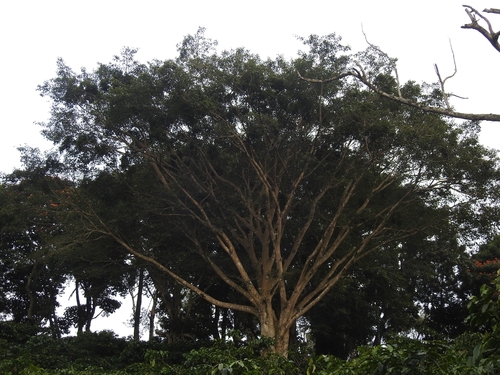
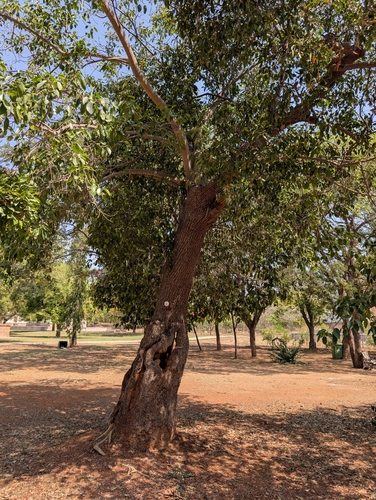
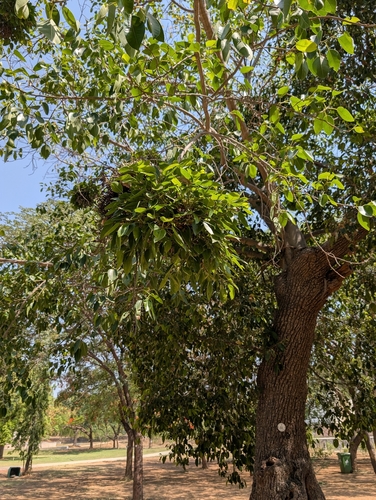
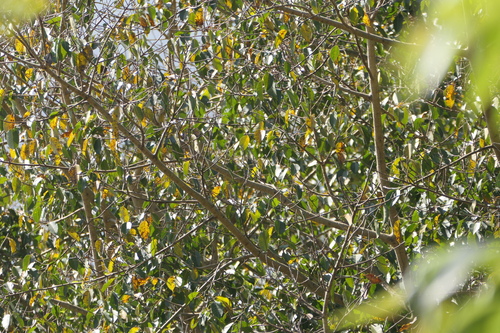
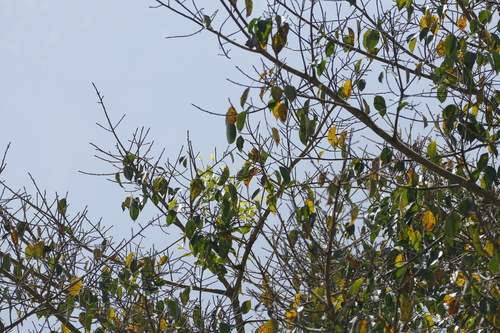
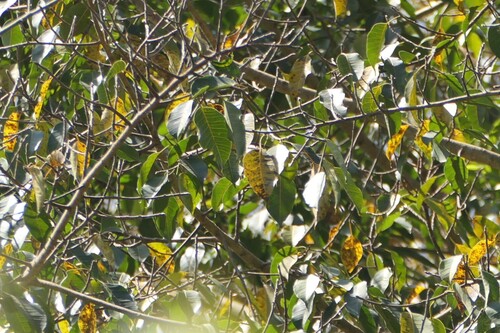
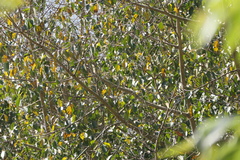
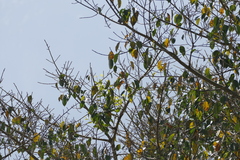
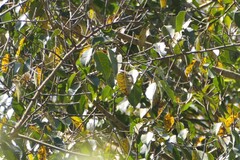
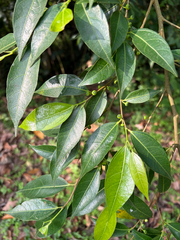
Photographs: (c) rajesh rocky, some rights reserved (CC BY); (c) Ravuri Krishna Chaitanya, some rights reserved (CC BY) (2); (c) Dinesh Valke, some rights reserved (CC BY-SA) (3).
Related
Similar habitat climate The 6 nearest by mean daily high, mean nightly low and rain, month by month. How.
 Celastrus paniculatus Oriental bittersweet Photo: CC BY, Ravuri Krishna Chaitanya
 Bambusa bambos Thorny bamboo Photo: CC BY-SA, Abu Hamas
 Diospyros montana Bombay Ebony Photo: CC BY, Sahaja
 Sapindus trifoliatus Threeleaf soapberry Photo: CC BY, renjus box
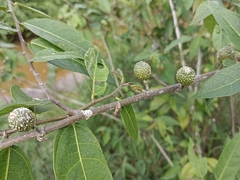 Ficus heterophylla Moraceae Photo: CC BY, renjus box
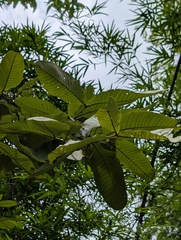 Terminalia elliptica Indian-laurel Photo: CC BY, Ravuri Krishna Chaitanya
Other Ficus 157 in the reference
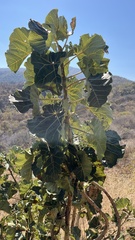 Ficus abutilifolia Large-leaved Rock Fig Photo: CC0, author not stated
 Ficus altissima False banyan Photo: CC BY, Jaro Guzinski
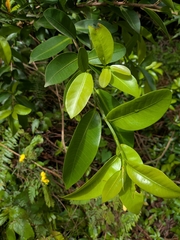 Ficus americana Jamaican cherry fig Photo: CC BY, Guillaume Delaitre
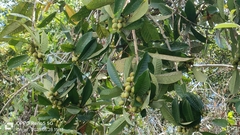
 Ficus ampelos Moraceae Photo: CC BY, 黃美滿
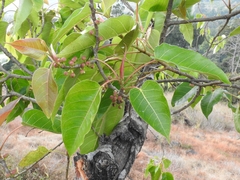
 Ficus annulata Moraceae Photo: CC BY-SA, Ong Jyh Seng
 Ficus arnottiana Indian Rock Fig Photo: CC BY, rajesh rocky
 Ficus aspera Mosaic fig Photo: CC BY-SA, Stan Shebs
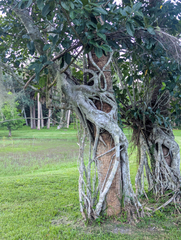 Ficus aurea Florida strangler Photo: CC BY, Tom Field
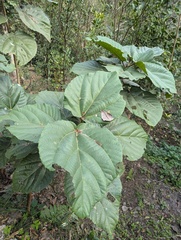 Ficus auriculata Roxburgh fig Photo: CC BY, Sagnik Dutta Roy
 Ficus barteri Moraceae Photo: CC BY-SA, Ji-Elle
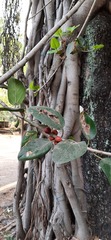 Ficus benghalensis Indian banyan Photo: CC BY, Sayee Girdhari
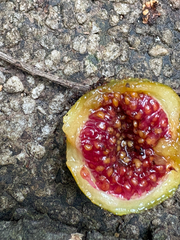 Ficus benguetensis Milk Tree Photo: CC BY, 黃美滿 all 158 ›
Names & registers
Also known as Ficus indica; Ficus pseudobenjamina; Ficus pseudotsiela; Ficus tsiela; Ficus tsjela and 4 more. (GBIF Backbone)
The record
Every figure here is derived from public data by a stated rule and names its source; nothing about this species is written for its page by a person or by AI, apart from the marked, credited quotations. How →
Where this page came from built 2026-10-22
gbif.species answeredasked 2026-10-22gbif.synonyms answeredasked 2026-10-22gbif.vernacular answeredasked 2026-10-22names fetched 2026-10-22wcvp.distribution answeredas of 2026-06-04gbif.occurrences answeredasked 2026-10-22GBIF occurrence download https://doi.org/10.15468/dl.hbdw64, of 2026-10-21; 0 records of GBIF's key 5572488, Ficus tjiela (Miq.) Miq. (Kew's file holds it as Ficus tjiela Miq. (orthographic under Ficus amplissima Sm.)): GBIF occurrence search API; 1 record within 1 km of a botanic garden, herbarium or zoo left out (1 at a zoo; Wikidata's list)climate answeredasked 2026-10-22climate.extremes answeredasked 2026-10-22NASA POWER (MERRA-2) daily 1981–2024, cell 17.50_78.125, lapse-corrected +3 m at 6.5 °C/kmwikidata answeredasked 2026-10-22wikipedia answeredasked 2026-10-22inat.photos.wild answeredasked 2026-10-22from iNaturalist's open data of 2026-09-27: research-grade observations with an open-licence photograph, the 24 whose photographs iNaturalist received last (the open data holds no votes); filled 2026-10-22inat.photos.cultivated not askedgbif.media answeredasked 2026-10-22none of the photographs on this page is credited to GBIF: those shown are other sources', and GBIF's were the same photographs or were set aside by the photograph rulesopenalex not askednot yet asked for this reference; a later fill takes the papers from OpenAlex's snapshotEvery source is recorded as having answered, reported nothing, refused, failed, not been asked, or answered twice where one answer is taken (“not taken: two items answered”), and, for a source asked when this page was built, when: the figures are as the source held them that day; a source read from a file (Kew's World Checklist, a GBIF download) says "as of" the file's day instead; a row carried from an earlier build of the page names that build instead. Only “nothing to report” is ever shown as an absence. Records came from 21 datasets via GBIF.org; each carries its own licence.