


 12 photographs ›
Summary
Garcinia prainiana, known as the button mangosteen or cherapu, is a species of flowering plant in the family Clusiaceae. It is small or medium-sized tree which is native to Peninsular Malaysia and Peninsular Thailand. Its fruit has a flavor similar to its cousin, the purple mangosteen, with an interesting taste some have compared to a tangerine, but unlike its cousin it has a tissue-thin skin rather than a hard rind, making it much easier to eat out-of-hand. Also unlike the purple mangosteen, it can be grown in a container. More on Wikipedia ›
Quoted from Wikipedia, "Garcinia prainiana", CC BY-SA 4.0.
About the genus · Garcinia
Garcinia is a genus of flowering plants in the family Clusiaceae native to the Sundaland bioregion of Asia, America, Australia, tropical and southern Africa, and Polynesia. The number of species is disputed; Plants of the World Online (POWO) recognise up to 400. Commonly, the plants in this genus are called saptrees, mangosteens, or garcinias, and is one of several plants known as by the name "monkey fruit". More on Wikipedia ›
Quoted from Wikipedia, "Garcinia", CC BY-SA 4.0.
Cultivation
Climate across the habitat
Natural habitat
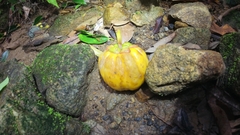
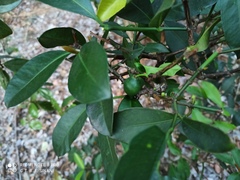
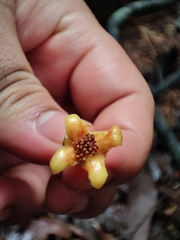
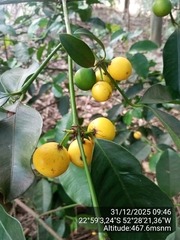
Photographs


Photographs: David J. Stang, CC BY-SA 4.0, via Wikimedia Commons; Tanoh Huma, CC BY-SA 4.0, via Wikimedia Commons (5).
Related
Other Garcinia 32 in the reference
 Garcinia atroviridis Clusiaceae Photo: CC BY, Ooi Qie
 Garcinia brasiliensis Clusiaceae Photo: CC BY, Thomaz Ricardo Favreto Sinani Garcinia celebica Clusiaceae Garcinia cochinchinensis Clusiaceae
 Garcinia cowa Brindal Berry Photo: CC BY, Muhammad HEEMBOO Garcinia cymosa Clusiaceae
 Garcinia dulcis Claudie mangosteen Photo: CC BY-SA, Christian Pirkl Garcinia forbesii Clusiaceae
 Garcinia gardneriana Achacha Photo: CC BY, Paulo C. O. Cunha
 Garcinia gerrardii Forest Garcinia Photo: CC BY-SA, JMK
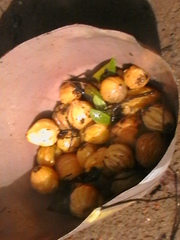 Garcinia gummi-gutta Malabar tamarind Photo: CC BY, Navaneeth Sini George
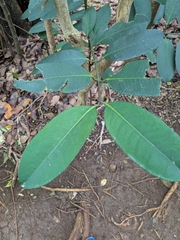 Garcinia humilis Wild mammee Photo: CC BY, Guillaume Delaitre all 33 ›
Names & registers
The record
Every figure here is derived from public data by a stated rule and names its source; nothing about this species is written for its page by a person or by AI, apart from the marked, credited quotations. How →
Where this page came from built 2026-10-22
gbif.species answeredasked 2026-10-22gbif.synonyms answeredasked 2026-10-22gbif.vernacular answeredasked 2026-10-22names fetched 2026-10-22wcvp.distribution answeredas of 2026-06-04gbif.occurrences answeredas of 2026-10-21GBIF occurrence download https://doi.org/10.15468/dl.hbdw64, of 2026-10-21climate nothing to reportasked 2026-10-22only 1 distinct land cell of the climate grid holds an in-range record placed to within 10 km; three are needed for an envelopewikidata answeredasked 2026-10-22wikipedia answeredasked 2026-10-22inat.photos.wild nothing to reportasked 2026-10-22from iNaturalist's open data of 2026-09-27: research-grade observations with an open-licence photograph, the 24 whose photographs iNaturalist received last (the open data holds no votes); filled 2026-10-22inat.photos.cultivated not askedgbif.media nothing to reportasked 2026-10-22commons answeredasked 2026-10-22openalex not askednot yet asked for this reference; a later fill takes the papers from OpenAlex's snapshotEvery source is recorded as having answered, reported nothing, refused, failed, not been asked, or answered twice where one answer is taken (“not taken: two items answered”), and, for a source asked when this page was built, when: the figures are as the source held them that day; a source read from a file (Kew's World Checklist, a GBIF download) says "as of" the file's day instead; a row carried from an earlier build of the page names that build instead. Only “nothing to report” is ever shown as an absence. Records came from 4 datasets via GBIF.org; each carries its own licence.