Gaultheria cuneata (Rehder & E.H.Wilson) Bean
Photographs not checked
iNaturalist was skipped (not asked) when this page was built. Not asked, or not answered, is not "none": nothing here claims there is none. Why the site says it this way.Summary
Gaultheria cuneata is a species of flowering plant in the family Ericaceae, native to western China. It is a densely branched, dwarf, evergreen shrub growing to 30 cm (12 in) tall by 100 cm (39 in) wide, with narrow glossy green leaves and white flowers in spring followed by white berries 1 cm in diameter in autumn. Like others of its family, it is a calcifuge, preferring an acid peaty soil. In cultivation it is used as groundcover for underplanting larger shrubs.
Quoted from Wikipedia, "Gaultheria cuneata", CC BY-SA 4.0.
About the genus · Gaultheria
Gaultheria is a genus of about 283 species of shrubs in the family Ericaceae. The name commemorates Jean François Gaultier of Quebec, an honour bestowed by the Scandinavian Pehr Kalm in 1748 and taken up by Carl Linnaeus in his Species Plantarum. These plants are native to Asia, Australasia and North and South America. More on Wikipedia ›
Quoted from Wikipedia, "Gaultheria", CC BY-SA 4.0.
Cultivation
Climate across the habitat
Natural habitat
How this section is made
Photographs
Related
Other Gaultheria 45 in the reference
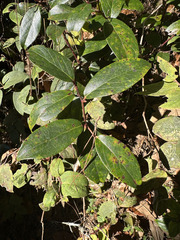 Gaultheria acuminata Ericaceae Photo: CC BY, Peter Quakenbush
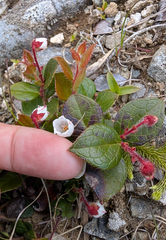 Gaultheria adenothrix Ericaceae Photo: CC BY, Kristof Zyskowski
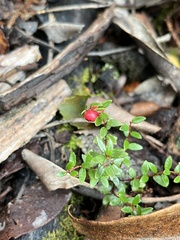 Gaultheria antarctica Antarctic mountainberry Photo: CC BY, Pablo Silva
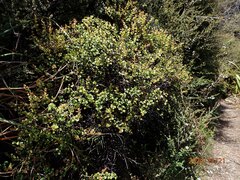 Gaultheria antipoda Bush snowberry Photo: CC BY, Duncan Cunningham Gaultheria apoensis Ericaceae
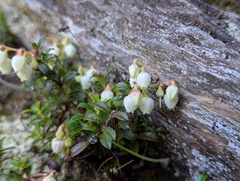 Gaultheria borneensis Ericaceae Photo: CC BY-SA, jengru Gaultheria cardiosepala Ericaceae
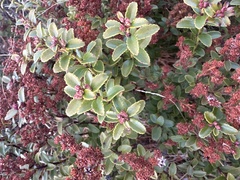 Gaultheria crassa Scarlet snowberry Photo: CC0, author not stated
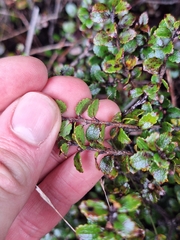 Gaultheria depressa Mountain Snowberry Photo: CC BY, Oscar Dove
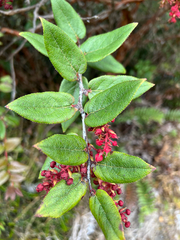 Gaultheria erecta Ericaceae Photo: CC0, author not stated
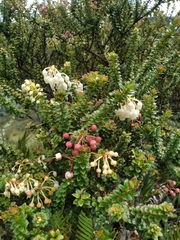 Gaultheria foliolosa Ericaceae Photo: CC0, author not stated
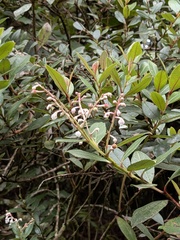 Gaultheria fragrantissima Ericaceae Photo: CC BY, Kalvin Chan all 46 ›
Names & registers
Also known as Gaultheria pyroloides var. cuneata. (GBIF Backbone)
The record
Every figure here is derived from public data by a stated rule and names its source; nothing about this species is written for its page by a person or by AI, apart from the marked, credited quotations. How →
Where this page came from built 2026-10-22
gbif.species answeredasked 2026-10-22gbif.synonyms answeredasked 2026-10-22gbif.vernacular answeredasked 2026-10-22names fetched 2026-10-22wcvp.distribution answeredas of 2026-06-04gbif.occurrences answeredas of 2026-10-21GBIF occurrence download https://doi.org/10.15468/dl.hbdw64, of 2026-10-21; 2 records within 1 km of a botanic garden, herbarium or zoo left out (2 at a botanic garden or arboretum; Wikidata's list)climate nothing to reportasked 2026-10-2229 in-range records, none placed to within 10 kmwikidata answeredasked 2026-10-22wikipedia answeredasked 2026-10-22inat.photos.wild nothing to reportasked 2026-10-22from iNaturalist's open data of 2026-09-27: research-grade observations with an open-licence photograph, the 24 whose photographs iNaturalist received last (the open data holds no votes); filled 2026-10-22inat.photos.cultivated not askedgbif.media nothing to reportasked 2026-10-22commons nothing to reportasked 2026-10-22openalex not askednot yet asked for this reference; a later fill takes the papers from OpenAlex's snapshotEvery source is recorded as having answered, reported nothing, refused, failed, not been asked, or answered twice where one answer is taken (“not taken: two items answered”), and, for a source asked when this page was built, when: the figures are as the source held them that day; a source read from a file (Kew's World Checklist, a GBIF download) says "as of" the file's day instead; a row carried from an earlier build of the page names that build instead. Only “nothing to report” is ever shown as an absence. Records came from 11 datasets via GBIF.org; each carries its own licence.