


 12 photographs ›
Summary
Gentiana paradoxa, the Caucasian gentian, is a species of flowering plant in the family Gentianaceae, endemic to the foothills of the Greater Caucasus Mountains in western Asia, near the Black Sea. A compact, mat-forming herbaceous perennial growing to 20 cm (7.9 in) tall and wide, its upright stems of grass-like, linear or lanceolate leaves bear clusters of 5 or 6 large, brilliant blue and white flowers in late summer. It is one of several species of gentians that are valued in cultivation for the unusual bright blue colour of their blooms. However, it is not particularly easy to grow, requiring moist, well-drained, lime-free soil and a position in full sun. More on Wikipedia ›
Quoted from Wikipedia, "Gentiana paradoxa", CC BY-SA 4.0.
Cultivation
Climate across the habitat
Natural habitat
How this section is made
Photographs


Photographs: Ghislain118 http://www.fleurs-des-montagnes.net, CC BY-SA 3.0, via Wikimedia Commons (2); Ghislain118 https://www.fleurs-des-montagnes.net, CC BY-SA 3.0, via Wikimedia Commons; peganum from Henfield, England, CC BY-SA 2.0, via Wikimedia Commons (3).
Related
Other Gentiana 103 in the reference
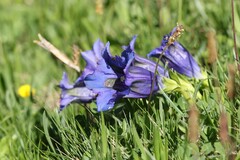 Gentiana acaulis Gentian Photo: CC BY, Antoine Thivolle
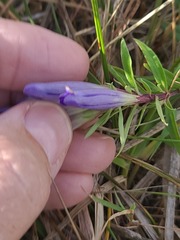 Gentiana affinis Pleated gentian Photo: CC0, author not stated
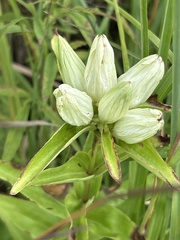 Gentiana alba Gentianaceae Photo: CC0, author not stated
 Gentiana algida Whitish gentian Photo: CC0, author not stated
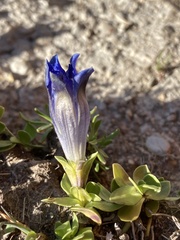 Gentiana alpina Southern gentian Photo: CC BY, Antoine MARNAT
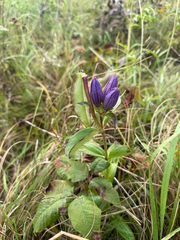 Gentiana andrewsii Andrews' bottle gentian Photo: CC BY, FunkyRat
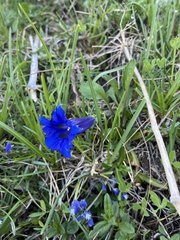 Gentiana angustifolia Gentianaceae Photo: CC0, author not stated
 Gentiana arethusae Gentianaceae Photo: CC BY-SA, Philippe.pechoux
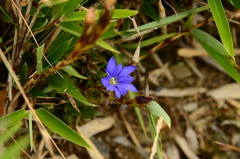 Gentiana arisanensis Alishan gentian Photo: CC BY, 如此甚好
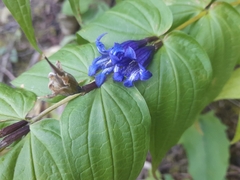 Gentiana asclepiadea Willow gentian Photo: CC BY, Flavien Saboureau
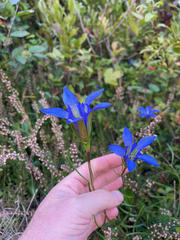 Gentiana autumnalis Pine barren gentian Photo: CC0, author not stated
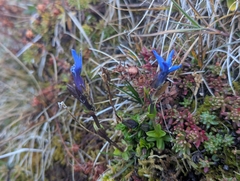 Gentiana bavarica Gentianaceae Photo: CC BY, Elias all 104 ›
Names & registers
Also known as Dasystephana paradoxa; Gentiana rhodocalyx; Gentiana vittae; Kudoa paradoxa. (GBIF Backbone)
The record
Every figure here is derived from public data by a stated rule and names its source; nothing about this species is written for its page by a person or by AI, apart from the marked, credited quotations. How →
Where this page came from built 2026-10-22
gbif.species answeredasked 2026-10-22gbif.synonyms answeredasked 2026-10-22gbif.vernacular answeredasked 2026-10-22names fetched 2026-10-22wcvp.distribution answeredas of 2026-06-04gbif.occurrences answeredas of 2026-10-21GBIF occurrence download https://doi.org/10.15468/dl.hbdw64, of 2026-10-21; 4 records within 1 km of a botanic garden, herbarium or zoo left out (4 at a botanic garden or arboretum; Wikidata's list)climate nothing to reportasked 2026-10-22only 1 distinct land cell of the climate grid holds an in-range record placed to within 10 km; three are needed for an envelopewikidata answeredasked 2026-10-22wikipedia answeredasked 2026-10-22inat.taxon not askedinat.photos.wild not askedinat.photos.cultivated not askedgbif.media nothing to reportasked 2026-10-22commons answeredasked 2026-10-22openalex not askednot yet asked for this reference; a later fill takes the papers from OpenAlex's snapshotEvery source is recorded as having answered, reported nothing, refused, failed, not been asked, or answered twice where one answer is taken (“not taken: two items answered”), and, for a source asked when this page was built, when: the figures are as the source held them that day; a source read from a file (Kew's World Checklist, a GBIF download) says "as of" the file's day instead; a row carried from an earlier build of the page names that build instead. Only “nothing to report” is ever shown as an absence. Records came from 3 datasets via GBIF.org; each carries its own licence.