
Glandularia peruviana (L.) Small
English names not checked: Wikidata's common names were not read for this page.


 10 photographs ›
At a glance
- Jan
- Feb
- Mar
- Apr, shaded
- May, shaded
- Jun, shaded
- Jul, shaded
- Aug, shaded
- Sep, shaded
- Oct, shaded
- Nov
- Dec
Summary
Verbena peruviana (syn. Glandularia peruviana), the Peruvian mock vervain, is a species of flowering plant in the family Verbenaceae. It is native to Bolivia, southern Brazil, northern Argentina, Paraguay, and Uruguay, but not Peru, and has been introduced to scattered locations elsewhere, including the former Czechoslovakia, the US state of Illinois, and the Leeward Islands. Under the synonym Glandularia peruviana, its cultivar 'Balendpibi' (trade name Endurascape Pink Bicolor) has gained the Royal Horticultural Society's Award of Garden Merit.
Quoted from Wikipedia, "Verbena peruviana", CC BY-SA 4.0; its title is one of this species' older names (GBIF Backbone), which is the proof that the article is this species'.
Cultivation
Seasons
The rain rule reads a summer growing season: 70% of the median year's rain (840 mm of 1,125 mm) falls in October to April, warmer than the year (wet-season mean 20.4 °C against a yearly mean of 16.9 °C). Months are the habitat's, southern hemisphere; shifted six months for a northern-hemisphere collection: April to October.
Rain
1,125 mm in the median year at the habitat, 840 mm of it October to April. Wettest months (2 at 130 mm), driest month July at 42 mm. Across the grid cells of the range the year's total runs 857 mm to 1,609 mm, the 10th to 90th percentile of each cell's own year. The median of the cells' own yearly totals, 1,189 mm, is the year's rain at the top of the page; the 1,125 mm here is the median year's, the twelve monthly medians added, which the rain rule reads. Habitat calendar, southern hemisphere; median year across the grid cells of the range, CHELSA.
Light
Open sky over the habitat: 16 to 46 mol/m²/day across the year (daily light integral, median year across the grid cells of the range, CHELSA; the lowest 10th-percentile month across the cells is 14, the highest 90th-percentile month 48).
Warmth and air
Coldest: the 1st-percentile night over 44 years at a typical spot in the range is -0.5 °C, the absolute minimum -5.2 °C, 227 frost nights in 44 years, 5.2 a year (NASA POWER daily minima). Warmest: the 99th-percentile day is 39.3 °C. Monthly means: the coldest month's mean nightly low 6.9 °C in July (across the grid cells of the range 2.8 °C to 11.7 °C), the warmest month's mean daily high 28.6 °C in January (median year across the grid cells of the range, CHELSA). Cold floor: -0.5 °C, which is the 1st-percentile night over 44 years at a typical spot in the range (NASA POWER).
Relative humidity at the habitat: 57 to 62% across the year (monthly means, median year across the grid cells of the range, CHELSA). A figure about the air, saying nothing about how the plant takes water.
How this section is made
Each card states this species' habitat figures with their sources, and what two fixed rules read from them; nothing here says what the plant does, wants or tolerates. The rules · the terms.
Seasons. Read from the median year of CHELSA monthly rainfall and mean temperature across the grid cells of the range: the rain rule takes the smallest set of months carrying 70% of the rain and calls it winter when its mean is more than half a degree below the year's, summer when more than that above, and neither in between; the temperature rule, used only under 120 mm, names the cooler six months when they are at least a degree cooler than the other six. Months are shifted for the other hemisphere only where the temperature curve moves 4 °C or more and the habitat lies 10° or more from the equator. A reading of the curves, not an observation of the plant.
Rain. CHELSA monthly precipitation, median year across the grid cells of the range. The rain that falls where the species is recorded; nothing about how the plant takes water.
Light. CHELSA shortwave radiation at each envelope cell, a daily-mean flux taken to a daily total and converted at 2.07 mol of PAR per MJ. The sky over the habitat, measured; what reaches a plant under a rock, a shrub or a shade cloth is not.
Temperature. NASA POWER daily minima and maxima over 44 years at a typical spot in the range, lapse-corrected +57 m to its elevation; CHELSA monthly means, median year across the grid cells of the range. The cold floor is the 1st-percentile night named in its sentence. Not a measured survival limit for any plant in a pot.
Humidity. CHELSA relative humidity, median year across the grid cells of the range.
Climate across the habitat
Habitat months, southern hemisphere
Mean daily high from 15 °C in Jul to 29 °C in Jan; mean nightly low from 7 °C in Jul to 19 °C in Jan. The cold quarter, Jun to Aug, is the three months around the coldest month's mean nightly low. 1,125 mm of rain in the median year (the twelve monthly medians added), the wettest months (2 at 130 mm). The bands show the 10th to 90th percentile across 643 habitat cells. Over 44 years at a typical spot in the range (NASA POWER) the absolute minimum was -5.2 °C and the 99th-percentile day 39.3 °C; neither is dated to a month. Beneath: daily light integral and relative humidity through the year, each on its own scale.
Figures by month
| Figure | Jan | Feb | Mar | Apr | May | Jun | Jul | Aug | Sep | Oct | Nov | Dec |
|---|---|---|---|---|---|---|---|---|---|---|---|---|
| Day °C | 29 / 25–31 | 27 / 24–30 | 25 / 22–29 | 22 / 19–26 | 18 / 15–22 | 16 / 13–20 | 15 / 12–20 | 18 / 14–22 | 19 / 16–24 | 22 / 19–26 | 25 / 22–28 | 27 / 24–30 |
| Night °C | 19 / 15–22 | 18 / 14–22 | 17 / 13–21 | 13 / 10–18 | 10 / 7–14 | 8 / 4–13 | 7 / 3–12 | 8 / 4–13 | 9 / 6–14 | 12 / 9–17 | 15 / 12–19 | 17 / 14–21 |
| Rain mm | 128 / 95–217 | 130 / 102–177 | 130 / 101–168 | 106 / 65–177 | 80 / 26–134 | 51 / 7–120 | 42 / 14–109 | 45 / 10–103 | 67 / 31–129 | 109 / 67–146 | 118 / 91–178 | 119 / 88–207 |
| DLI | 45 / 40–47 | 39 / 36–42 | 32 / 30–33 | 24 / 23–26 | 19 / 17–21 | 16 / 14–19 | 17 / 15–21 | 23 / 20–27 | 29 / 27–33 | 36 / 35–38 | 42 / 40–44 | 46 / 42–48 |
| RH % | 58 / 55–62 | 59 / 56–63 | 60 / 58–64 | 61 / 59–64 | 61 / 59–64 | 62 / 57–65 | 61 / 55–64 | 58 / 53–63 | 58 / 53–62 | 58 / 54–62 | 58 / 54–61 | 57 / 54–61 |
How this section is made
Natural habitat
This species has no GBIF key of its own. Its records are GBIF's under the key of the name Kew's World Checklist holds as this plant: 2925587 (Verbena peruviana (L.) Britton, 1842 records). No name was matched to GBIF; the keys are read from Kew's synonymy. How.
How this section is made
Photographs


Photographs: Zanchetta Fabio (faxstaff), CC BY-SA 2.5, via Wikimedia Commons (3); [ https://www.flickr.com/people/43206694@N03 M�rcia Stefani], CC BY 2.0, via Wikimedia Commons; Diego Delso, CC BY-SA 3.0, via Wikimedia Commons; Hedwig Storch, CC BY-SA 3.0, via Wikimedia Commons.
Related
Similar habitat climate The 6 nearest by mean daily high, mean nightly low and rain, month by month. How.
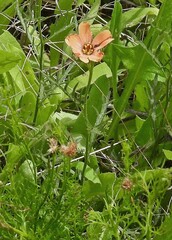 Turnera sidoides Turneraceae Photo: CC0, author not stated
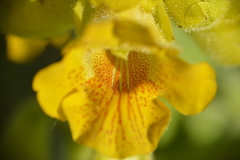 Ibicella lutea Yellow unicorn-plant Photo: CC BY, María Zeta
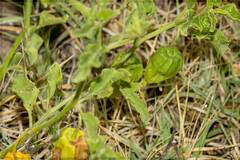 Physalis viscosa Stellate ground-cherry Photo: CC BY, RAP
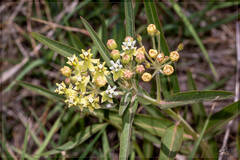 Asclepias mellodora Apocynaceae Photo: CC BY, RAP
 Celtis tala Desert Hackberry Photo: CC BY, Holger Braun
 Oxypetalum solanoides Apocynaceae Photo: CC BY, Lucila Trussi
Other Glandularia 18 in the reference
 Glandularia aristigera Verbenaceae Photo: CC BY-SA, Paul venter Glandularia berteroi Verbenaceae
 Glandularia bipinnatifida Verbenaceae Photo: CC BY-SA, Copyright by Curtis Clark, licensed as…
 Glandularia chiricahensis Verbenaceae Photo: CC0, Patrick Alexander from Las Cruces, NM
 Glandularia dissecta Verbenaceae Photo: CC BY, Sofocador
 Glandularia gooddingii Verbenaceae Photo: CC BY-SA, Stan Shebs Glandularia laciniata Verbenaceae Glandularia latilobata Verbenaceae
 Glandularia maritima Verbenaceae Photo: Public domain, Everglades NPS from Homestead, Florida… Glandularia platensis Verbenaceae Glandularia polyantha Verbenaceae Glandularia pubera Verbenaceae all 19 ›
Names & registers
Also known as Erinus peruvianus; Verbena sanguinea; Verbena peruviana; Verbenella chamaedryfolia; Verbena platensis var. latiuscula and 11 more. (WCVP, RBG Kew)
The record
Every figure here is derived from public data by a stated rule and names its source; nothing about this species is written for its page by a person or by AI, apart from the marked, credited quotations. How →
Where this page came from built 2026-10-22
kew.names answeredas of 2026-06-04Kew's entry Glandularia peruviana (L.) Small (plant_name_id 89973), read from Kew's names filegbif.species not askedGBIF's backbone holds no one accepted species of this name, and a name it holds only as another species' synonym is not taken for this one, so GBIF's records were not askedgbif.synonyms not askedGBIF's backbone holds no one accepted species of this name, and a name it holds only as another species' synonym is not taken for this one, so GBIF's records were not askedgbif.vernacular not askedGBIF's backbone holds no one accepted species of this name, and a name it holds only as another species' synonym is not taken for this one, so GBIF's records were not askedwcvp.distribution answeredas of 2026-06-04gbif.occurrences answeredas of 2026-10-21this species has no GBIF key of its own; its records are read under GBIF's keys for the names Kew's file holds as this plant, never by a name matched; GBIF occurrence download https://doi.org/10.15468/dl.hbdw64, of 2026-10-21; 1842 records of GBIF's key 2925587, Verbena peruviana (L.) Britton (Kew's file holds it as Verbena peruviana (L.) Britton (synonym under Glandularia peruviana (L.) Small)): the GBIF download; 18 records within 1 km of a botanic garden, herbarium or zoo left out (16 at a botanic garden or arboretum, 2 at a zoo; Wikidata's list)climate answeredasked 2026-10-22climate.extremes answeredasked 2026-10-22NASA POWER (MERRA-2) daily 1981–2024, cell -31.00_-63.125, lapse-corrected +57 m at 6.5 °C/kmwikidata answeredasked 2026-10-22found by Kew's IPNI identifier 110637-2, POWO 110637-2wikipedia answeredasked 2026-10-22Wikipedia redirects Glandularia peruviana to Verbena peruviana, an older name of this species (Verbena peruviana)inat.photos.wild not askedinat.photos.cultivated not askedgbif.media not askedGBIF's backbone holds no one accepted species of this name, and a name it holds only as another species' synonym is not taken for this one, so GBIF's records were not askedcommons answeredasked 2026-10-22openalex not askednot yet asked for this reference; a later fill takes the papers from OpenAlex's snapshotEvery source is recorded as having answered, reported nothing, refused, failed, not been asked, or answered twice where one answer is taken (“not taken: two items answered”), and, for a source asked when this page was built, when: the figures are as the source held them that day; a source read from a file (Kew's World Checklist, a GBIF download) says "as of" the file's day instead; a row carried from an earlier build of the page names that build instead. Only “nothing to report” is ever shown as an absence. Records came from 72 datasets via GBIF.org; each carries its own licence.