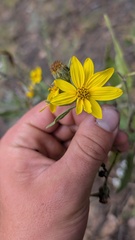
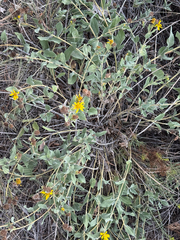
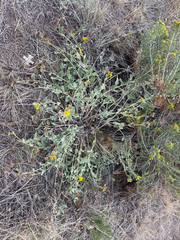
 99 photographs ›
At a glance
- Jan
- Feb
- Mar, shaded
- Apr, shaded
- May, shaded
- Jun, shaded
- Jul, shaded
- Aug, shaded
- Sep, shaded
- Oct
- Nov
- Dec
Summary
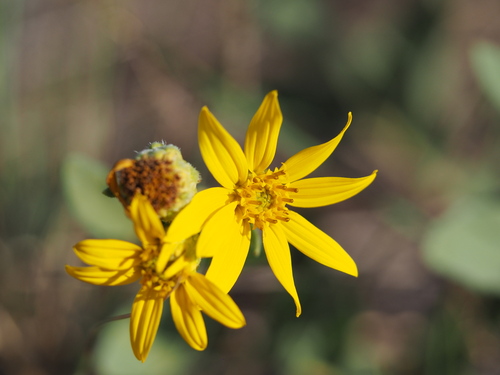
Helianthus pumilus is a North American species of sunflower known by the common name little sunflower or bush sunflower. It is found in the western United States, primarily the Rocky Mountain region of Montana, Wyoming, and Colorado, with a few isolated populations in Utah and Idaho.
Quoted from Wikipedia, "Helianthus pumilus", CC BY-SA 4.0.
About the genus · Helianthus
Helianthus is a genus comprising around 50 species of annual and perennial flowering plants in the daisy family Asteraceae commonly known as sunflowers. The species of Helianthus are native to North America. The best-known species is the common sunflower. More on Wikipedia ›
Quoted from Wikipedia, "Helianthus", CC BY-SA 4.0.
Cultivation
Seasons
The rain rule reads a summer growing season: 70% of the median year's rain (355 mm of 464 mm) falls in March to September, warmer than the year (wet-season mean 12.0 °C against a yearly mean of 6.8 °C). Months are the habitat's, northern hemisphere; shifted six months for a southern-hemisphere collection: September to March.
Rain
464 mm in the median year at the habitat, 355 mm of it March to September. Wettest month May at 64 mm, driest month January at 15 mm. Across the grid cells of the range the year's total runs 378 mm to 535 mm, the 10th to 90th percentile of each cell's own year. The median of the cells' own yearly totals, 465 mm, is the year's rain at the top of the page; the 464 mm here is the median year's, the twelve monthly medians added, which the rain rule reads. Habitat calendar, northern hemisphere; median year across the grid cells of the range, CHELSA.
Light
Open sky over the habitat: 16 to 47 mol/m²/day across the year (daily light integral, median year across the grid cells of the range, CHELSA; the lowest 10th-percentile month across the cells is 14, the highest 90th-percentile month 48).
Warmth and air
Coldest: the 1st-percentile night over 44 years at a typical spot in the range is -16.6 °C, the absolute minimum -27.9 °C, 7,280 frost nights in 44 years, 165.5 a year (NASA POWER daily minima). Warmest: the 99th-percentile day is 35.2 °C. Monthly means: the coldest month's mean nightly low -9.1 °C in December (across the grid cells of the range -12.3 °C to -6.7 °C), the warmest month's mean daily high 26.8 °C in July (median year across the grid cells of the range, CHELSA). Cold floor: -16.6 °C, which is the 1st-percentile night over 44 years at a typical spot in the range (NASA POWER).
Relative humidity at the habitat: 51 to 53% across the year (monthly means, median year across the grid cells of the range, CHELSA). A figure about the air, saying nothing about how the plant takes water.
How this section is made
Each card states this species' habitat figures with their sources, and what two fixed rules read from them; nothing here says what the plant does, wants or tolerates. The rules · the terms.
Seasons. Read from the median year of CHELSA monthly rainfall and mean temperature across the grid cells of the range: the rain rule takes the smallest set of months carrying 70% of the rain and calls it winter when its mean is more than half a degree below the year's, summer when more than that above, and neither in between; the temperature rule, used only under 120 mm, names the cooler six months when they are at least a degree cooler than the other six. Months are shifted for the other hemisphere only where the temperature curve moves 4 °C or more and the habitat lies 10° or more from the equator. A reading of the curves, not an observation of the plant.
Rain. CHELSA monthly precipitation, median year across the grid cells of the range. The rain that falls where the species is recorded; nothing about how the plant takes water.
Light. CHELSA shortwave radiation at each envelope cell, a daily-mean flux taken to a daily total and converted at 2.07 mol of PAR per MJ. The sky over the habitat, measured; what reaches a plant under a rock, a shrub or a shade cloth is not.
Temperature. NASA POWER daily minima and maxima over 44 years at a typical spot in the range, lapse-corrected +169 m to its elevation; CHELSA monthly means, median year across the grid cells of the range. The cold floor is the 1st-percentile night named in its sentence. Not a measured survival limit for any plant in a pot.
Humidity. CHELSA relative humidity, median year across the grid cells of the range.
Climate across the habitat
Habitat months, northern hemisphere
Mean daily high from 3 °C in Dec to 27 °C in Jul; mean nightly low from -9 °C in Jan, Feb and Dec to 12 °C in Jul and Aug. The cold quarter, Dec to Feb, is the three months around the coldest month's mean nightly low, centred on the 3 months in a row that tie for it. 464 mm of rain in the median year (the twelve monthly medians added), the wettest month May. The bands show the 10th to 90th percentile across 283 habitat cells. Over 44 years at a typical spot in the range (NASA POWER) the absolute minimum was -27.9 °C and the 99th-percentile day 35.2 °C; neither is dated to a month. Beneath: daily light integral and relative humidity through the year, each on its own scale.
Figures by month
| Figure | Jan | Feb | Mar | Apr | May | Jun | Jul | Aug | Sep | Oct | Nov | Dec |
|---|---|---|---|---|---|---|---|---|---|---|---|---|
| Day °C | 4 / 0–6 | 5 / 1–8 | 9 / 4–12 | 13 / 8–16 | 18 / 14–21 | 24 / 20–26 | 27 / 23–30 | 26 / 22–29 | 22 / 18–25 | 16 / 12–18 | 8 / 4–11 | 3 / -1–5 |
| Night °C | -9 / -12–-7 | -9 / -12–-6 | -5 / -9–-3 | -2 / -5–1 | 4 / 0–6 | 9 / 5–11 | 12 / 9–15 | 12 / 8–14 | 8 / 4–10 | 2 / -1–4 | -5 / -8–-3 | -9 / -12–-7 |
| Rain mm | 15 / 9–18 | 18 / 11–23 | 40 / 24–49 | 58 / 42–69 | 64 / 56–73 | 51 / 45–60 | 55 / 44–71 | 49 / 37–74 | 38 / 31–45 | 34 / 26–40 | 21 / 15–25 | 21 / 12–24 |
| DLI | 18 / 16–20 | 25 / 23–27 | 33 / 32–35 | 41 / 39–43 | 44 / 43–46 | 47 / 47–48 | 46 / 46–47 | 41 / 40–42 | 35 / 34–36 | 26 / 24–28 | 19 / 17–21 | 16 / 14–17 |
| RH % | 52 / 50–56 | 52 / 51–56 | 52 / 51–55 | 52 / 51–54 | 53 / 51–55 | 52 / 50–54 | 51 / 48–53 | 52 / 49–55 | 51 / 49–54 | 51 / 50–53 | 52 / 50–55 | 53 / 51–56 |
How this section is made
Natural habitat
How this section is made
Photographs
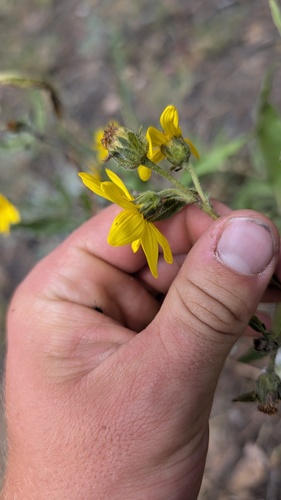
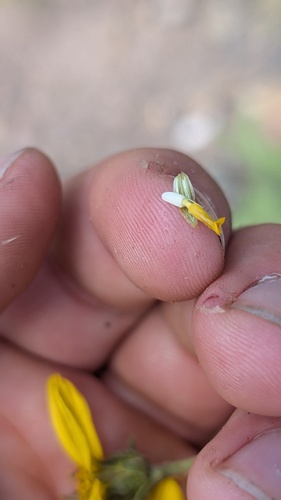
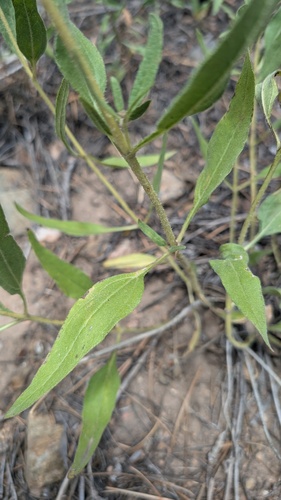
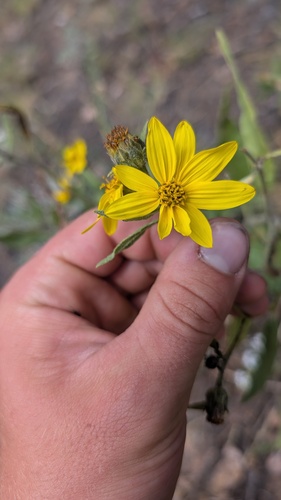
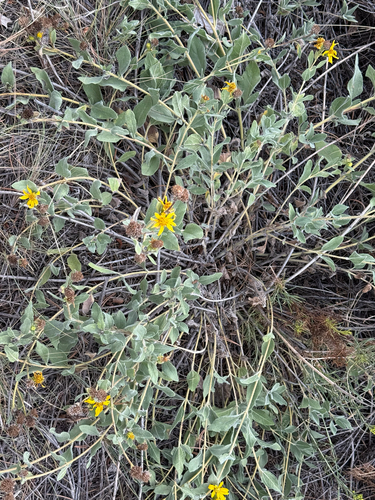
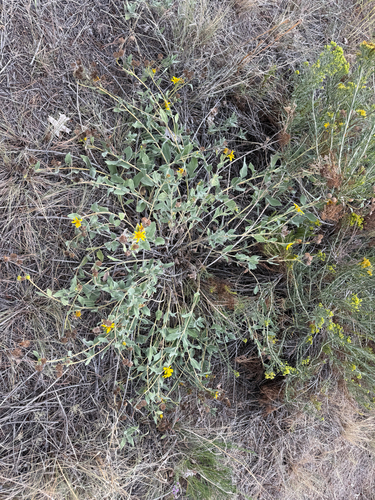
Photographs: author not stated, no rights reserved · CC0 (4); (c) Jared Lincenberg, some rights reserved (CC BY) (2).
Related
Similar habitat climate The 6 nearest by mean daily high, mean nightly low and rain, month by month. How.
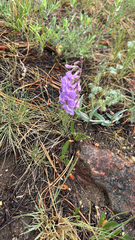 Penstemon secundiflorus Sidebells penstemon Photo: CC BY, Ron Burkert
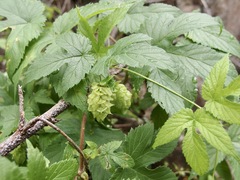 Humulus neomexicanus Neomexicanus Hops Photo: CC BY, Sue Carnahan
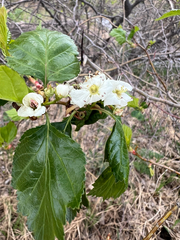 Crataegus erythropoda Cerro hawthorn Photo: CC BY, Jared Shorma
 Scutellaria brittonii Britton's skullcap Photo: CC BY, Stephen Hornbeck
 Delphinium geyeri Geyer's larkspur Photo: CC0, author not stated
 Populus angustifolia Mountain cottonwood Photo: CC BY, Daughter Dad
Other Helianthus 44 in the reference
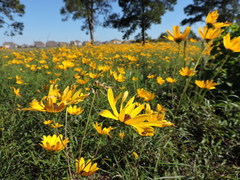
 Helianthus agrestis Rural sunflower Photo: CC BY, sblumen
 Helianthus angustifolius Swamp sunflower Photo: CC BY, Sam Kieschnick
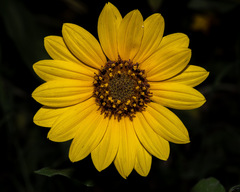 Helianthus annuus Sunflower Photo: CC BY, Michelle W. (鍾偉瑋)
 Helianthus anomalus Sand sunflower Photo: CC BY, Patrick Cox
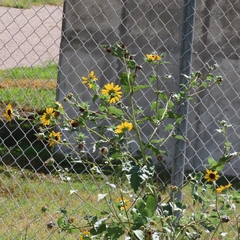 Helianthus argophyllus Silverleaf sunflower Photo: CC BY, Suanne Pyle
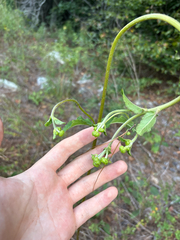 Helianthus atrorubens Purple-disk sunflower Photo: CC0, author not stated
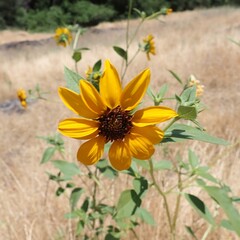 Helianthus bolanderi Bolander's sunflower Photo: CC BY, Larry Jensen
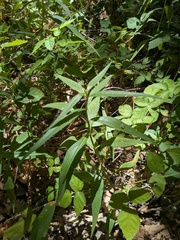 Helianthus californicus California sunflower Photo: CC BY, jayjt
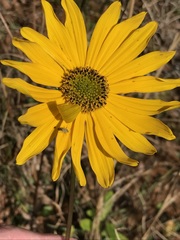 Helianthus carnosus Fleshy sunflower Photo: CC BY, Brandon Corder
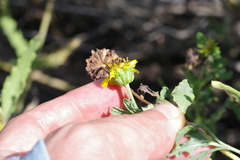 Helianthus ciliaris Texas blueweed Photo: CC BY, Eric Knight
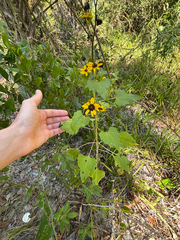 Helianthus debilis Cucumberleaf sunflower Photo: CC0, author not stated
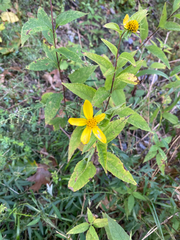 Helianthus decapetalus Thinleaf sunflower Photo: CC0, author not stated all 45 ›
Names & registers
Also known as Helianthus pumilus var. nicolletii; Helianthus pumilus var. pumilus. (GBIF Backbone)
The record
Every figure here is derived from public data by a stated rule and names its source; nothing about this species is written for its page by a person or by AI, apart from the marked, credited quotations. How →
Where this page came from built 2026-10-22
gbif.species answeredasked 2026-10-22gbif.synonyms answeredasked 2026-10-22gbif.vernacular answeredasked 2026-10-22names fetched 2026-10-22wcvp.distribution answeredas of 2026-06-04gbif.occurrences answeredas of 2026-10-21GBIF occurrence download https://doi.org/10.15468/dl.hbdw64, of 2026-10-21; 17 records within 1 km of a botanic garden, herbarium or zoo left out (14 at a botanic garden or arboretum, 3 at a herbarium; Wikidata's list)climate answeredasked 2026-10-22climate.extremes answeredasked 2026-10-22NASA POWER (MERRA-2) daily 1981–2024, cell 40.00_-105.000, lapse-corrected +169 m at 6.5 °C/kmwikidata answeredasked 2026-10-22IPNI and POWO linked by Kew's number for Helianthus pumilus Nutt. (the item's: IPNI 119234-2, POWO 119234-2)wikipedia answeredasked 2026-10-22inat.photos.wild answeredasked 2026-10-22from iNaturalist's open data of 2026-09-27: research-grade observations with an open-licence photograph, the 24 whose photographs iNaturalist received last (the open data holds no votes); filled 2026-10-22inat.photos.cultivated not askedgbif.media answeredasked 2026-10-22openalex not askednot yet asked for this reference; a later fill takes the papers from OpenAlex's snapshotEvery source is recorded as having answered, reported nothing, refused, failed, not been asked, or answered twice where one answer is taken (“not taken: two items answered”), and, for a source asked when this page was built, when: the figures are as the source held them that day; a source read from a file (Kew's World Checklist, a GBIF download) says "as of" the file's day instead; a row carried from an earlier build of the page names that build instead. Only “nothing to report” is ever shown as an absence. Records came from 44 datasets via GBIF.org; each carries its own licence.