


 18 photographs ›
Summary
Helleborus thibetanus, the Tibetan hellebore, is a species of flowering plant in the family Ranunculaceae, native to China, in S Gansu, NW Hubei, S Shaanxi and NW Sichuan.
Quoted from Wikipedia, "Helleborus thibetanus", CC BY-SA 4.0.
About the genus · Helleborus
Commonly known as hellebores, the Eurasian genus Helleborus consists of approximately 20 species of herbaceous or evergreen perennial flowering plants in the family Ranunculaceae, within which it gave its name to the tribe of Helleboreae. Many hellebore species are poisonous.
Quoted from Wikipedia, "Hellebore", CC BY-SA 4.0.
Cultivation
Grouped as a temperate garden plant, listed under the genus Helleborus in the archetype table, and Kew describes it as “perennial or rhizomatous geophyte”, “temperate”.
How this section is made
Each card states this species' habitat figures with their sources, and what two fixed rules read from them; nothing here says what the plant does, wants or tolerates. The rules · the terms.
Group. Listed under the genus Helleborus in the archetype table, and Kew describes it as “perennial or rhizomatous geophyte”, “temperate”. A group is taken only where Kew's description of the species agrees with the table's listing. The table gives no figure and no prose; the cold floor is the habitat's alone.
Climate across the habitat
Natural habitat
How this section is made
Photographs

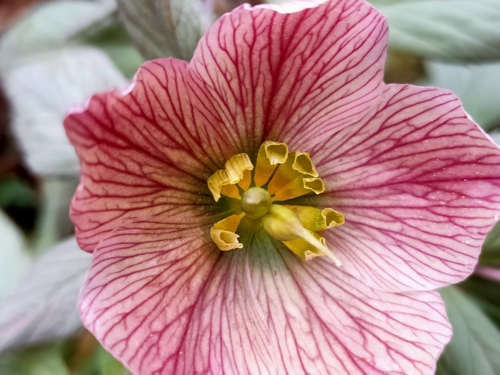


Photographs: (c) zhangshen, some rights reserved (CC BY) (6).
Related
Other Helleborus 14 in the reference
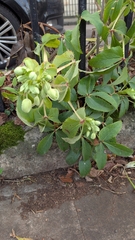 Helleborus argutifolius Corsican Hellebore Photo: CC BY, R Mitchell
 Helleborus atrorubens Ranunculaceae Photo: CC BY, sunoochi from Sapporo, Hokkaido, Japan
 Helleborus cyclophyllus Ranunculaceae Photo: CC BY-SA, Peter Billinghurst
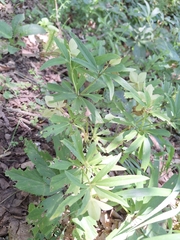 Helleborus dumetorum Green-flowered hellebore Photo: CC BY, Dávid Horváth
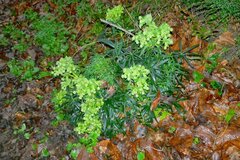 Helleborus foetidus Stinking hellebore Photo: CC0, author not stated
 Helleborus lividus Majorcan Hellebore Photo: CC BY-SA, Colin Meurk
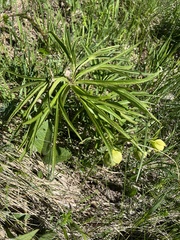 Helleborus multifidus Ranunculaceae Photo: CC0, Mirko Ubović
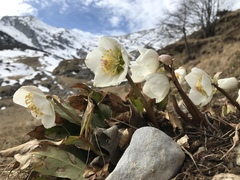 Helleborus niger Christmas-rose Photo: CC BY, Riccardo Riva
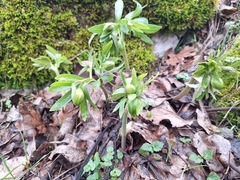 Helleborus odorus Sweet-scented Hellebore Photo: CC BY, Dávid Horváth
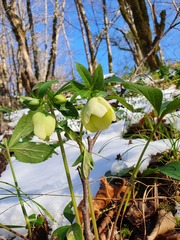 Helleborus orientalis Lenten-rose Photo: CC BY, Анна Митрошенкова
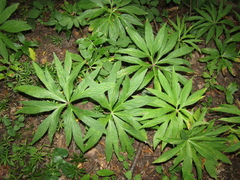 Helleborus purpurascens Purple-flowered Christmas Rose Photo: CC BY, Oleksandr Shynder
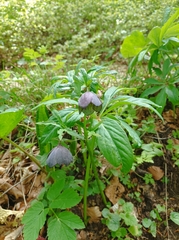 Helleborus torquatus Ranunculaceae Photo: CC BY, Manfred Kolbacher all 15 ›
Names & registers
Also known as Helleborus chinensis; Helleborus viridis var. thibetanus. (GBIF Backbone)
The record
Every figure here is derived from public data by a stated rule and names its source; nothing about this species is written for its page by a person or by AI, apart from the marked, credited quotations. How →
Where this page came from built 2026-10-22
gbif.species answeredasked 2026-10-22gbif.synonyms answeredasked 2026-10-22gbif.vernacular answeredasked 2026-10-22names fetched 2026-10-22wcvp.distribution answeredas of 2026-06-04gbif.occurrences answeredas of 2026-10-21GBIF occurrence download https://doi.org/10.15468/dl.hbdw64, of 2026-10-21climate nothing to reportasked 2026-10-22only 2 distinct land cells of the climate grid hold an in-range record placed to within 10 km; three are needed for an envelopewikidata answeredasked 2026-10-22wikipedia answeredasked 2026-10-22inat.photos.wild answeredasked 2026-10-22from iNaturalist's open data of 2026-09-27: research-grade observations with an open-licence photograph, the 24 whose photographs iNaturalist received last (the open data holds no votes); filled 2026-10-22inat.photos.cultivated not askedgbif.media answeredasked 2026-10-22commons answeredasked 2026-10-22openalex not askednot yet asked for this reference; a later fill takes the papers from OpenAlex's snapshotEvery source is recorded as having answered, reported nothing, refused, failed, not been asked, or answered twice where one answer is taken (“not taken: two items answered”), and, for a source asked when this page was built, when: the figures are as the source held them that day; a source read from a file (Kew's World Checklist, a GBIF download) says "as of" the file's day instead; a row carried from an earlier build of the page names that build instead. Only “nothing to report” is ever shown as an absence. Records came from 11 datasets via GBIF.org; each carries its own licence.