Hibiscus cooperi J.Veitch f.
Cited as Kew's World Checklist cites it, Hibiscus cooperi J.Veitch f.: GBIF's backbone key for this page carries the name with another author, J.J.Veitch.
Photographs not checked
iNaturalist was skipped (not asked) when this page was built. Not asked, or not answered, is not "none": nothing here claims there is none. Why the site says it this way.Summary
Hibiscus cooperi is a species of flowering plant in the family Malvaceae, native to Vanuatu. It was first formally described in 1863. It is one of the parents of the widely cultivated Hibiscus × rosa-sinensis, the other being Hibiscus kaute.
Quoted from Wikipedia, "Hibiscus cooperi", CC BY-SA 4.0.
About the genus · Hibiscus
Hibiscus is a genus of plants in the family Malvaceae native to the tropics and subtropics. The genus is quite large, comprising 319 species. Hibiscus are renowned for their large, showy flowers and those species are commonly known simply as "hibiscus", or less widely known as rose mallow. More on Wikipedia ›
Quoted from Wikipedia, "Hibiscus", CC BY-SA 4.0.
Cultivation
Climate across the habitat
Natural habitat
Photographs
Related
Other Hibiscus 54 in the reference
 Hibiscus acetosella Malvaceae Photo: CC BY-SA, Zuin
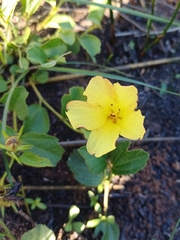 Hibiscus aethiopicus Cape Hibiscus Photo: CC BY, Martjie Fia Fourie Hibiscus aridicola Malvaceae
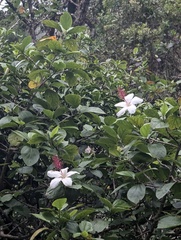 Hibiscus arnottianus White Molokai Hibiscus Photo: CC0, author not stated
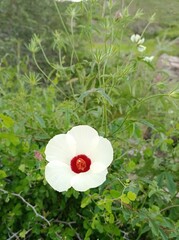 Hibiscus biseptus Arizona rose-mallow Photo: CC BY, Jose Luis Leon de la Luz
 Hibiscus boryanus Malvaceae Photo: CC BY-SA, Planete Terre
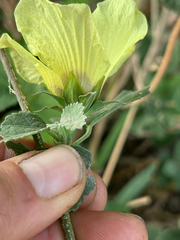 Hibiscus calyphyllus Lemonyellow rosemallow Photo: CC0, author not stated
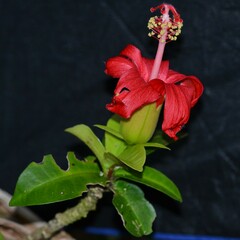 Hibiscus clayi Clay's hibiscus Photo: CC0, author not stated
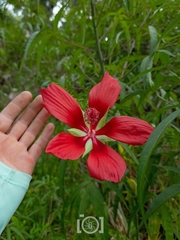 Hibiscus coccineus Scarlet rose-mallow Photo: CC0, author not stated
 Hibiscus columnaris Malvaceae Photo: CC BY-SA, Claude Marodon
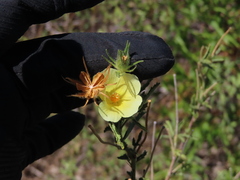 Hibiscus coulteri Desert rose-mallow Photo: CC BY, Ulises Pinedo
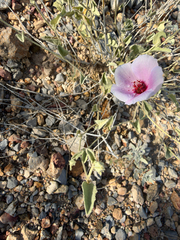 Hibiscus denudatus Rock hibiscus Photo: CC BY, IDClaire all 55 ›
Names & registers
The record
Every figure here is derived from public data by a stated rule and names its source; nothing about this species is written for its page by a person or by AI, apart from the marked, credited quotations. How →
Where this page came from built 2026-10-22
gbif.species answeredasked 2026-10-22homonym key checked: GBIF holds no one usage of Hibiscus cooperi J.Veitch f. under another key, so the key is left as it is; GBIF's key 11205253 is Hibiscus cooperi J.J.Veitch; the page links Kew's Hibiscus cooperi J.Veitch f., and the name is cited as Kew cites itgbif.synonyms answeredasked 2026-10-22gbif.vernacular answeredasked 2026-10-22names fetched 2026-10-22wcvp.distribution answeredas of 2026-06-04gbif.occurrences answeredas of 2026-10-21GBIF occurrence download https://doi.org/10.15468/dl.hbdw64, of 2026-10-21climate nothing to reportasked 2026-10-222 in-range records, none placed to within 10 kmwikidata answeredasked 2026-10-22found by its label; its IPNI identifier 560124-1 is Kew's for Hibiscus cooperi J.Veitch f.wikipedia answeredasked 2026-10-22inat.taxon not askedinat.photos.wild not askedinat.photos.cultivated not askedgbif.media nothing to reportasked 2026-10-22commons nothing to reportasked 2026-10-22openalex not askednot yet asked for this reference; a later fill takes the papers from OpenAlex's snapshotEvery source is recorded as having answered, reported nothing, refused, failed, not been asked, or answered twice where one answer is taken (“not taken: two items answered”), and, for a source asked when this page was built, when: the figures are as the source held them that day; a source read from a file (Kew's World Checklist, a GBIF download) says "as of" the file's day instead; a row carried from an earlier build of the page names that build instead. Only “nothing to report” is ever shown as an absence. Records came from 1 datasets via GBIF.org; each carries its own licence.