Hydrangea longipes Franch.
Photographs not checked
iNaturalist was skipped (not asked) when this page was built. Not asked, or not answered, is not "none": nothing here claims there is none. Why the site says it this way.Summary
Hydrangea longipes is a species of flowering plant in the family Hydrangeaceae, native to western China.
Quoted from Wikipedia, "Hydrangea longipes", CC BY-SA 4.0.
About the genus · Hydrangea
Hydrangea is a genus of more than 70 species of flowering plants native to Asia and the Americas. Hydrangea is also used as the common name for the genus; some are also often called hortensia. The genus was first described from Virginia in North America, but by far the greatest species diversity is in eastern Asia, notably China, Korea, and Japan. More on Wikipedia ›
Quoted from Wikipedia, "Hydrangea", CC BY-SA 4.0.
Cultivation
Grouped as a temperate garden plant, listed under the genus Hydrangea in the archetype table, and Kew describes it as “shrub”, “temperate”.
How this section is made
Each card states this species' habitat figures with their sources, and what two fixed rules read from them; nothing here says what the plant does, wants or tolerates. The rules · the terms.
Group. Listed under the genus Hydrangea in the archetype table, and Kew describes it as “shrub”, “temperate”. A group is taken only where Kew's description of the species agrees with the table's listing. The table gives no figure and no prose; the cold floor is the habitat's alone.
Climate across the habitat
Natural habitat
How this section is made
Photographs
Related
Other Hydrangea 42 in the reference
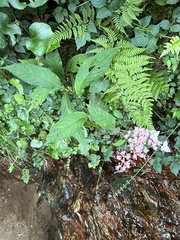 Hydrangea alternifolia Hydrangeaceae Photo: CC BY, pavlaki1968 Hydrangea ampla Chinese hydrangea-vine
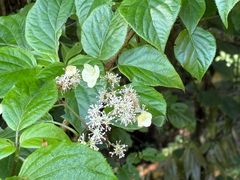 Hydrangea anomala Japanese Climbing-hydrangea Photo: CC BY, 黃美滿
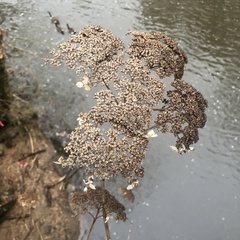 Hydrangea arborescens Smooth hydrangea Photo: CC BY, Andrew Conboy
 Hydrangea arguta Kanawao Photo: CC BY, Kevin Faccenda
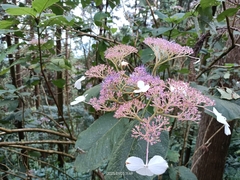 Hydrangea aspera Rough-leaf hydrangea Photo: CC BY, 五色鳥
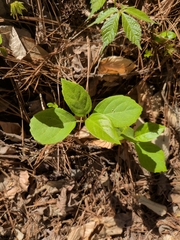 Hydrangea barbara Climbing hydrangea Photo: CC0, Odile V
 Hydrangea bifida Hydrangeaceae Photo: CC BY, Philippe Giabbanelli
 Hydrangea bretschneideri Hydrangeaceae Photo: CC BY-SA, Vonundzu
 Hydrangea caerulea Hydrangeaceae Photo: CC BY-SA, Bouba at French Wikipedia
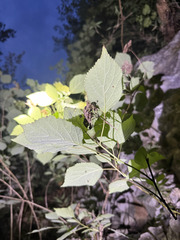 Hydrangea cinerea Ashy hydrangea Photo: CC BY, sblumen
 Hydrangea fauriei Hydrangeaceae Photo: CC BY, Cheng-Te Hsu all 43 ›
Names & registers
Also known as Hydrangea aspera var. longipes; Hydrangea discocarpa; Hydrangea hemsleyana; Hydrangea hemsleyana var. pavoliniana. (GBIF Backbone)
The record
Every figure here is derived from public data by a stated rule and names its source; nothing about this species is written for its page by a person or by AI, apart from the marked, credited quotations. How →
Where this page came from built 2026-10-22
gbif.species answeredasked 2026-10-22gbif.synonyms answeredasked 2026-10-22gbif.vernacular answeredasked 2026-10-22names fetched 2026-10-22wcvp.distribution answeredas of 2026-06-04gbif.occurrences answeredas of 2026-10-21GBIF occurrence download https://doi.org/10.15468/dl.hbdw64, of 2026-10-21climate nothing to reportasked 2026-10-22198 in-range records, none placed to within 10 kmwikidata answeredasked 2026-10-22IPNI and POWO linked by Kew's number for Hydrangea longipes Franch. (the item's: IPNI 986071-1, POWO 791634-1)wikipedia answeredasked 2026-10-22inat.taxon not askedinat.photos.wild not askedinat.photos.cultivated not askedgbif.media nothing to reportasked 2026-10-22commons nothing to reportasked 2026-10-22openalex not askednot yet asked for this reference; a later fill takes the papers from OpenAlex's snapshotEvery source is recorded as having answered, reported nothing, refused, failed, not been asked, or answered twice where one answer is taken (“not taken: two items answered”), and, for a source asked when this page was built, when: the figures are as the source held them that day; a source read from a file (Kew's World Checklist, a GBIF download) says "as of" the file's day instead; a row carried from an earlier build of the page names that build instead. Only “nothing to report” is ever shown as an absence. Records came from 14 datasets via GBIF.org; each carries its own licence.