
Inga feuilleei DC.
English names not checked: Wikidata's common names were not read for this page.


 12 photographs ›
Summary
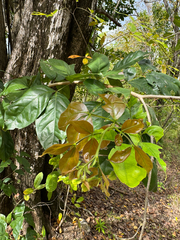
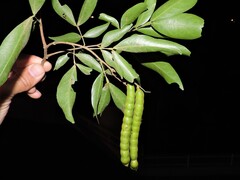
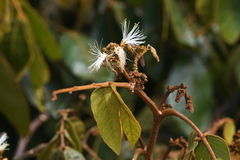
Inga feuilleei (named after Louis Feuillée), commonly known as pacay or ice-cream bean tree, is a tree in the family Fabaceae native to Andean valleys of northwestern South America. Pacay trees, as is the case with other trees in genus Inga, produce pods that contain an edible white pulp and have nitrogen-fixing roots.
Quoted from Wikipedia, "Inga feuilleei", CC BY-SA 4.0.
About the genus · Inga
Inga is a genus of small tropical, tough-leaved, nitrogen-fixing trees and shrubs, subfamily Mimosoideae. Inga's leaves are pinnate, and flowers are generally white. Many of the hundreds of species are used ornamentally.
Quoted from Wikipedia, "Inga", CC BY-SA 4.0.
Cultivation
Climate across the habitat
Natural habitat
This species has no GBIF key of its own. Its records are GBIF's under the key of the name Kew's World Checklist holds as this plant: 5629286 (Feuilleea feuilleei (DC.) Kuntze, 0 records). No name was matched to GBIF; the keys are read from Kew's synonymy. How.
Photographs


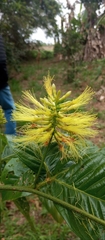
Photographs: Floro Ortiz Contreras, CC BY 4.0, via Wikimedia Commons; Ruth Gutiérrez Oliveros, CC0, via Wikimedia Commons (4); Agnieszka Kwiecień, Nova, CC BY-SA 4.0, via Wikimedia Commons.
Related
Other Inga 17 in the reference
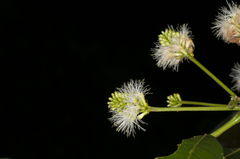 Inga densiflora Fabaceae Photo: CC BY-SA, Oscar Marín
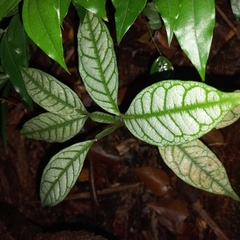 Inga edulis Ice cream bean Photo: CC BY, Patrícia Mees
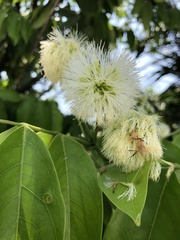 Inga inicuil Fabaceae Photo: CC BY, Skjold Søndergaard
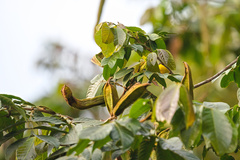 Inga insignis Fabaceae Photo: CC BY, Attila Oláh Inga lanceifolia Fabaceae
 Inga laurina Sacky sac bean Photo: CC BY, Matteo Bellucci
 Inga marginata Guabilla Photo: CC BY, Fabrício Mil Homens Riella
 Inga oerstediana Fabaceae Photo: CC BY, Trevor Van Loon
 Inga ornata Fabaceae Photo: CC BY-SA, Alejandro Bayer Tamayo from Armenia…
 Inga pilosula Fabaceae Photo: CC BY, Paulo C. O. Cunha
 Inga punctata Fabaceae Photo: CC BY, Alexis López Hernández all 18 ›
Names & registers
Also known as Feuilleea reticulata; Inga cumingiana; Inga reticulata; Inga pacai; Feuilleea feuilleei. (WCVP, RBG Kew)
The record
Every figure here is derived from public data by a stated rule and names its source; nothing about this species is written for its page by a person or by AI, apart from the marked, credited quotations. How →
Where this page came from built 2026-10-22
kew.names answeredas of 2026-06-04Kew's entry Inga feuilleei DC. (plant_name_id 2865283), read from Kew's names filegbif.species not askedGBIF's backbone holds no one accepted species of this name, and a name it holds only as another species' synonym is not taken for this one, so GBIF's records were not askedgbif.synonyms not askedGBIF's backbone holds no one accepted species of this name, and a name it holds only as another species' synonym is not taken for this one, so GBIF's records were not askedgbif.vernacular not askedGBIF's backbone holds no one accepted species of this name, and a name it holds only as another species' synonym is not taken for this one, so GBIF's records were not askedwcvp.distribution answeredas of 2026-06-04gbif.occurrences nothing to reportasked 2026-10-22this species has no GBIF key of its own; its records are read under GBIF's keys for the names Kew's file holds as this plant, never by a name matched; 0 records of GBIF's key 5629286, Feuilleea feuilleei (DC.) Kuntze (Kew's file holds it as Feuilleea feuilleei (DC.) Kuntze (synonym under Inga feuilleei DC.)): GBIF occurrence search APIclimate nothing to reportasked 2026-10-22no georeferenced record inside the rangewikidata not taken: two items answeredasked 2026-10-22not taken: two items carry Kew's IPNI identifier 128507-2, POWO 128507-2 (Q39144632, Q257726)wikipedia answeredasked 2026-10-22inat.taxon not askedinat.photos.wild not askedinat.photos.cultivated not askedgbif.media not askedGBIF's backbone holds no one accepted species of this name, and a name it holds only as another species' synonym is not taken for this one, so GBIF's records were not askedcommons answeredasked 2026-10-22openalex not askednot yet asked for this reference; a later fill takes the papers from OpenAlex's snapshotEvery source is recorded as having answered, reported nothing, refused, failed, not been asked, or answered twice where one answer is taken (“not taken: two items answered”), and, for a source asked when this page was built, when: the figures are as the source held them that day; a source read from a file (Kew's World Checklist, a GBIF download) says "as of" the file's day instead; a row carried from an earlier build of the page names that build instead. Only “nothing to report” is ever shown as an absence.