
Koenigia × fennica (Reiersen) T.M.Schust. & Reveal
Finnish knotweed
A hybrid: K. alpina × K. weyrichii, the parents Kew's World Checklist states for it (WCVP, RBG Kew).


 5 photographs ›
Summary
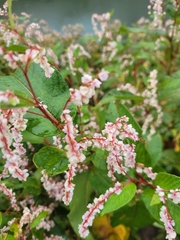
Koenigia × fennica, known as Finnish knotweed, is a hybrid between two species of Koenigia, K. alpina and K. weyrichii, members of the family Polygonaceae, the knotweed family. It generally only known as a cultivated garden plant, but plants have been recorded a few times surviving in abandoned areas in northern Europe, especially in Finland. The cultivar 'Johanniswolke' is considered an attractive ornamental perennial plant.
Quoted from Wikipedia, "Koenigia × fennica", CC BY-SA 4.0.
Cultivation
Climate across the habitat
Natural habitat
Photographs


Photographs: Harri Kosonen, CC BY-SA, via GBIF (4).
Related
Other Koenigia 14 in the reference
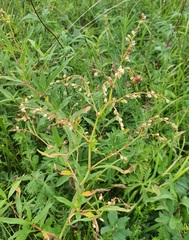 Koenigia alpina Alpine knotweed Photo: CC BY, Urgamal Magsar Koenigia angustifolia Polygonaceae
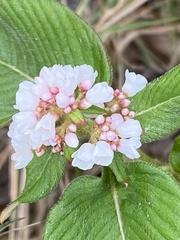 Koenigia campanulata Bellflower Knotweed Photo: CC BY, rmjb Koenigia coriaria Polygonaceae
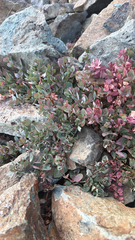 Koenigia davisiae Davis's Knotweed Photo: CC BY, harrii
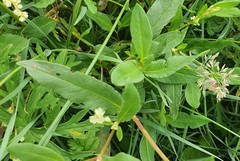 Koenigia divaricata Polygonaceae Photo: CC BY, Urgamal Magsar
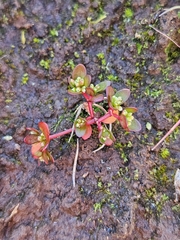 Koenigia islandica Iceland-purslane Photo: CC BY, Karl Palsson
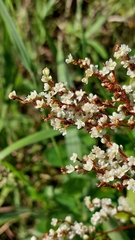 Koenigia jurii Juriy’s knotweed Photo: CC BY, Lena Perova
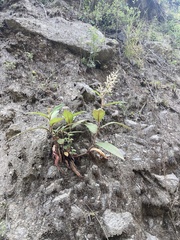 Koenigia mollis Sikkim Knotweed Photo: CC0, author not stated
 Koenigia panjutinii Polygonaceae Photo: CC BY, Oleg Kosterin
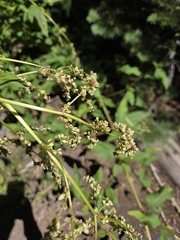 Koenigia phytolaccifolia Polygonaceae Photo: CC BY, Rosie Yacoub
 Koenigia polystachya Himalayan knotweed Photo: CC BY, Subir B. Shakya all 15 ›
Names & registers
Also known as Aconogonon alpinum; Aconogonon xfennicum; Aconogonum xfennicum. (GBIF Backbone)
The record
Every figure here is derived from public data by a stated rule and names its source; nothing about this species is written for its page by a person or by AI, apart from the marked, credited quotations. How →
Where this page came from built 2026-10-22
gbif.species answeredasked 2026-10-22gbif.synonyms answeredasked 2026-10-22gbif.vernacular answeredasked 2026-10-22names fetched 2026-10-22wcvp.distribution answeredas of 2026-06-04Kew's entry lists no native region, only 6 where it is introducedgbif.occurrences answeredas of 2026-10-21GBIF occurrence download https://doi.org/10.15468/dl.hbdw64, of 2026-10-21; 13 records within 1 km of a botanic garden, herbarium or zoo left out (12 at a botanic garden or arboretum, 1 at a zoo; Wikidata's list)climate nothing to reportasked 2026-10-22native range not verified: no WCVP distribution with native status for this name, so records cannot be told from cultivation and no habitat climate is derivedwikidata answeredasked 2026-10-22wikipedia answeredasked 2026-10-22inat.taxon not askedinat.photos.wild not askedinat.photos.cultivated not askedgbif.media answeredasked 2026-10-22commons nothing to reportasked 2026-10-22openalex not askednot yet asked for this reference; a later fill takes the papers from OpenAlex's snapshotEvery source is recorded as having answered, reported nothing, refused, failed, not been asked, or answered twice where one answer is taken (“not taken: two items answered”), and, for a source asked when this page was built, when: the figures are as the source held them that day; a source read from a file (Kew's World Checklist, a GBIF download) says "as of" the file's day instead; a row carried from an earlier build of the page names that build instead. Only “nothing to report” is ever shown as an absence. Records came from 37 datasets via GBIF.org; each carries its own licence.