
Laburnum × watereri (A.C.Rosenthal & Bermann) Dippel
Golden chain tree
A hybrid: L. alpinum × L. anagyroides, the parents Kew's World Checklist states for it (WCVP, RBG Kew).


 17 photographs ›
Summary
Laburnum × watereri (or Laburnum watereri), is a naturally occurring hybrid species of Laburnum, native to Central Europe. Its parents are common laburnum, Laburnum anagyroides, and alpine laburnum, Laburnum alpinum. A small deciduous tree or large shrub, it is a popular garden plant, called golden chain tree for its spectacular display of hanging clusters of yellow pea-like blossoms. It can be trained to take forms such as arches and espaliers.
Quoted from Wikipedia, "Laburnum × watereri", CC BY-SA 4.0.
About the genus · Laburnum
Laburnum, sometimes called golden chain or golden rain, is a genus of two species of small trees in the subfamily Faboideae of the pea family Fabaceae. The species are Laburnum anagyroides—common laburnum and Laburnum alpinum—alpine laburnum. They are native to the mountains of Southern Europe.
Quoted from Wikipedia, "Laburnum", CC BY-SA 4.0.
Cultivation
Climate across the habitat
Natural habitat
Photographs


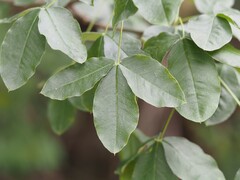
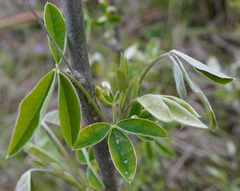
Photographs: Theodor Korsgaard, CC BY, via GBIF (4); Kenneth Kourula, CC BY-SA, via GBIF (2).
Related
Other Laburnum 2 in the reference
 Laburnum alpinum Scottish laburnum Photo: CC BY, Louis Aureglia
 Laburnum anagyroides Golden chain tree Photo: CC BY, Patrick Hacker
Names & registers
Also known as Laburnum vulgare f. vossii; Laburnum vulgare var. parkesii; Laburnum vulgare var. watereri; Laburnum xwatereri. (GBIF Backbone)
Under another author Laburnum alpinum × anagyroides is an older name of this species, not Laburnum alpinum, a species of the reference. (GBIF Backbone)
The record
Every figure here is derived from public data by a stated rule and names its source; nothing about this species is written for its page by a person or by AI, apart from the marked, credited quotations. How →
Where this page came from built 2026-10-22
gbif.species answeredasked 2026-10-22gbif.synonyms answeredasked 2026-10-22gbif.vernacular answeredasked 2026-10-22names fetched 2026-10-22wcvp.distribution answeredas of 2026-06-04gbif.occurrences answeredas of 2026-10-21GBIF occurrence download https://doi.org/10.15468/dl.hbdw64, of 2026-10-21; 31 records within 1 km of a botanic garden, herbarium or zoo left out (24 at a botanic garden or arboretum, 1 at a herbarium, 6 at a zoo; Wikidata's list)climate nothing to reportasked 2026-10-22only 1 distinct land cell of the climate grid holds an in-range record placed to within 10 km; three are needed for an envelopewikidata answeredasked 2026-10-22wikipedia answeredasked 2026-10-22inat.photos.wild nothing to reportasked 2026-10-22from iNaturalist's open data of 2026-09-27: research-grade observations with an open-licence photograph, the 24 whose photographs iNaturalist received last (the open data holds no votes); filled 2026-10-22inat.photos.cultivated not askedgbif.media answeredasked 2026-10-22openalex not askednot yet asked for this reference; a later fill takes the papers from OpenAlex's snapshotEvery source is recorded as having answered, reported nothing, refused, failed, not been asked, or answered twice where one answer is taken (“not taken: two items answered”), and, for a source asked when this page was built, when: the figures are as the source held them that day; a source read from a file (Kew's World Checklist, a GBIF download) says "as of" the file's day instead; a row carried from an earlier build of the page names that build instead. Only “nothing to report” is ever shown as an absence. Records came from 42 datasets via GBIF.org; each carries its own licence.