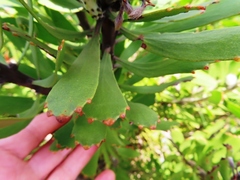
 5 photographs ›
Summary
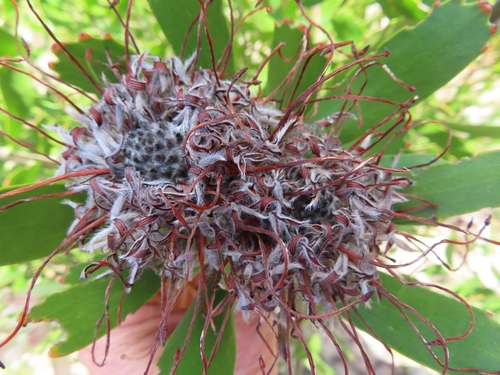
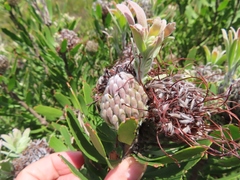
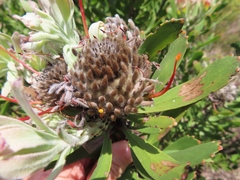
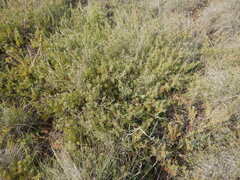
Leucospermum fulgens is an evergreen, upright shrub of up to 3 m (10 ft) high, from the family Proteaceae. It has hairless and leathery inverted lance-shaped to oblong leaves tipped with mostly three teeth and globe- to egg-shaped flowerheads of 6–8 cm in diameter, that consist of pink to orange, later crimson flowers. From the center of the flowers emerge almost straight styles that jointly give the impression of a pincushion. It is called Potberg pincushion in English. More on Wikipedia ›
Quoted from Wikipedia, "Leucospermum fulgens", CC BY-SA 4.0.
About the genus · Leucospermum
Leucospermum, commonly known as pincushions, is a genus of evergreen upright, sometimes creeping shrubs that is assigned to the Proteaceae, with currently 48 known species.
Quoted from Wikipedia, "Leucospermum", CC BY-SA 4.0.
Cultivation
Climate across the habitat
Natural habitat
How this section is made
Photographs
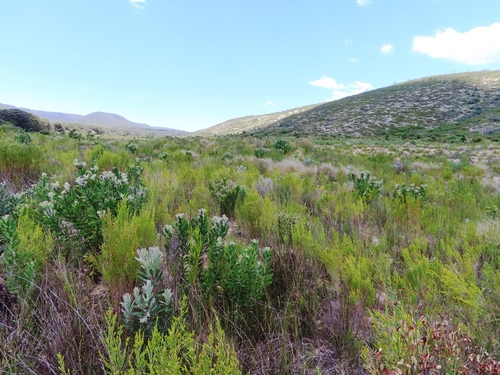
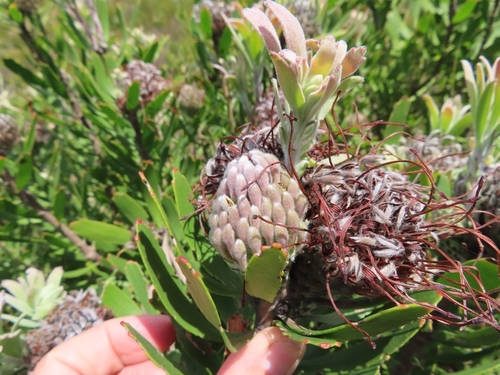
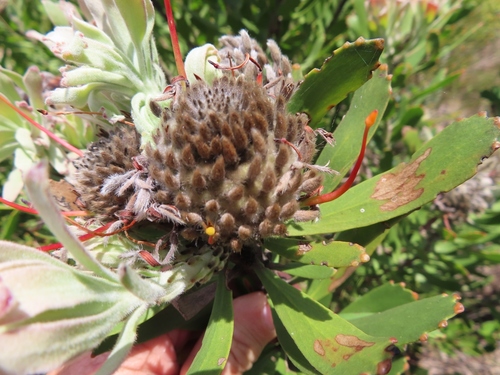
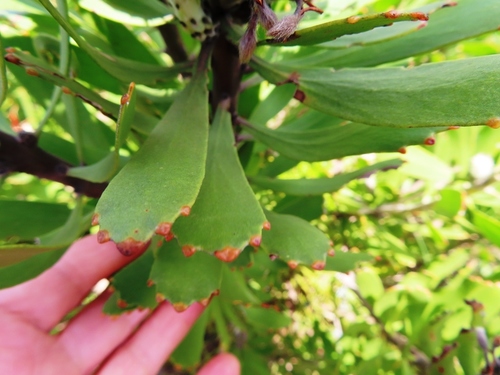
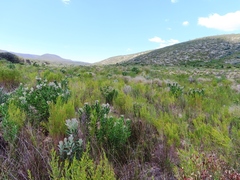
Photographs: (c) linkie, some rights reserved (CC BY) (4).
Related
Other Leucospermum 29 in the reference
 Leucospermum bolusii Gordon's Bay Pincushion Photo: CC BY-SA, Tony Rebelo
 Leucospermum calligerum Arid Pincushion Photo: CC BY, marius
 Leucospermum catherinae Catherine-wheel Pincushion Photo: CC BY, Justin Ponder
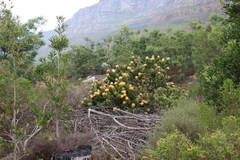 Leucospermum conocarpodendron Tree Pincushion Photo: CC BY-SA, Tony Rebelo
 Leucospermum cordifolium Pincushion Photo: CC BY, Adele SL
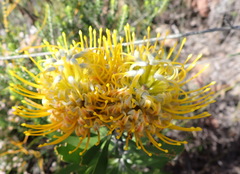 Leucospermum cuneiforme Wart-stemmed Pincushion Photo: CC BY-SA, Nicola van Berkel
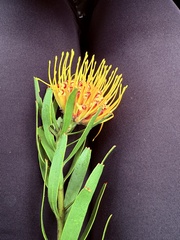 Leucospermum erubescens Oudtshoorn Pincushion Photo: CC BY, Christina
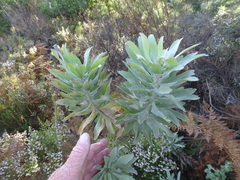 Leucospermum formosum Handsome Leucadendrum Photo: CC BY, Shaun Swanepoel
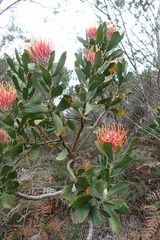 Leucospermum glabrum Outeniqua Pincushion Photo: CC BY, Karen Eichholz
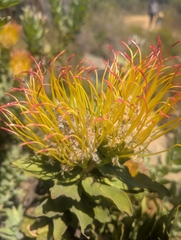 Leucospermum grandiflorum Grey-leaf Fountain Pincushion Photo: CC BY, biogeek
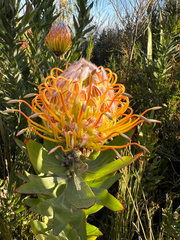 Leucospermum gueinzii Kloof Fountain Pincushion Photo: CC0, author not stated
 Leucospermum heterophyllum Trident Pincushion Photo: CC BY-SA, James Deacon all 30 ›
Names & registers
The record
Every figure here is derived from public data by a stated rule and names its source; nothing about this species is written for its page by a person or by AI, apart from the marked, credited quotations. How →
Where this page came from built 2026-10-22
gbif.species answeredasked 2026-10-22gbif.synonyms answeredasked 2026-10-22gbif.vernacular answeredasked 2026-10-22names fetched 2026-10-22wcvp.distribution answeredas of 2026-06-04gbif.occurrences answeredas of 2026-10-21GBIF occurrence download https://doi.org/10.15468/dl.hbdw64, of 2026-10-21climate nothing to reportasked 2026-10-22only 2 distinct land cells of the climate grid hold an in-range record placed to within 10 km; three are needed for an envelopewikidata answeredasked 2026-10-22wikipedia answeredasked 2026-10-22inat.photos.wild answeredasked 2026-10-22from iNaturalist's open data of 2026-09-27: research-grade observations with an open-licence photograph, the 24 whose photographs iNaturalist received last (the open data holds no votes); filled 2026-10-22inat.photos.cultivated not askedgbif.media answeredasked 2026-10-22none of the photographs on this page is credited to GBIF: those shown are other sources', and GBIF's were the same photographs or were set aside by the photograph rulescommons nothing to reportasked 2026-10-22openalex not askednot yet asked for this reference; a later fill takes the papers from OpenAlex's snapshotEvery source is recorded as having answered, reported nothing, refused, failed, not been asked, or answered twice where one answer is taken (“not taken: two items answered”), and, for a source asked when this page was built, when: the figures are as the source held them that day; a source read from a file (Kew's World Checklist, a GBIF download) says "as of" the file's day instead; a row carried from an earlier build of the page names that build instead. Only “nothing to report” is ever shown as an absence. Records came from 3 datasets via GBIF.org; each carries its own licence.