Ligustrum leucanthum (S.Moore) P.S.Green
Sharp-leaf privet
Photographs not checked
iNaturalist was skipped (not asked) when this page was built. Not asked, or not answered, is not "none": nothing here claims there is none. Why the site says it this way.At a glance
- Jan
- Feb
- Mar
- Apr, shaded
- May, shaded
- Jun, shaded
- Jul, shaded
- Aug, shaded
- Sep, shaded
- Oct
- Nov
- Dec
From few records: 8 records in 5 grid cells. The records.
About the genus · Ligustrum
A privet is a flowering plant in the genus Ligustrum. The genus contains about 50 species of erect, deciduous or evergreen shrubs or trees, with a native distribution from Europe to tropical and subtropical Asia, and with one species each native to Australia and north Africa. Some species have become widely naturalized or invasive where introduced. More on Wikipedia ›
Quoted from Wikipedia, "Privet", CC BY-SA 4.0.
Cultivation
Seasons
The rain rule reads a summer growing season: 70% of the median year's rain (1,439 mm of 2,007 mm) falls in April to September, warmer than the year (wet-season mean 21.4 °C against a yearly mean of 15.1 °C). Months are the habitat's, northern hemisphere; shifted six months for a southern-hemisphere collection: October to March.
Rain
2,007 mm in the median year at the habitat, 1,439 mm of it April to September. Wettest month June at 301 mm, driest month December at 50 mm. Across the grid cells of the range the year's total runs 1,609 mm to 2,238 mm, the 10th to 90th percentile of each cell's own year. The median of the cells' own yearly totals, 1,961 mm, is the year's rain at the top of the page; the 2,007 mm here is the median year's, the twelve monthly medians added, which the rain rule reads. Habitat calendar, northern hemisphere; median year across the grid cells of the range, CHELSA.
Light
Open sky over the habitat: 14 to 31 mol/m²/day across the year (daily light integral, median year across the grid cells of the range, CHELSA; the lowest 10th-percentile month across the cells is 13, the highest 90th-percentile month 33).
Warmth and air
Coldest: the 1st-percentile night over 44 years at a typical spot in the range is -7.4 °C, the absolute minimum -16.1 °C, 3,110 frost nights in 44 years, 70.7 a year (NASA POWER daily minima). Warmest: the 99th-percentile day is 31.8 °C. Monthly means: the coldest month's mean nightly low -0.5 °C in January (across the grid cells of the range -0.9 °C to -0.3 °C), the warmest month's mean daily high 29.0 °C in July (median year across the grid cells of the range, CHELSA). Cold floor: -7.4 °C, which is the 1st-percentile night over 44 years at a typical spot in the range (NASA POWER).
Relative humidity at the habitat: 62 to 68% across the year (monthly means, median year across the grid cells of the range, CHELSA). A figure about the air, saying nothing about how the plant takes water.
How this section is made
Each card states this species' habitat figures with their sources, and what two fixed rules read from them; nothing here says what the plant does, wants or tolerates. The rules · the terms.
Seasons. Read from the median year of CHELSA monthly rainfall and mean temperature across the grid cells of the range: the rain rule takes the smallest set of months carrying 70% of the rain and calls it winter when its mean is more than half a degree below the year's, summer when more than that above, and neither in between; the temperature rule, used only under 120 mm, names the cooler six months when they are at least a degree cooler than the other six. Months are shifted for the other hemisphere only where the temperature curve moves 4 °C or more and the habitat lies 10° or more from the equator. A reading of the curves, not an observation of the plant.
Rain. CHELSA monthly precipitation, median year across the grid cells of the range. The rain that falls where the species is recorded; nothing about how the plant takes water.
Light. CHELSA shortwave radiation at each envelope cell, a daily-mean flux taken to a daily total and converted at 2.07 mol of PAR per MJ. The sky over the habitat, measured; what reaches a plant under a rock, a shrub or a shade cloth is not.
Temperature. NASA POWER daily minima and maxima over 44 years at a typical spot in the range, lapse-corrected +386 m to its elevation; CHELSA monthly means, median year across the grid cells of the range. The cold floor is the 1st-percentile night named in its sentence. Not a measured survival limit for any plant in a pot.
Humidity. CHELSA relative humidity, median year across the grid cells of the range.
Climate across the habitat
From few records: this habitat climate is read from 8 records in 5 grid cells; a page says so under 12 records or 5 cells, and shows the figures as read.
Habitat months, northern hemisphere
Mean daily high from 7 °C in Jan to 29 °C in Jul and Aug; mean nightly low from -1 °C in Jan to 22 °C in Jul and Aug. The cold quarter, Dec to Feb, is the three months around the coldest month's mean nightly low. 2,007 mm of rain in the median year (the twelve monthly medians added), the wettest month Jun. The bands show the 10th to 90th percentile across 5 habitat cells. Over 44 years at a typical spot in the range (NASA POWER) the absolute minimum was -16.1 °C and the 99th-percentile day 31.8 °C; neither is dated to a month. Beneath: daily light integral and relative humidity through the year, each on its own scale.
Figures by month
| Figure | Jan | Feb | Mar | Apr | May | Jun | Jul | Aug | Sep | Oct | Nov | Dec |
|---|---|---|---|---|---|---|---|---|---|---|---|---|
| Day °C | 7 / 5–8 | 8 / 7–9 | 13 / 12–13 | 19 / 17–19 | 23 / 22–23 | 26 / 24–26 | 29 / 26–30 | 29 / 26–29 | 25 / 22–25 | 20 / 17–20 | 14 / 12–15 | 9 / 7–10 |
| Night °C | -1 / -1–0 | 1 / 1–2 | 4 / 4–5 | 10 / 10–11 | 15 / 14–16 | 19 / 18–20 | 22 / 21–23 | 22 / 20–22 | 18 / 17–18 | 12 / 12–13 | 7 / 6–7 | 1 / 1–2 |
| Rain mm | 75 / 35–91 | 94 / 46–99 | 152 / 80–180 | 171 / 117–235 | 191 / 152–299 | 301 / 218–354 | 291 / 251–337 | 274 / 190–324 | 211 / 120–225 | 101 / 87–152 | 96 / 53–104 | 50 / 24–59 |
| DLI | 15 / 13–16 | 17 / 14–18 | 21 / 17–21 | 25 / 22–27 | 28 / 26–29 | 27 / 26–28 | 31 / 28–33 | 30 / 27–30 | 24 / 20–24 | 18 / 14–21 | 16 / 13–17 | 14 / 13–17 |
| RH % | 65 / 64–65 | 66 / 64–66 | 65 / 63–66 | 63 / 62–64 | 62 / 62–64 | 66 / 63–68 | 66 / 64–67 | 66 / 65–70 | 68 / 62–69 | 65 / 62–67 | 64 / 62–66 | 62 / 62–64 |
How this section is made
Natural habitat
How this section is made
Photographs
Related
Similar habitat climate The 6 nearest by mean daily high, mean nightly low and rain, month by month. How.
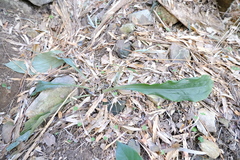 Calanthe graciliflora Orchidaceae Photo: CC BY, 王天明 Polygonatum cyrtonema Asparagaceae
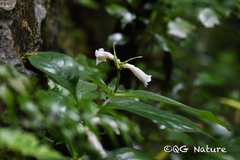 Hemiboea subcapitata Gesneriaceae Photo: CC BY, Wang.QG Polygonatum filipes Asparagaceae
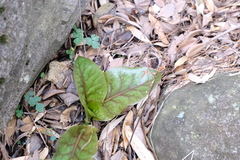 Cardiocrinum cathayanum Liliaceae Photo: CC BY, 王天明
Other Ligustrum 20 in the reference
 Ligustrum delavayanum Oleaceae Photo: CC BY-SA, FreCha Ligustrum foliosum Korean privet Ligustrum henryi Oleaceae
 Ligustrum ibota Oleaceae Photo: CC BY-SA, Krzysztof Golik
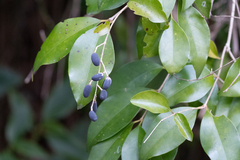 Ligustrum japonicum Japanese privet Photo: CC BY, WATANABE Hitoshi 渡辺仁
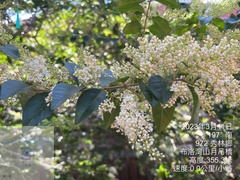 Ligustrum liukiuense Oleaceae Photo: CC BY, 謝麗霦
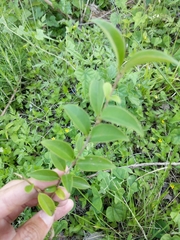 Ligustrum lucidum Glossy privet Photo: CC BY, Alison Northup
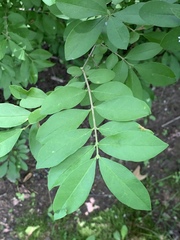 Ligustrum obtusifolium Border privet Photo: CC BY, Sandy Wolkenberg
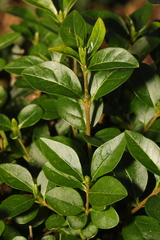 Ligustrum ovalifolium Garden privet Photo: CC0, author not stated
 Ligustrum pricei Oleaceae Photo: CC BY, Cheng-Tao Lin all 21 ›
Names & registers
Also known as Ligustrum acutissimum; Ligustrum acutissimum var. glabrum; Ligustrum henryi var. longitubum; Ligustrum ibota f. subcoriaceum; Ligustrum longitubum and 3 more. (GBIF Backbone)
The record
Every figure here is derived from public data by a stated rule and names its source; nothing about this species is written for its page by a person or by AI, apart from the marked, credited quotations. How →
Where this page came from built 2026-10-22
gbif.species answeredasked 2026-10-22gbif.synonyms answeredasked 2026-10-22gbif.vernacular answeredasked 2026-10-22names fetched 2026-10-22wcvp.distribution answeredas of 2026-06-04gbif.occurrences answeredas of 2026-10-21GBIF occurrence download https://doi.org/10.15468/dl.hbdw64, of 2026-10-21; 6 records within 1 km of a botanic garden, herbarium or zoo left out (6 at a botanic garden or arboretum; Wikidata's list)climate answeredasked 2026-10-22climate.extremes answeredasked 2026-10-22NASA POWER (MERRA-2) daily 1981–2024, cell 29.50_121.250, lapse-corrected +386 m at 6.5 °C/kmwikidata answeredasked 2026-10-22wikipedia nothing to reportasked 2026-10-22inat.photos.wild nothing to reportasked 2026-10-22from iNaturalist's open data of 2026-09-27: research-grade observations with an open-licence photograph, the 24 whose photographs iNaturalist received last (the open data holds no votes); filled 2026-10-22inat.photos.cultivated not askedgbif.media nothing to reportasked 2026-10-22commons nothing to reportasked 2026-10-22openalex not askednot yet asked for this reference; a later fill takes the papers from OpenAlex's snapshotEvery source is recorded as having answered, reported nothing, refused, failed, not been asked, or answered twice where one answer is taken (“not taken: two items answered”), and, for a source asked when this page was built, when: the figures are as the source held them that day; a source read from a file (Kew's World Checklist, a GBIF download) says "as of" the file's day instead; a row carried from an earlier build of the page names that build instead. Only “nothing to report” is ever shown as an absence. Records came from 24 datasets via GBIF.org; each carries its own licence.