Species
+

Linum usitatissimum L.

Common Flax, Flaaks, Flachs (DE); Common flax (EN); Lino (ES), Flax

No habitat climate 68 photographs

Every figure on this page is derived from public data by a stated rule and says its source; nothing here is written by a person or a model, except the Wikipedia passage, which is quoted and marked as such. How it is made.

Summary

Flax, also known as common flax or line, is a flowering plant, Linum usitatissimum, in the family Linaceae. It is cultivated as a food and fiber crop in regions of the world with temperate climates.

Text from Wikipedia, “Flax”, CC BY-SA 4.0, quoted as written. Kept separate from everything derived here.

About the genus · Linum

Linum (flax) is a genus of approximately 200 species in the flowering plant family Linaceae. They are native to temperate and subtropical regions of the world. The genus includes the common flax, the bast fibre of which is used to produce linen and the seeds to produce linseed oil.

Text from Wikipedia, “Linum”, CC BY-SA 4.0, quoted as written.

Family
Linaceae
Described by
L.
Native to
North Caucasus, Transcaucasus, Iran +3
Wild records
2 in range· 1 open

Also known as Linum angustifolium subsp. usitatissimum (L.) Rouy; Linum arvense Neck.; Linum crepitans (Boenn.) Dumort.; Linum dehiscens subsp. crepitans (Boenn.) Vavilov & Elladi; Linum grandiflorum Rchb. and 44 more.

Cultivation

Nothing derived: no habitat climate for this species, and the archetype table has no figure for its genus or family.

Climate across the habitat

No habitat climate can be derived: Only 2 distinct land cells of the climate grid hold an in-range record; three are needed for an envelope.

Natural habitat

Native range as published by WCVP.
Openly licensed records inside the range, framed on where they fall.
NativeNorth Caucasus, Transcaucasus, Iran, Iraq, Lebanon-Syria, Turkey· introduced: Great Britain, Ireland, Belgium, Czechoslovakia, Germany, Baleares, Corse, France, Portugal, Sardegna, Spain, Albania, Bulgaria, Italy, Kriti, Sicilia, Turkey-in-Europe, Yugoslavia, Baltic States, Central European Russia, East European Russia, South European Russia, Ukraine, Algeria, Egypt, Libya, Morocco, Tunisia, Azores, Canary Is., Madeira, Ethiopia, Kenya, Angola, Buryatiya, Tuva, West Siberia, Amur, Kamchatka, Khabarovsk, Primorye, Sakhalin, Kazakhstan, Kirgizistan, Turkmenistan, Tadzhikistan, Uzbekistan, Afghanistan, Cyprus, East Aegean Is., Palestine, Oman, Saudi Arabia, Yemen, China South-Central, Inner Mongolia, Manchuria, China North-Central, China Southeast, Tibet, Xinjiang, Mongolia, Japan, Korea, Taiwan, Assam, Bangladesh, East Himalaya, India, Nepal, Pakistan, West Himalaya, Thailand, Vietnam, Tasmania, New Caledonia, Northwest Territories, Alberta, British Columbia, Manitoba, Saskatchewan, Newfoundland, Nova Scotia, Ontario, Québec, Colorado, Idaho, Montana, Oregon, Washington, Wyoming, Illinois, Iowa, Kansas, Minnesota, Missouri, North Dakota, Nebraska, Oklahoma, South Dakota, Wisconsin, Connecticut, Indiana, Maine, Massachusetts, Michigan, New Hampshire, New Jersey, New York, Ohio, Pennsylvania, Rhode I., Vermont, West Virginia, Arizona, California, New Mexico, Texas, Alabama, Arkansas, Delaware, Florida, Georgia, Kentucky, Louisiana, Maryland, Mississippi, North Carolina, South Carolina, Tennessee, Virginia, District of Columbia, Mexico Central, Mexico Northeast, Mexico Northwest, Mexico Southwest, Costa Rica, Bermuda, Cuba, Dominican Republic, Ecuador, Argentina Northeast, Argentina South, Argentina Northwest, Chile Central, Chile North, Uruguay
Kew's description“annual” · “temperate”· quoted from WCVP, RBG Kew (CC BY 4.0); not derived here
Evidence usedThe map marker rests on all 2 georeferenced records inside the native range; the map shows only the 1 openly licensed one, which alone would put the marker in the same place. 1575 records outside the range (gardens, roadsides, misidentifications) ignored. Under a dozen records: treat the map as indicative. No climate envelope is derived for this species.

Photographs

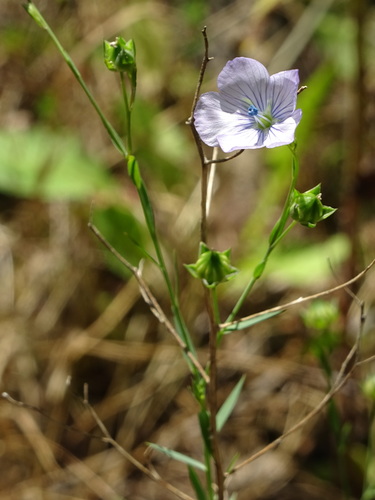
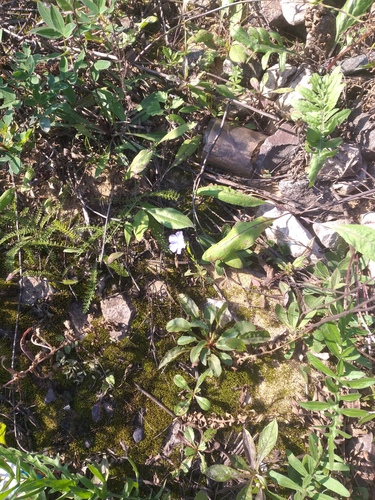
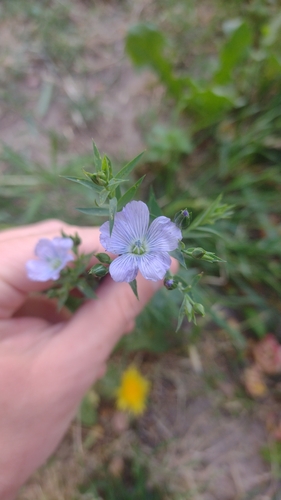
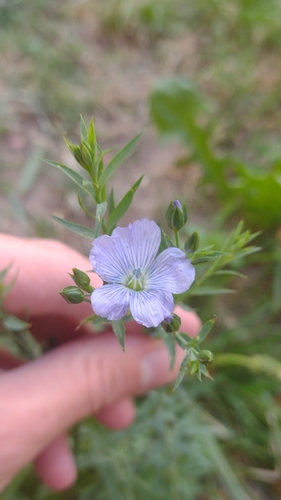
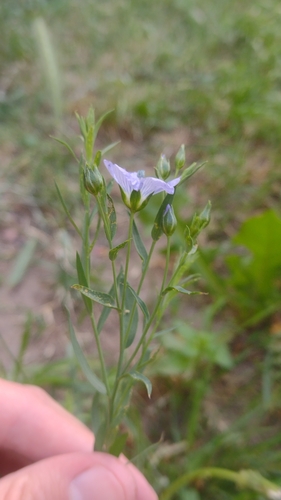
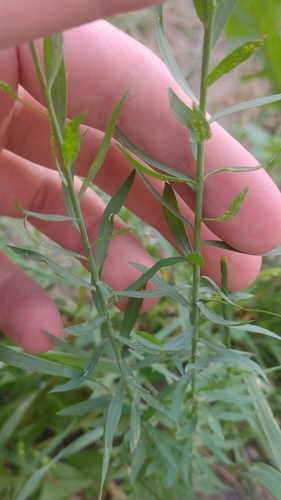
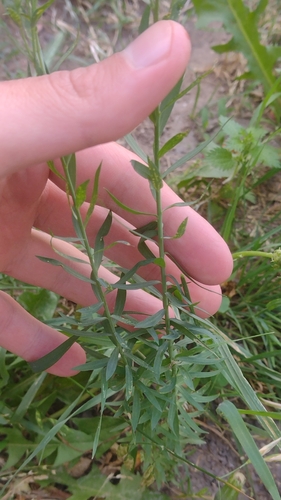
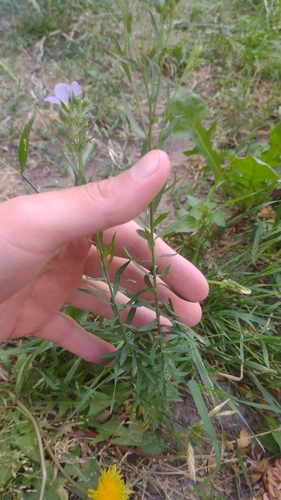
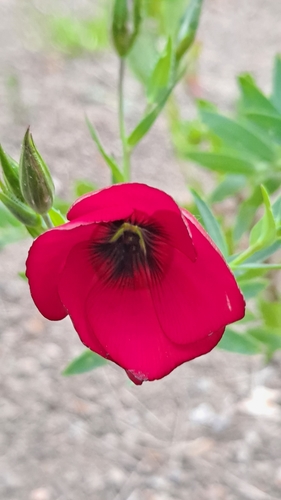
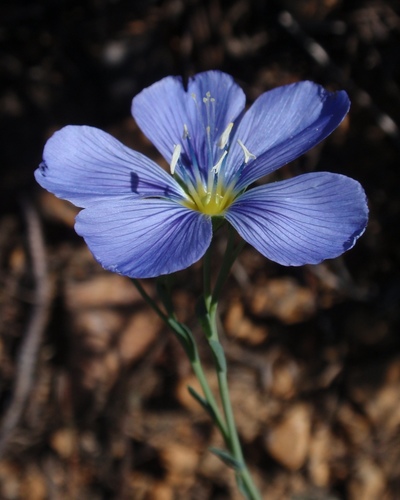
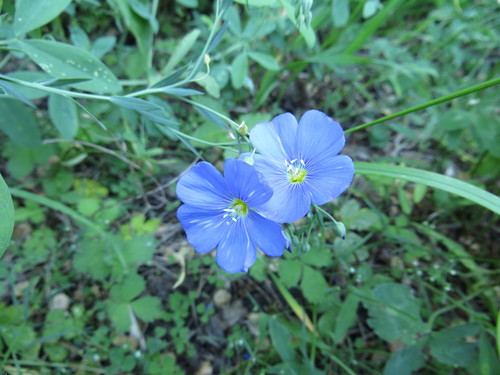
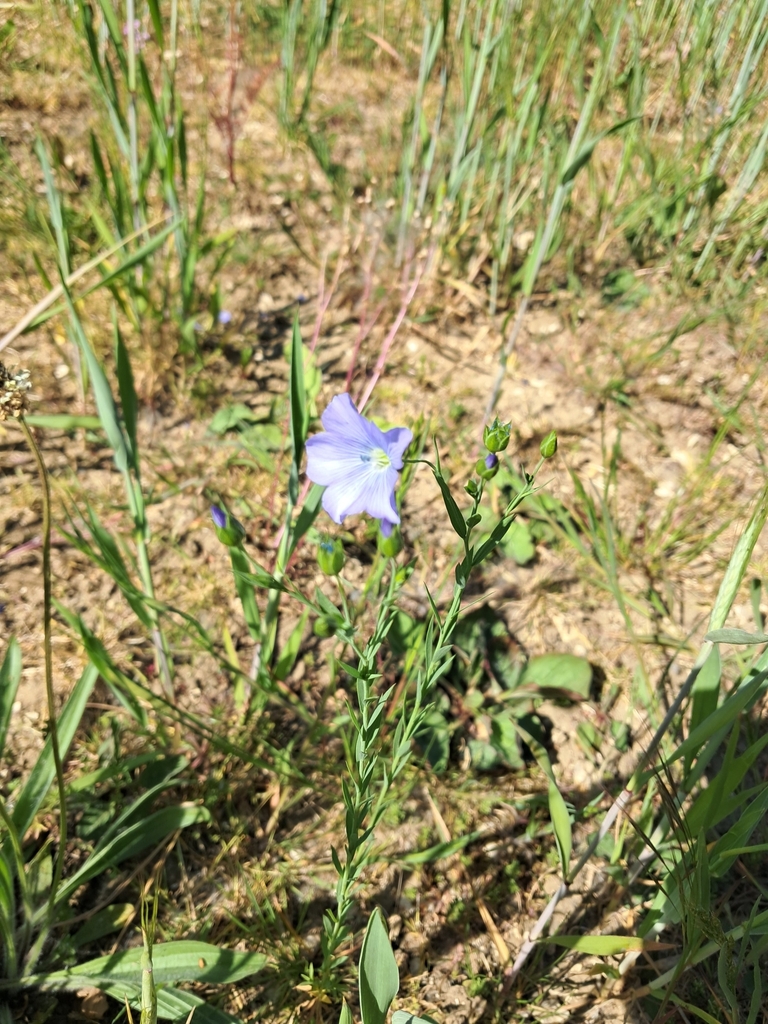
Linum usitatissimumLinum usitatissimumLinum usitatissimumLinum usitatissimumLinum usitatissimumLinum usitatissimumLinum usitatissimumLinum usitatissimum

Photographs: (c) ml_ls, some rights reserved (CC BY); (c) Dmitriy Bochkov, some rights reserved (CC BY); no rights reserved · CC0 (6).

Photographs: iNaturalist did not answer when this page was built; what is shown came from the sources that did.

Papers naming this species

Works whose title or abstract names Linum usitatissimum, most cited first, from OpenAlex (CC0). A mention, not a cultivation source: nothing on this page is drawn from them.

Lignin Biosynthesis and Structure
Ruben Vanholme, Brecht Demedts, Kris Morreel, John Ralph (2010) · PLANT PHYSIOLOGY
Mycorrhizal Fungi Can Dominate Phosphate Supply to Plants Irrespective of Growth Responses
Sally E. Smith, F. A. SMITH, Iver Jakobsen (2003) · PLANT PHYSIOLOGY
Biosynthesis of Jasmonic Acid by Several Plant Species
Brady A. Vick, Don C. Zimmerman (1984) · PLANT PHYSIOLOGY
A Critical Approach to Evaluating Clinical Efficacy, Adverse Events and Drug Interactions of Herbal Remedies
Angelo A. Izzo, Sung Hoon‐Kim, Rajan Radhakrishnan, Elizabeth M. Williamson (2016) · Phytotherapy Research
Haustorially Expressed Secreted Proteins from Flax Rust Are Highly Enriched for Avirulence Elicitors
Ann‐Maree Catanzariti, Peter N. Dodds, Gregory J. Lawrence, Michael Ayliffe (2005) · The Plant Cell
High α-linolenic acid flaxseed (Linum usitatissimum):some nutritional properties in humans
Stephen C. Cunnane, Sujata Ganguli, Chantale Menard, Andrea C. Liede (1993) · British Journal Of Nutrition
The genome of flax ( Linum usitatissimum ) assembled de novo from short shotgun sequence reads
Yidong Wang, Neil Hobson, Leonardo Galindo‐González, Shilin Zhu (2012) · The Plant Journal
Phytosterol Composition of Nuts and Seeds Commonly Consumed in the United States
Katherine M. Phillips, David M. Ruggio, M. Ashraf‐Khorassani (2005) · Journal of Agricultural and Food Chemistry
Mycorrhizal Networks: Common Goods of Plants Shared under Unequal Terms of Trade
Florian Walder, Helge Niemann, Natarajan Mathimaran, Moritz F. Lehmann (2012) · PLANT PHYSIOLOGY
The Melampsora lini AvrL567 Avirulence Genes Are Expressed in Haustoria and Their Products Are Recognized inside Plant Cells
Peter N. Dodds, Gregory J. Lawrence, Ann‐Maree Catanzariti, Michael Ayliffe (2004) · The Plant Cell
Herb and Spices in Colorectal Cancer Prevention and Treatment: A Narrative Review
Md. Sanower Hossain, Md. Abdul Kader, Khang Wen Goh, Md. Maidul Islam (2022) · Frontiers in Pharmacology

Other Linum 3 in the reference

History & registers

Where this page came from built 2026-09-20 · dossier v2 · node
gbif.species answeredcarried from build of 2026-09-19 (offline re-derivation; the backbone was not asked)
gbif.synonyms answeredcarried from build of 2026-09-19 (offline re-derivation; the backbone was not asked)
gbif.vernacular answeredcarried from build of 2026-09-19 (offline re-derivation; the backbone was not asked)
wcvp.distribution answered
gbif.occurrences answeredGBIF occurrence download https://doi.org/10.15468/dl.3h4zam
climate nothing to report
wikidata answeredcarried from build of 2026-09-19 (rederive); that build: carried from build of 2026-09-19 (rederive)
wikipedia answeredcarried from build of 2026-09-19; this build: skipped
inat.taxon not asked
inat.photos.wild answeredcarried from build of 2026-09-19; this build: skipped
inat.photos.cultivated nothing to reportcarried from build of 2026-09-19 (rederive); that build: carried from build of 2026-09-19 (rederive)
commons nothing to reportcarried from build of 2026-09-19 (rederive); that build: carried from build of 2026-09-19 (rederive)
gbif.media answered
openalex answeredcarried from build of 2026-09-19; this build: skipped

Every upstream is recorded as having answered, reported nothing, or refused. Only “nothing to report” is ever shown as an absence. Records came from 191 datasets via GBIF.org; each carries its own licence.