


 11 photographs ›
Summary
Liparis grossa is a species of flowering plant in the family Orchidaceae. It is native to wet tropical forests of eastern and southern Taiwan, including Orchid Island, and the Philippines. A pseudobulbous epiphyte, it is typically found on large trees in forest edges at elevations from sea level to 500 m (1,600 ft).
Quoted from Wikipedia, "Liparis grossa", CC BY-SA 4.0.
Cultivation
Climate across the habitat
Natural habitat
How this section is made
Photographs


Photographs: KENPEI, CC BY-SA 3.0, via Wikimedia Commons; Kuo-Chu Yueh, CC BY-SA 2.0, via Wikimedia Commons (5).
Related
Other Liparis 16 in the reference
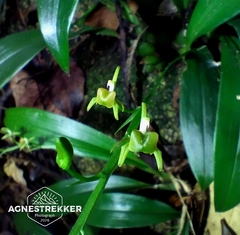 Liparis bootanensis Bhutan Widelip Orchid Photo: CC0, author not stated
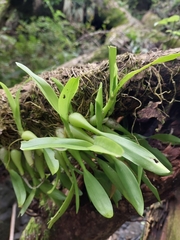 Liparis condylobulbon Orchidaceae Photo: CC BY, Jason
 Liparis crenulata Orchidaceae Photo: CC BY-SA, User:BotBln
 Liparis elliptica Orchidaceae Photo: CC BY-SA, vrxz
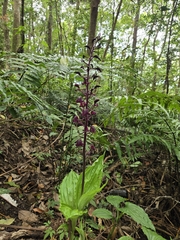 Liparis gigantea Giant Widelip Orchid Photo: CC BY, jimmy
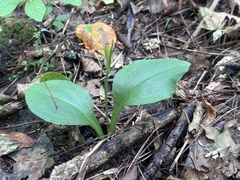 Liparis kumokiri Large widelip orchid Photo: CC BY, Tatyana Petrenko
 Liparis latifolia Orchidaceae Photo: CC BY, Jay Pruett
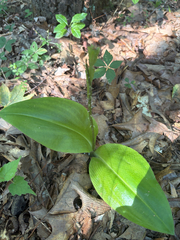 Liparis liliifolia Brown wide-lip orchid Photo: CC BY, Karina M. Torres
 Liparis makinoana Miniature widelip orchid Photo: CC BY, sunoochi from Sapporo, Hokkaido, Japan
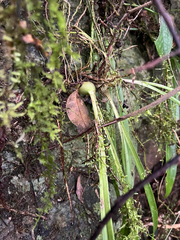 Liparis nakaharae Orchidaceae Photo: CC0, author not stated
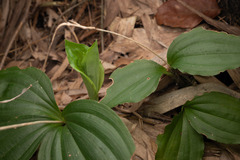 Liparis nervosa Pantropical widelip orchid Photo: CC BY, Saryu Mae 前 朝琉 all 17 ›
Names & registers
Also known as Blepharoglossum grossum; Leptorchis grossa; Leptorkis grossa; Liparis rizalensis; Liparis tateishii and 1 more. (GBIF Backbone)
The record
Every figure here is derived from public data by a stated rule and names its source; nothing about this species is written for its page by a person or by AI, apart from the marked, credited quotations. How →
Where this page came from built 2026-10-22
gbif.species answeredasked 2026-10-22gbif.synonyms answeredasked 2026-10-22gbif.vernacular answeredasked 2026-10-22names fetched 2026-10-22wcvp.distribution answeredas of 2026-06-04gbif.occurrences answeredas of 2026-10-21GBIF occurrence download https://doi.org/10.15468/dl.hbdw64, of 2026-10-21climate nothing to reportasked 2026-10-22only 1 distinct land cell of the climate grid holds an in-range record placed to within 10 km; three are needed for an envelopewikidata answeredasked 2026-10-22wikipedia answeredasked 2026-10-22inat.photos.wild nothing to reportasked 2026-10-22from iNaturalist's open data of 2026-09-27: research-grade observations with an open-licence photograph, the 24 whose photographs iNaturalist received last (the open data holds no votes); filled 2026-10-22inat.photos.cultivated not askedgbif.media nothing to reportasked 2026-10-22commons answeredasked 2026-10-22openalex not askednot yet asked for this reference; a later fill takes the papers from OpenAlex's snapshotEvery source is recorded as having answered, reported nothing, refused, failed, not been asked, or answered twice where one answer is taken (“not taken: two items answered”), and, for a source asked when this page was built, when: the figures are as the source held them that day; a source read from a file (Kew's World Checklist, a GBIF download) says "as of" the file's day instead; a row carried from an earlier build of the page names that build instead. Only “nothing to report” is ever shown as an absence. Records came from 3 datasets via GBIF.org; each carries its own licence.