Massonia sempervirens U.Müll.-Doblies, G.Milkuhn & D.Müll.-Doblies
Asparagaceae
Every figure on this page is derived from public data by a stated rule and says its source; nothing here is written by a person or a model, except the Wikipedia passage, which is quoted and marked as such. How it is made.
About the genus · Massonia
Massonia is a genus of bulbous perennial flowering plants in the family Asparagaceae, subfamily Scilloideae. It is native to southern Africa, and is found in localities such as Namaqualand with hot and dry summers, being dormant in summer and growing during winter. The genus Whiteheadia has been merged into Massonia. More on Wikipedia ›
The opening of Wikipedia, “Massonia”, CC BY-SA 4.0, quoted as written.
Cultivation
Grouped as a bulb, tuber or caudex by the genus Massonia, which is reliably one kind of plant (archetype table). The table holds no figure for this group, which spans too much for one minimum, and no habitat climate is derived yet; no cold floor is given, and no prose comes from the table.
Climate across the habitat
Natural habitat
Papers naming this species
Works whose title or abstract names Massonia sempervirens, most cited first, from OpenAlex (CC0). A mention, not a cultivation source: nothing on this page is drawn from them.
Related
Other Massonia 31 in the reference
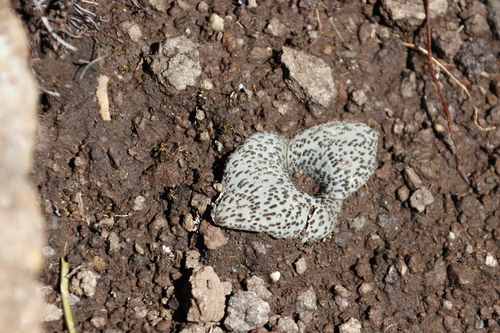 Massonia amoena Eastern Hedgehog Lily Massonia angustifolia Calvinia Hedgehog Lily
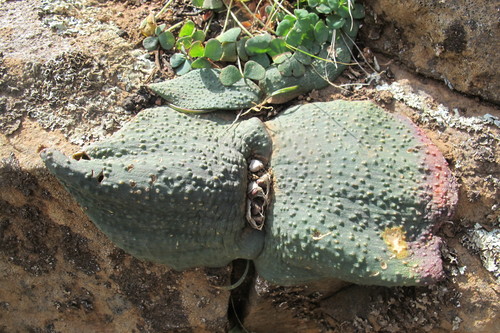 Massonia bakeriana Northern Pustulate Hedgehog Lily
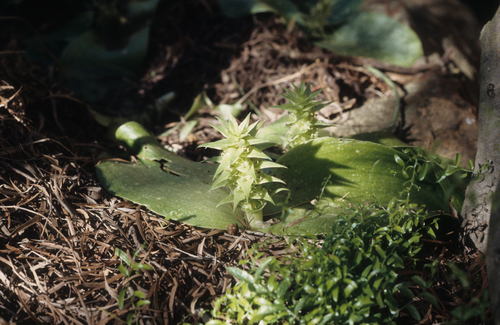 Massonia bifolia Pagoda Lily Massonia calvata Sneeuberg Hedgehog Lily Massonia dentata Nuweveld Hedgehog Lily
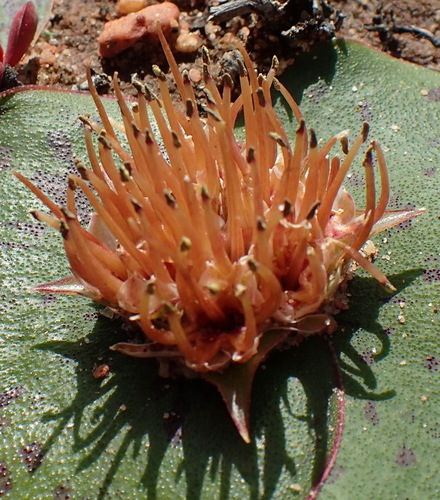 Massonia depressa Common Hedgehog Lily
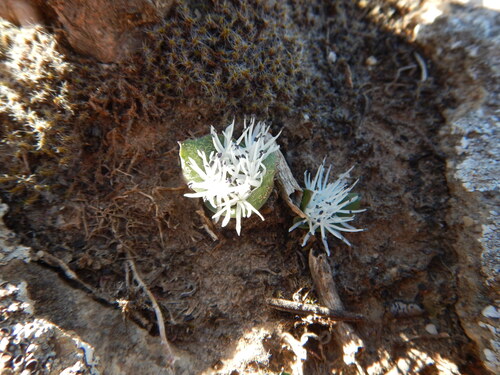 Massonia dregei Collar Hedgehog Lily Massonia echinata Spiky Hedgehog Lily Massonia etesionamibensis Asparagaceae Massonia gypsicola Kners Hedgehog Lily
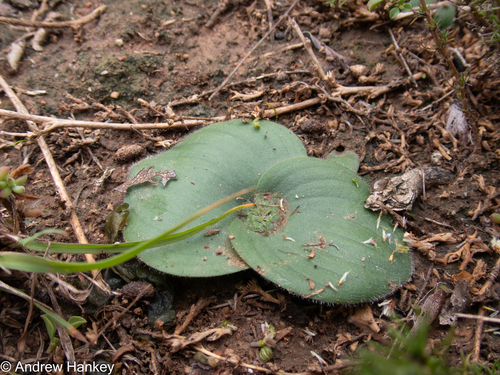 Massonia hirsuta Dune Hedgehog Lily all 32 ›
History & registers
Where this page came from built 2026-09-20 · dossier v2 · node
gbif.species answeredcarried from build of 2026-09-20 (offline re-derivation; the backbone was not asked)gbif.synonyms answeredcarried from build of 2026-09-20 (offline re-derivation; the backbone was not asked)gbif.vernacular answeredcarried from build of 2026-09-20 (offline re-derivation; the backbone was not asked)wcvp.distribution answeredgbif.occurrences nothing to reportclimate nothing to reportwikidata answeredcarried from build of 2026-09-20 (rederive); that build: carried from build of 2026-09-19 (rederive); that build: carried from build of 2026-09-19 (rederive)wikipedia nothing to reportcarried from build of 2026-09-20; this build: skippedinat.taxon not askedcarried from build of 2026-09-20 (rederive)inat.photos.wild nothing to reportcarried from build of 2026-09-20 (rederive); that build: carried from build of 2026-09-19 (rederive); that build: carried from build of 2026-09-19 (rederive)inat.photos.cultivated nothing to reportcarried from build of 2026-09-20 (rederive); that build: carried from build of 2026-09-19 (rederive); that build: carried from build of 2026-09-19 (rederive)commons nothing to reportcarried from build of 2026-09-20 (rederive); that build: carried from build of 2026-09-19 (rederive); that build: carried from build of 2026-09-19 (rederive)gbif.media did not answercarried from build of 2026-09-20 (rederive); that build: api.gbif.org not asked: offline re-derivationopenalex answeredcarried from build of 2026-09-20; this build: skippedEvery upstream is recorded as having answered, reported nothing, or refused. Only “nothing to report” is ever shown as an absence.