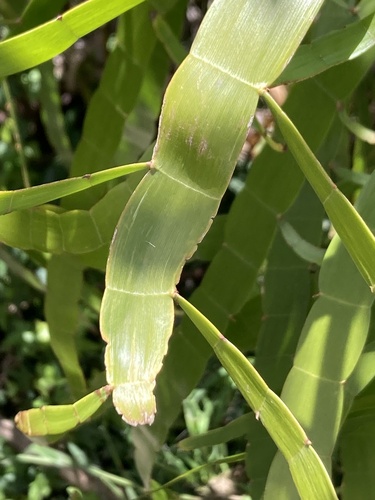
Muehlenbeckia platyclada (F.Muell.) Meisn.
Ribbonbush; Centipede-plant; Tapewormplant
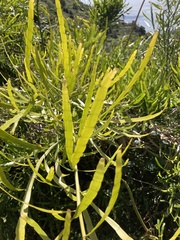
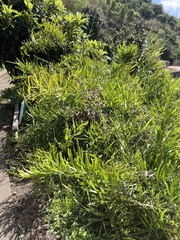
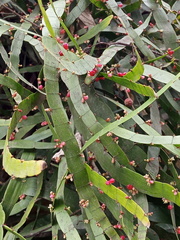
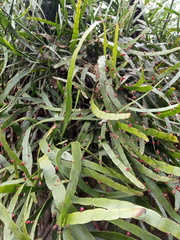
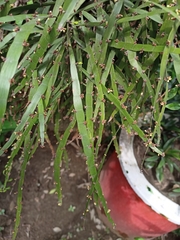
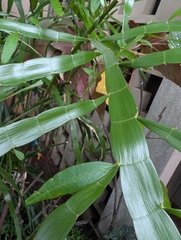 22 photographs ›
Summary
Muehlenbeckia platyclada (synonym Homalocladium platycladum), known as centipede plant, tapeworm plant or ribbonbush, is a species of plant in the knotweed family from New Guinea and the Solomon Islands. It is also naturalized in other tropical regions, including Puerto Rico, India, Bolivia, Madagascar, Nicaragua and Pakistan.
Quoted from Wikipedia, "Muehlenbeckia platyclada", CC BY-SA 4.0.
Cultivation
Climate across the habitat
Natural habitat
How this section is made
Photographs
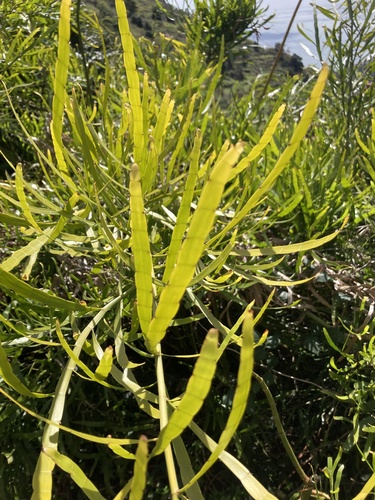
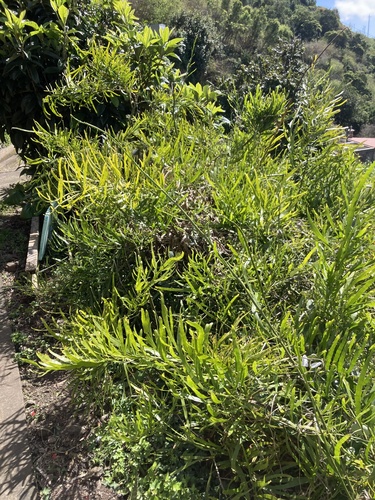
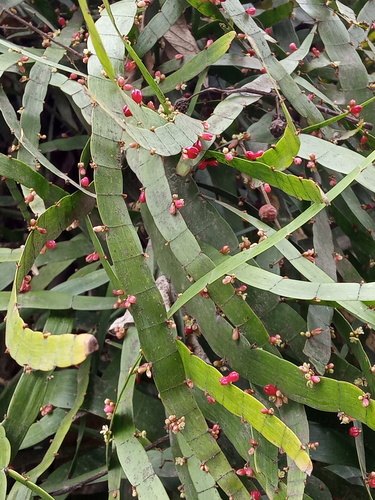
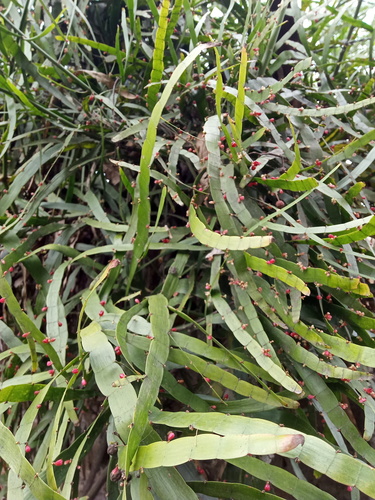
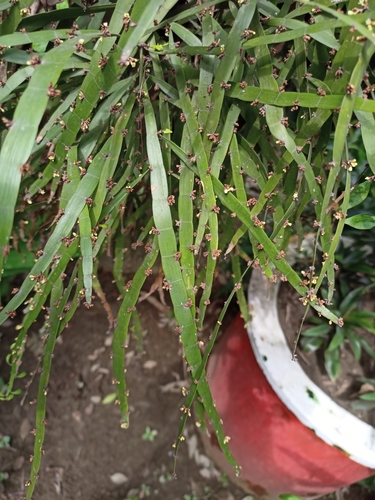
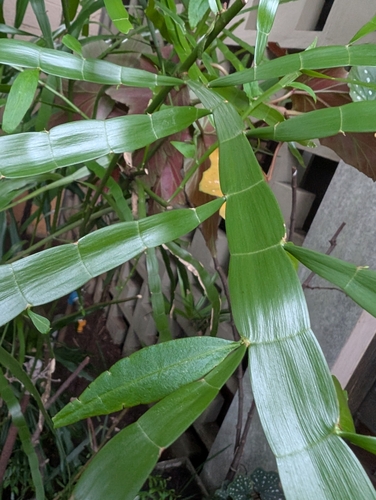
Photographs: Paul F, CC BY, iNaturalist via GBIF (2); Sagnik Dutta Roy, CC BY, iNaturalist via GBIF (2); Sabarni Sarker, CC BY, iNaturalist via GBIF; Henrique Pinto Macedo, CC BY, iNaturalist via GBIF.
Related
Other Muehlenbeckia 11 in the reference
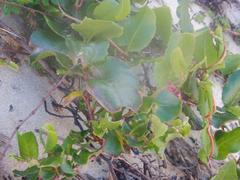 Muehlenbeckia adpressa Climbing Lignum Photo: CC BY, Bryce Watts-Parker
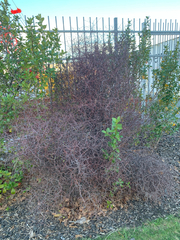 Muehlenbeckia astonii Shrub Pohuehue Photo: CC BY, Liadan Dickie
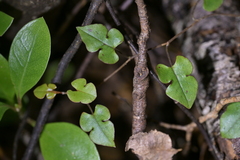 Muehlenbeckia australis Pōhuehue Photo: CC BY-SA, Christopher Stephens
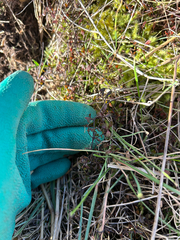 Muehlenbeckia axillaris Creeping Wire Vine Photo: CC BY, Hannah Whittall
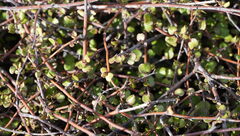 Muehlenbeckia complexa Wire Plant Photo: CC BY, William Harland
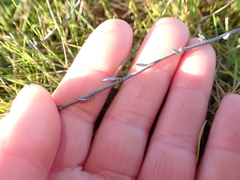 Muehlenbeckia ephedroides Leafless Pōhuehue Photo: CC BY, Liadan Dickie
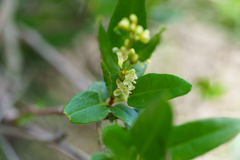 Muehlenbeckia gunnii Polygonaceae Photo: CC BY, Kym Nicolson
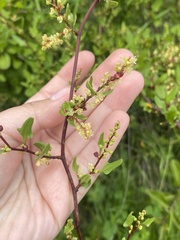 Muehlenbeckia hastulata Wirevine Photo: CC BY, Gabriela Cartes
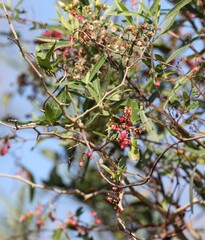 Muehlenbeckia sagittifolia Polygonaceae Photo: CC BY, Andrea Gantzer
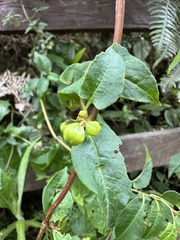 Muehlenbeckia tamnifolia Polygonaceae Photo: CC BY, Nicolás Baresch Uribe
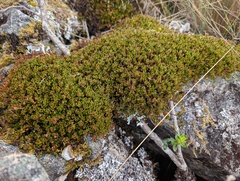 Muehlenbeckia volcanica Polygonaceae Photo: CC BY, Yuri Sofronov
Names & registers
Also known as Calacinum platycladum; Coccoloba platyclada; Exocarpos ceramicus; Homalocladium platycladum; Muehlenbeckia platyclados and 2 more. (GBIF Backbone)
The record
Every figure here is derived from public data by a stated rule and names its source; nothing about this species is written for its page by a person or by AI, apart from the marked, credited quotations. How →
Where this page came from built 2026-10-22
gbif.species answeredasked 2026-10-22gbif.synonyms answeredasked 2026-10-22gbif.vernacular answeredasked 2026-10-22names fetched 2026-10-22wcvp.distribution answeredas of 2026-06-04gbif.occurrences answeredas of 2026-10-21GBIF occurrence download https://doi.org/10.15468/dl.hbdw64, of 2026-10-21; 51 records within 1 km of a botanic garden, herbarium or zoo left out (43 at a botanic garden or arboretum, 3 at a herbarium, 5 at a zoo; Wikidata's list)climate nothing to reportasked 2026-10-2215 in-range records, none placed to within 10 kmwikidata not taken: two items answeredasked 2026-10-22not taken: two items answered to the older names' GBIF records (Q3268129, Q50849690)wikipedia answeredasked 2026-10-22inat.taxon not askedinat.photos.wild not askedinat.photos.cultivated not askedgbif.media answeredasked 2026-10-22openalex not askednot yet asked for this reference; a later fill takes the papers from OpenAlex's snapshotEvery source is recorded as having answered, reported nothing, refused, failed, not been asked, or answered twice where one answer is taken (“not taken: two items answered”), and, for a source asked when this page was built, when: the figures are as the source held them that day; a source read from a file (Kew's World Checklist, a GBIF download) says "as of" the file's day instead; a row carried from an earlier build of the page names that build instead. Only “nothing to report” is ever shown as an absence. Records came from 84 datasets via GBIF.org; each carries its own licence.