
Nymphaea thermarum Eb.Fisch.
Pygmy Rwandan water lily
Cited as Kew's World Checklist cites it, Nymphaea thermarum Eb.Fisch.: GBIF's backbone key for this page carries the name with another author, E.Fisch.


 8 photographs ›
Summary
Nymphaea thermarum, also known as Miniature Rwandan water lily, is a species of water lily that is endemic to Rwanda. Once thought to be extinct in the wild, all wild plants were believed to be lost due to destruction of its native habitat, but it was thought to be saved from extinction when it was grown from seed at the Royal Botanic Gardens, Kew in 2009. A previously-unknown wild population was discovered in 2023.
Quoted from Wikipedia, "Nymphaea thermarum", CC BY-SA 4.0.
About the genus · Nymphaea
Nymphaea is a genus of hardy and tender aquatic plants in the family Nymphaeaceae. The genus has a cosmopolitan distribution. Many species are cultivated as ornamental plants, and many cultivars have been bred. More on Wikipedia ›
Quoted from Wikipedia, "Nymphaea", CC BY-SA 4.0.
Cultivation
Climate across the habitat
Natural habitat
Photographs


Photographs: deror_avi, CC BY-SA 3.0, via Wikimedia Commons; Teresa Grau Ros from Barcelona, CC BY-SA 2.0, via Wikimedia Commons; Rudolphous, CC BY-SA 4.0, via Wikimedia Commons; Metacladistics, CC BY 4.0, via Wikimedia Commons; Krzysztof Ziarnek, Kenraiz, CC BY-SA 4.0, via Wikimedia Commons (2).
Related
Other Nymphaea 20 in the reference
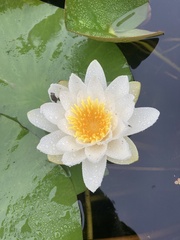 Nymphaea alba European white water-lily Photo: CC BY, Nick Butcher
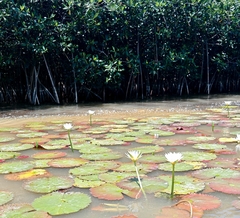 Nymphaea ampla Dotleaf waterlily Photo: CC0, author not stated
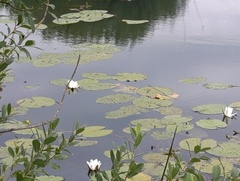 Nymphaea candida White water lily Photo: CC BY, Мирослав Соболев
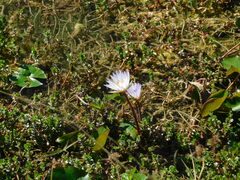 Nymphaea × daubenyana Nymphaeaceae Photo: CC BY, David Garza
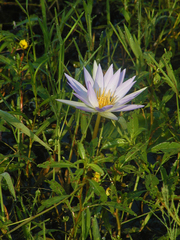 Nymphaea elegans Blue water-lily Photo: CC BY, Mike Duran
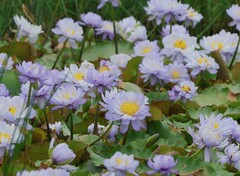 Nymphaea gigantea Giant water-lily Photo: CC BY-SA, Greg Tasney
 Nymphaea gracilis Nymphaeaceae Photo: CC BY-SA, Oscar Alejandro Morales Juárez
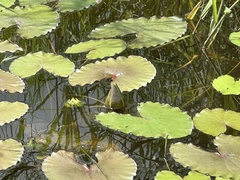 Nymphaea jamesoniana James' waterlily Photo: CC BY, Claudio Cantú Muñiz
 Nymphaea lotus White Egyptian lotus Photo: CC BY, Lucy Keith-Diagne
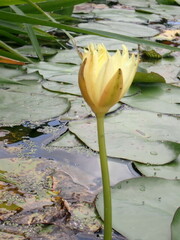 Nymphaea mexicana Banana water-lily Photo: CC BY, mfeaver
 Nymphaea micrantha Blue Egyptian Lotus Photo: CC BY, Lucy Keith-Diagne
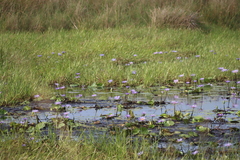 Nymphaea nouchali Blue lotus Photo: CC BY-SA, Tony Rebelo all 21 ›
Names & registers
The record
Every figure here is derived from public data by a stated rule and names its source; nothing about this species is written for its page by a person or by AI, apart from the marked, credited quotations. How →
Where this page came from built 2026-10-22
gbif.species answeredasked 2026-10-22GBIF's key 3697368 is Nymphaea thermarum E.Fisch.; the page links Kew's Nymphaea thermarum Eb.Fisch., and the name is cited as Kew cites itgbif.synonyms answeredasked 2026-10-22gbif.vernacular answeredasked 2026-10-22names fetched 2026-10-22wcvp.distribution answeredas of 2026-06-04gbif.occurrences answeredas of 2026-10-21GBIF occurrence download https://doi.org/10.15468/dl.hbdw64, of 2026-10-21; 3 records within 1 km of a botanic garden, herbarium or zoo left out (2 at a botanic garden or arboretum, 1 at a herbarium; Wikidata's list)climate nothing to reportasked 2026-10-221 in-range record, none placed to within 10 kmwikidata answeredasked 2026-10-22wikipedia answeredasked 2026-10-22inat.photos.wild nothing to reportasked 2026-10-22from iNaturalist's open data of 2026-09-27: research-grade observations with an open-licence photograph, the 24 whose photographs iNaturalist received last (the open data holds no votes); filled 2026-10-22inat.photos.cultivated not askedgbif.media nothing to reportasked 2026-10-22commons answeredasked 2026-10-22openalex not askednot yet asked for this reference; a later fill takes the papers from OpenAlex's snapshotEvery source is recorded as having answered, reported nothing, refused, failed, not been asked, or answered twice where one answer is taken (“not taken: two items answered”), and, for a source asked when this page was built, when: the figures are as the source held them that day; a source read from a file (Kew's World Checklist, a GBIF download) says "as of" the file's day instead; a row carried from an earlier build of the page names that build instead. Only “nothing to report” is ever shown as an absence. Records came from 1 datasets via GBIF.org; each carries its own licence.