Species
+

Pandanus amaryllifolius Roxb. ex Lindl.

Fragrant Pandan, Pandan Mabongo, Seuke Bangu, Seuke Musang

No habitat climate 5 photographs

Every figure on this page is derived from public data by a stated rule and says its source; nothing here is written by a person or a model, except the Wikipedia passage, which is quoted and marked as such. How it is made.

Summary

Pandanus amaryllifolius is a tropical plant in the Pandanus (screwpine) genus, which is commonly known as pandan. Its fragrant leaves are commonly used for flavoring in the cuisines of Southeast Asia, some South Asian cuisines and in Hainanese cuisine from China.

Text from Wikipedia, “Pandanus amaryllifolius”, CC BY-SA 4.0, quoted as written. Kept separate from everything derived here.

About the genus · Pandanus

Pandanus is a genus of monocots with about 578 accepted species. They are palm-like, dioecious trees and shrubs native to the Old World tropics and subtropics. Common names include pandan, screw palm and screw pine. More on Wikipedia ›

The opening of Wikipedia, “Pandanus”, CC BY-SA 4.0, quoted as written.

Family
Pandanaceae
Described by
Roxb. ex Lindl.
Native to
Maluku
Wild records
1 in range· 0 open

Also known as Pandanus hasskarlii Merr.; Pandanus latifolius Hassk.; Pandanus latifolius var. minor Hassk.; Pandanus odorus Ridl.

Cultivation

Nothing derived: no habitat climate for this species, and the archetype table has no figure for its genus or family.

Climate across the habitat

No habitat climate can be derived: Only 1 distinct land cell of the climate grid holds an in-range record; three are needed for an envelope.

Natural habitat

Native range as published by WCVP.
No openly licensed record to show inside the range.
NativeMaluku· introduced: China South-Central, Bangladesh, India, Sri Lanka, Cambodia, Myanmar, Thailand, Vietnam, Lesser Sunda Is., Malaya, Philippines, New Guinea
Kew's description“shrub” · “wet tropical”· quoted from WCVP, RBG Kew (CC BY 4.0); not derived here
Evidence usedThe map marker rests on all 1 georeferenced record inside the native range; none carries a licence permitting republication, so the map shows no points. 78 records outside the range (gardens, roadsides, misidentifications) ignored. Under a dozen records: treat the map as indicative. No climate envelope is derived for this species.

Photographs

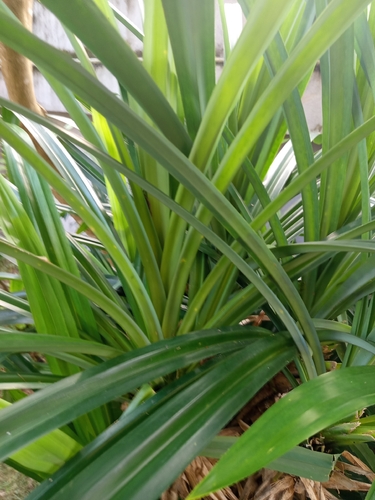
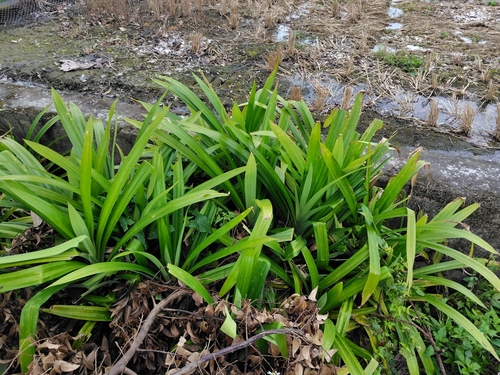
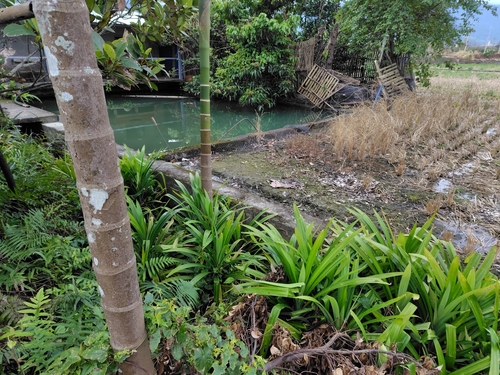
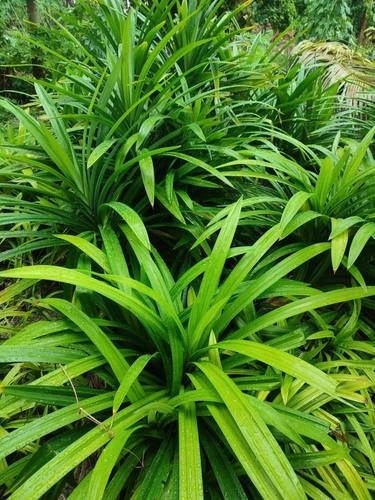
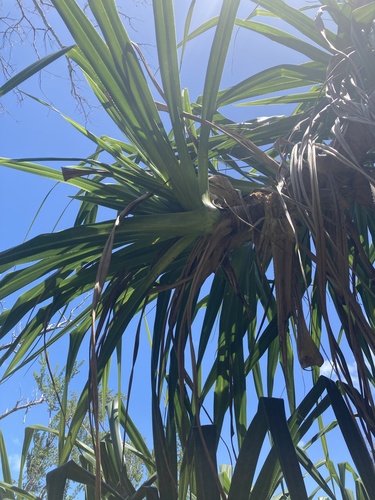
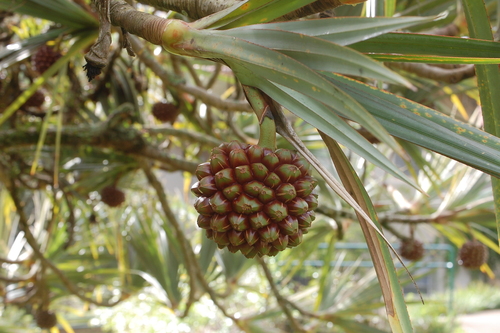
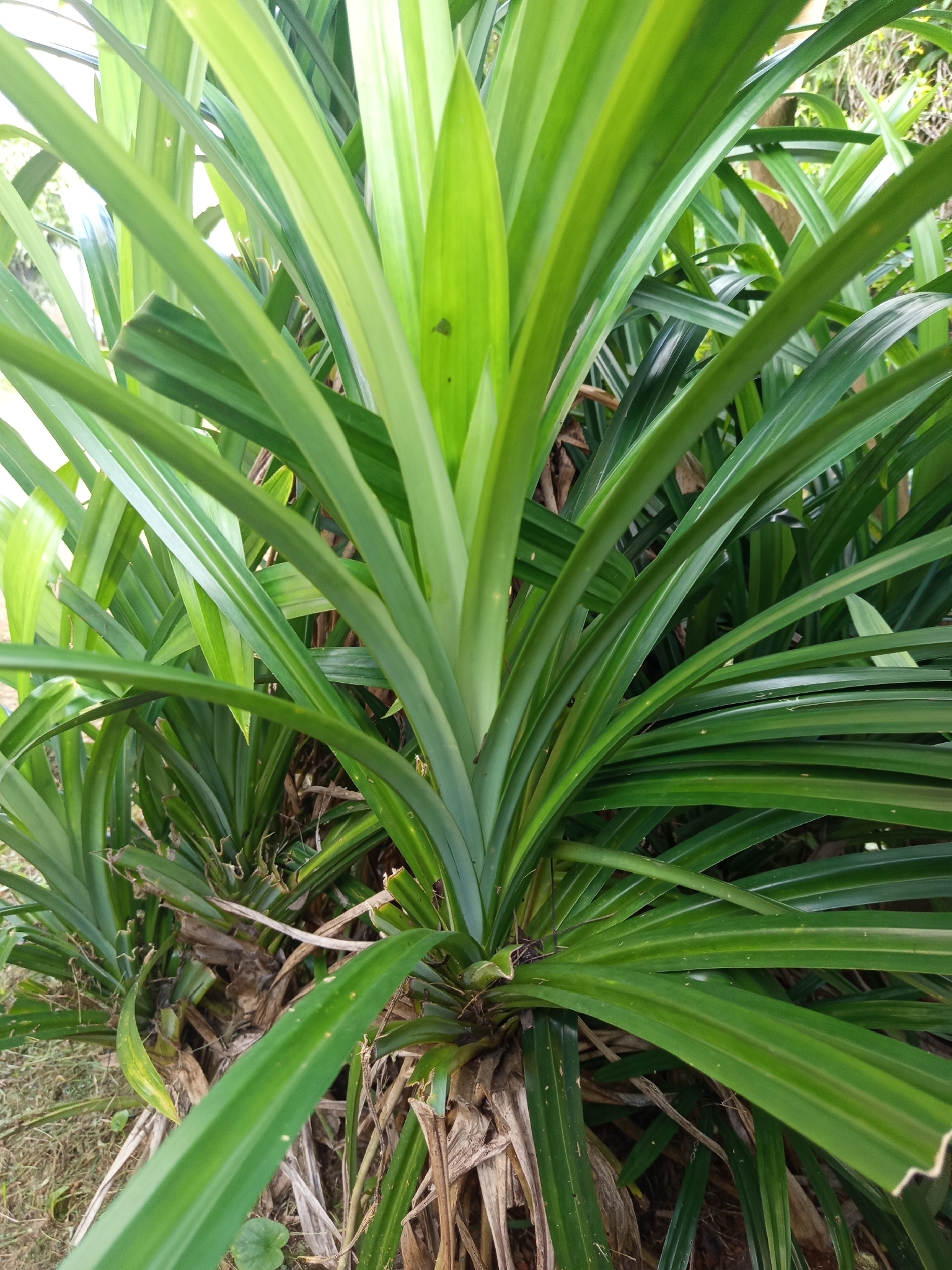
Pandanus amaryllifoliusPandanus amaryllifoliusPandanus amaryllifoliusPandanus amaryllifolius

Photographs: Sri Srikumar, CC0, iNaturalist via GBIF; chiuluan, CC BY, iNaturalist via GBIF (2); Quentin Groom, CC0, iNaturalist via GBIF.

Photographs: iNaturalist did not answer when this page was built; what is shown came from the sources that did.

Papers naming this species

Works whose title or abstract names Pandanus amaryllifolius, most cited first, from OpenAlex (CC0). A mention, not a cultivation source: nothing on this page is drawn from them.

Antioxidative properties of Pandanus amaryllifolius leaf extracts in accelerated oxidation and deep frying studies
Fatihanim Mohd Nor, Suhaila Mohamed, Nor Aini Idris, Razali Ismail (2008) · Food Chemistry
Identification and Quantitation of the Rice Aroma Compound, 2-Acetyl-1-pyrroline, in Bread Flowers (Vallaris glabra Ktze)
Sugunya Wongpornchai, Tinakorn Sriseadka, Suppachai Choonvisase (2002) · Journal of Agricultural and Food Chemistry
Bioactive metabolites of Diaporthe sp. P133, an endophytic fungus isolated from Pandanus amaryllifolius
Melfei E. Bungihan, Mario A. Tan, Mariko Kitajima, Noriyuki Kogure (2011) · Journal of Natural Medicines
Purification and characterization of a new antiviral protein from the leaves of Pandanus amaryllifolius (Pandanaceae)
Linda S. M. Ooi, Samuel S. M. Sun, Vincent E. C. Ooi (2004) · The International Journal of Biochemistry & Cell Biology
The use of spray drying to microencapsulate 2-acetyl-1-pyrroline, a major flavour component of aromatic rice
Muanmai Apintanapong, Athapol Noomhorm (2003) · International Journal of Food Science & Technology
Structural characterization of piperidine alkaloids from Pandanus amaryllifolius by inverse-detected 2D NMR techniques
Maribel G. Nonato, Mary J. Garson, Roger J.W. Truscott, John A. Carver (1993) · Phytochemistry
Structure Characterization, Biomimetic Total Synthesis, and Optical Purity of Two New Pyrrolidine Alkaloids, Pandamarilactonine-A and -B, Isolated from Pandanus amaryllifolius Roxb.
Hiromitsu Takayama, Tomotake Ichikawa, Toshiyuki Kuwajima, Mariko Kitajima (2000) · Journal of the American Chemical Society
Antifungal activity of Streptomyces spp. isolated from rhizosphere of Thai medicinal plants.
Sutthinan Khamna, Akira Yokota, John F. Peberdy, Saisamorn Lumyong (2009) · International journal of integrative biology
Optimization of HS-SPME conditions for quantification of 2-acetyl-1-pyrroline and study of other volatiles in Pandanus amaryllifolius Roxb.
Kantilal V. Wakte, Ratnakar J. Thengane, Narendra Jawali, Altafhusain B. Nadaf (2009) · Food Chemistry
Supercritical carbon dioxide extraction of 2-acetyl-1-pyrroline from Pandanus amaryllifolius Roxb
Paramita Bhattacharjee, Amol C. Kshirsagar, Rekha S. Singhal (2004) · Food Chemistry

Other Pandanus 2 in the reference

History & registers

Where this page came from built 2026-09-20 · dossier v2 · node
gbif.species answeredcarried from build of 2026-09-19 (offline re-derivation; the backbone was not asked)
gbif.synonyms answeredcarried from build of 2026-09-19 (offline re-derivation; the backbone was not asked)
gbif.vernacular answeredcarried from build of 2026-09-19 (offline re-derivation; the backbone was not asked)
wcvp.distribution answered
gbif.occurrences answeredGBIF occurrence download https://doi.org/10.15468/dl.3h4zam
climate nothing to report
wikidata answeredcarried from build of 2026-09-19 (rederive); that build: carried from build of 2026-09-19 (rederive)
wikipedia answeredcarried from build of 2026-09-19; this build: skipped
inat.taxon not asked
inat.photos.wild not askedcarried from build of 2026-09-19 (rederive); that build: not asked: 6 wild photographs already from the GBIF download
inat.photos.cultivated nothing to reportcarried from build of 2026-09-19 (rederive); that build: filled 2026-09-20
commons nothing to reportcarried from build of 2026-09-19 (rederive); that build: carried from build of 2026-09-19 (rederive)
gbif.media answered
openalex answeredcarried from build of 2026-09-19; this build: skipped

Every upstream is recorded as having answered, reported nothing, or refused. Only “nothing to report” is ever shown as an absence. Records came from 11 datasets via GBIF.org; each carries its own licence.