


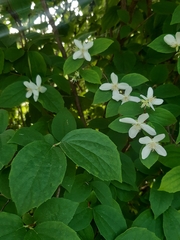
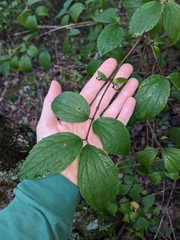
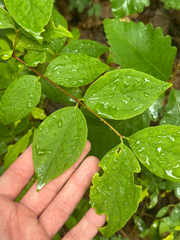
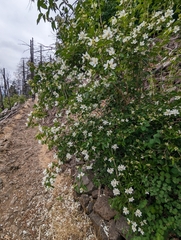
 4 photographs ›
Summary
Philadelphus delavayi is a deciduous shrub in the genus Philadelphus, native to China, Tibet, and Upper Burma. It was discovered by Pierre Jean Marie Delavay in 1887. It has an upright growth habit, to a height of 3 metres, with arching branches and ovate, tapered, sometimes toothed, dark green leaves up to 10 cm or more long. It bears racemes of 5-9 cup shaped, single, very fragrant creamy-white flowers, 2.5 cm across.
Quoted from Wikipedia, "Philadelphus delavayi", CC BY-SA 4.0.
About the genus · Philadelphus
Philadelphus (mock-orange) is a genus of about 60 species of shrubs from 3–20 ft tall, native to North America, Central America, Asia and (locally) in southeast Europe.
Quoted from Wikipedia, "Philadelphus", CC BY-SA 4.0.
Cultivation
Climate across the habitat
Natural habitat
How this section is made
Photographs


Photographs: Daderot, CC0, via Wikimedia Commons; peganum from Henfield, England, CC BY-SA 2.0, via Wikimedia Commons (2).
Related
Other Philadelphus 22 in the reference
 Philadelphus brachybotrys Hydrangeaceae Photo: CC BY-SA, Krzysztof Golik Philadelphus calvescens Hydrangeaceae
 Philadelphus coronarius Mock-orange Photo: CC BY, Martin Scheuch Philadelphus henryi Hydrangeaceae
 Philadelphus hirsutus Cliff mock orange Photo: CC BY, Alaina Krakowiak Philadelphus incanus Hairy mock orange
 Philadelphus inodorus Scentless mock orange Photo: CC0, author not stated Philadelphus kansuensis Hydrangeaceae
 Philadelphus lewisii Lewis' mock-orange Photo: CC BY, David Anderson
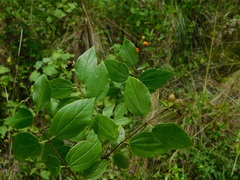 Philadelphus mexicanus Mexican mock orange Photo: CC BY, Neptalí Ramírez Marcial
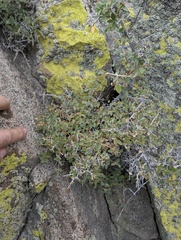 Philadelphus microphyllus Littleleaf mock orange Photo: CC BY, Trevor Van Loon
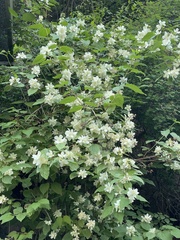 Philadelphus pekinensis Beijing mock orange Photo: CC BY, Jane Charlen all 23 ›
Names & registers
Also known as Philadelphus delavayi f. cruciflorus; Philadelphus delavayi f. melanocalyx; Philadelphus delavayi var. melanocalyx. (GBIF Backbone)
The record
Every figure here is derived from public data by a stated rule and names its source; nothing about this species is written for its page by a person or by AI, apart from the marked, credited quotations. How →
Where this page came from built 2026-10-22
gbif.species answeredasked 2026-10-22gbif.synonyms answeredasked 2026-10-22gbif.vernacular answeredasked 2026-10-22names fetched 2026-10-22wcvp.distribution answeredas of 2026-06-04gbif.occurrences answeredas of 2026-10-21GBIF occurrence download https://doi.org/10.15468/dl.hbdw64, of 2026-10-21; 2 records within 1 km of a botanic garden, herbarium or zoo left out (2 at a botanic garden or arboretum; Wikidata's list)climate nothing to reportasked 2026-10-22only 2 distinct land cells of the climate grid hold an in-range record placed to within 10 km; three are needed for an envelopewikidata answeredasked 2026-10-22wikipedia answeredasked 2026-10-22inat.taxon not askedinat.photos.wild not askedinat.photos.cultivated not askedgbif.media nothing to reportasked 2026-10-22commons answeredasked 2026-10-22openalex not askednot yet asked for this reference; a later fill takes the papers from OpenAlex's snapshotEvery source is recorded as having answered, reported nothing, refused, failed, not been asked, or answered twice where one answer is taken (“not taken: two items answered”), and, for a source asked when this page was built, when: the figures are as the source held them that day; a source read from a file (Kew's World Checklist, a GBIF download) says "as of" the file's day instead; a row carried from an earlier build of the page names that build instead. Only “nothing to report” is ever shown as an absence. Records came from 21 datasets via GBIF.org; each carries its own licence.