


 12 photographs ›
Summary
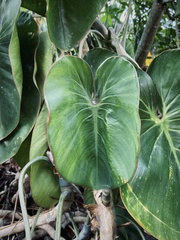
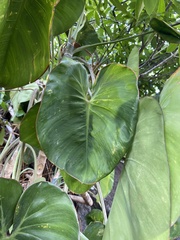
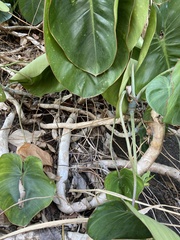
Philodendron ricardoi is a species of plant in the genus Philodendron native to Espírito Santo in Brazil. It is named for the Brazilian palm grower Ricardo Gonzaga Campos, who collected some original samples of the species to be studied. It has thick stems and a crown of leaves that are ovate to rotundate in shape. In natural habitat it grows in the open on rocky outcroppings, somewhat similarly to Philodendron cipoense of neighboring Minas Gerais state.
Quoted from Wikipedia, "Philodendron ricardoi", CC BY-SA 4.0.
About the genus · Philodendron
Philodendron is a large genus of flowering plants in the family Araceae. As of September 2025, the Plants of the World Online accepted 625 species; other sources accept different numbers. Regardless of number of species, the genus is the second-largest member of the family Araceae, after genus Anthurium. More on Wikipedia ›
Quoted from Wikipedia, "Philodendron", CC BY-SA 4.0.
Cultivation
Climate across the habitat
Natural habitat
How this section is made
Photographs


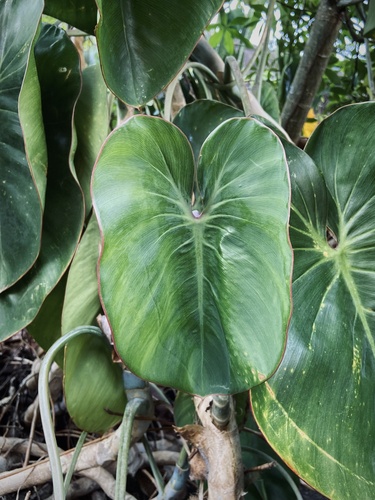
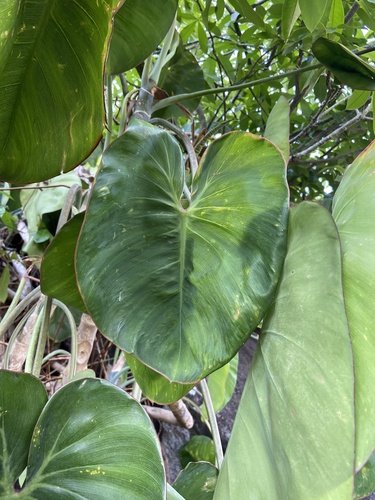
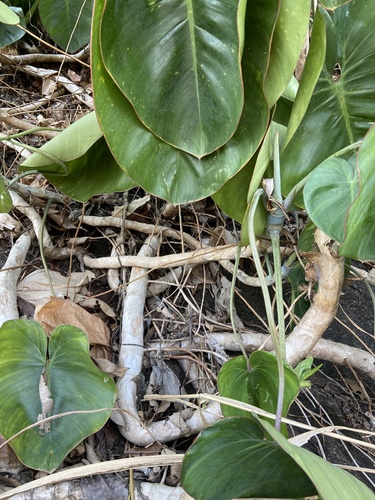
Photographs: Thiago Flores Flores, CC BY-SA, via GBIF (3); Alexandre Magno, CC BY, iNaturalist via GBIF (3).
Related
Other Philodendron 93 in the reference
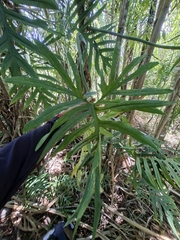 Philodendron angustisectum Araceae Photo: CC BY, Daniel Mesa
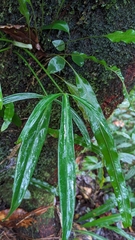 Philodendron anisotomum Araceae Photo: CC BY-SA, Yu
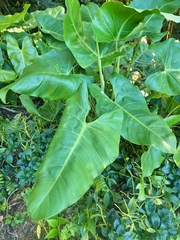 Philodendron appendiculatum Araceae Photo: CC BY-SA, UNA Ecoturismo
 Philodendron atabapoense Araceae Photo: CC0, author not stated
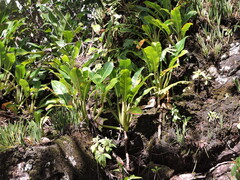 Philodendron auriculatum Araceae Photo: CC BY, Fabrício Mil Homens Riella
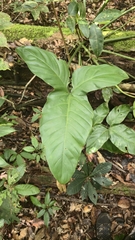 Philodendron barrosoanum Araceae Photo: CC0, author not stated
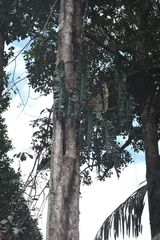 Philodendron billietiae Araceae Photo: CC BY, fmunoz
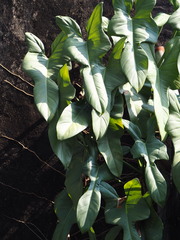 Philodendron bipennifolium Fiddle-leaf philodendron Photo: CC0, author not stated
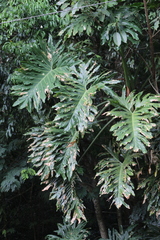 Philodendron bipinnatifidum Araceae Photo: CC BY, Paulo C. O. Cunha
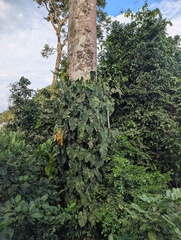 Philodendron brandtianum Silver Leaf Philodendron Photo: CC BY, Yuri Sofronov Philodendron brasiliense Araceae
 Philodendron burle-marxii Araceae Photo: CC BY-SA, David J. Stang all 94 ›
Names & registers
The record
Every figure here is derived from public data by a stated rule and names its source; nothing about this species is written for its page by a person or by AI, apart from the marked, credited quotations. How →
Where this page came from built 2026-10-22
gbif.species answeredasked 2026-10-22gbif.synonyms answeredasked 2026-10-22gbif.vernacular answeredasked 2026-10-22names fetched 2026-10-22wcvp.distribution answeredas of 2026-06-04gbif.occurrences answeredas of 2026-10-21GBIF occurrence download https://doi.org/10.15468/dl.hbdw64, of 2026-10-21; 1 record within 1 km of a botanic garden, herbarium or zoo left out (1 at a botanic garden or arboretum; Wikidata's list)climate nothing to reportasked 2026-10-22only 1 distinct land cell of the climate grid holds an in-range record placed to within 10 km; three are needed for an envelopewikidata answeredasked 2026-10-22wikipedia answeredasked 2026-10-22inat.taxon not askedinat.photos.wild not askedinat.photos.cultivated not askedgbif.media answeredasked 2026-10-22openalex not askednot yet asked for this reference; a later fill takes the papers from OpenAlex's snapshotEvery source is recorded as having answered, reported nothing, refused, failed, not been asked, or answered twice where one answer is taken (“not taken: two items answered”), and, for a source asked when this page was built, when: the figures are as the source held them that day; a source read from a file (Kew's World Checklist, a GBIF download) says "as of" the file's day instead; a row carried from an earlier build of the page names that build instead. Only “nothing to report” is ever shown as an absence. Records came from 3 datasets via GBIF.org; each carries its own licence.