
Phyllanthus eriocarpus (Champ. ex Benth.) Müll.Arg.
English names not checked: Wikidata's common names were not read for this page.
At a glance
- Jan
- Feb
- Mar
- Apr
- May, shaded
- Jun, shaded
- Jul, shaded
- Aug, shaded
- Sep, shaded
- Oct
- Nov
- Dec
Summary
Phyllanthus eriocarpus is a species of flowering plant in the family Phyllanthaceae. It is native to portions of Southeast Asia and southern China, including Myanmar, Thailand, Vietnam, Thailand, Hainan, Peninsular Malaysia, northern Sumatra, and Sulawesi. It's a bush or tree that mainly thrives in the damp tropical environment at elevations ranging from 100 to 1700 meters above sea level.
Quoted from Wikipedia, "Phyllanthus eriocarpus", CC BY-SA 4.0.
About the genus · Phyllanthus
Phyllanthus is the largest genus in the plant family Phyllanthaceae. Estimates of the number of species in this genus vary widely, from 750 to 1200. Phyllanthus has a remarkable diversity of growth forms including annual and perennial herbs, shrubs, climbers, floating aquatics, and pachycaulous succulents. More on Wikipedia ›
Quoted from Wikipedia, "Phyllanthus", CC BY-SA 4.0.
Cultivation
Seasons
The rain rule reads a summer growing season: 70% of the median year's rain (1,748 mm of 2,194 mm) falls in May to September, warmer than the year (wet-season mean 27.3 °C against a yearly mean of 22.7 °C). Months are the habitat's, northern hemisphere; shifted six months for a southern-hemisphere collection: November to March.
Rain
2,194 mm in the median year at the habitat, 1,748 mm of it May to September. Wettest month June at 418 mm, driest month January at 23 mm. Across the grid cells of the range the year's total runs 1,957 mm to 2,505 mm, the 10th to 90th percentile of each cell's own year. The median of the cells' own yearly totals, 2,215 mm, is the year's rain at the top of the page; the 2,194 mm here is the median year's, the twelve monthly medians added, which the rain rule reads. Habitat calendar, northern hemisphere; median year across the grid cells of the range, CHELSA.
Light
Open sky over the habitat: 22 to 36 mol/m²/day across the year (daily light integral, median year across the grid cells of the range, CHELSA; the lowest 10th-percentile month across the cells is 20, the highest 90th-percentile month 37).
Warmth and air
Coldest: the 1st-percentile night over 44 years at a typical spot in the range is 6.3 °C, the absolute minimum 1.6 °C, no frost in 44 years (NASA POWER daily minima). Warmest: the 99th-percentile day is 31.4 °C. Monthly means: the coldest month's mean nightly low 12.2 °C in January (across the grid cells of the range 9.5 °C to 13.4 °C), the warmest month's mean daily high 29.4 °C in July and August (median year across the grid cells of the range, CHELSA). Cold floor: 6.3 °C, which is the 1st-percentile night over 44 years at a typical spot in the range (NASA POWER).
Relative humidity at the habitat: 58 to 70% across the year (monthly means, median year across the grid cells of the range, CHELSA). A figure about the air, saying nothing about how the plant takes water.
How this section is made
Each card states this species' habitat figures with their sources, and what two fixed rules read from them; nothing here says what the plant does, wants or tolerates. The rules · the terms.
Seasons. Read from the median year of CHELSA monthly rainfall and mean temperature across the grid cells of the range: the rain rule takes the smallest set of months carrying 70% of the rain and calls it winter when its mean is more than half a degree below the year's, summer when more than that above, and neither in between; the temperature rule, used only under 120 mm, names the cooler six months when they are at least a degree cooler than the other six. Months are shifted for the other hemisphere only where the temperature curve moves 4 °C or more and the habitat lies 10° or more from the equator. A reading of the curves, not an observation of the plant.
Rain. CHELSA monthly precipitation, median year across the grid cells of the range. The rain that falls where the species is recorded; nothing about how the plant takes water.
Light. CHELSA shortwave radiation at each envelope cell, a daily-mean flux taken to a daily total and converted at 2.07 mol of PAR per MJ. The sky over the habitat, measured; what reaches a plant under a rock, a shrub or a shade cloth is not.
Temperature. NASA POWER daily minima and maxima over 44 years at a typical spot in the range, lapse-corrected +174 m to its elevation; CHELSA monthly means, median year across the grid cells of the range. The cold floor is the 1st-percentile night named in its sentence. Not a measured survival limit for any plant in a pot.
Humidity. CHELSA relative humidity, median year across the grid cells of the range.
Climate across the habitat
Habitat months, northern hemisphere
Mean daily high from 18 °C in Jan to 29 °C in Jun, Jul, Aug and Sep; mean nightly low from 12 °C in Jan to 26 °C in Jul and Aug. The cold quarter, Dec to Feb, is the three months around the coldest month's mean nightly low. 2,194 mm of rain in the median year (the twelve monthly medians added), the wettest month Jun. The bands show the 10th to 90th percentile across 57 habitat cells. Over 44 years at a typical spot in the range (NASA POWER) the absolute minimum was 1.6 °C and the 99th-percentile day 31.4 °C; neither is dated to a month. Beneath: daily light integral and relative humidity through the year, each on its own scale.
Figures by month
| Figure | Jan | Feb | Mar | Apr | May | Jun | Jul | Aug | Sep | Oct | Nov | Dec |
|---|---|---|---|---|---|---|---|---|---|---|---|---|
| Day °C | 18 / 17–19 | 19 / 18–20 | 21 / 21–23 | 24 / 24–26 | 27 / 26–28 | 29 / 28–29 | 29 / 29–30 | 29 / 29–30 | 29 / 28–29 | 27 / 26–27 | 23 / 22–24 | 19 / 19–21 |
| Night °C | 12 / 10–13 | 14 / 12–15 | 17 / 15–17 | 20 / 19–21 | 23 / 21–24 | 25 / 23–26 | 26 / 24–26 | 26 / 24–26 | 25 / 22–25 | 22 / 19–23 | 18 / 15–19 | 13 / 11–15 |
| Rain mm | 23 / 20–37 | 55 / 46–71 | 77 / 65–105 | 160 / 138–197 | 302 / 269–345 | 418 / 337–475 | 362 / 276–414 | 380 / 287–437 | 286 / 193–319 | 65 / 54–88 | 39 / 35–57 | 27 / 23–32 |
| DLI | 22 / 20–23 | 22 / 20–23 | 26 / 24–27 | 29 / 27–31 | 31 / 29–32 | 32 / 28–33 | 36 / 32–37 | 33 / 31–34 | 32 / 29–32 | 30 / 27–31 | 25 / 24–26 | 22 / 21–23 |
| RH % | 61 / 59–62 | 65 / 61–67 | 67 / 63–69 | 69 / 65–72 | 69 / 66–72 | 70 / 67–73 | 69 / 67–72 | 69 / 67–71 | 66 / 64–68 | 62 / 60–64 | 59 / 58–61 | 58 / 57–59 |
How this section is made
Natural habitat
This species has no GBIF key of its own. Its records are GBIF's under the key of the name Kew's World Checklist holds as this plant: 3080301 (Glochidion eriocarpum Champ. ex Benth., 1114 records). No name was matched to GBIF; the keys are read from Kew's synonymy. How.
How this section is made
Related
Similar habitat climate The 6 nearest by mean daily high, mean nightly low and rain, month by month. How.
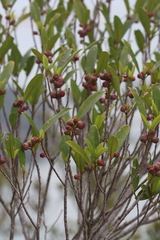 Ficus variolosa Mountain Fig Photo: CC BY, Denys Vynokurov Santaloides microphylla Connaraceae
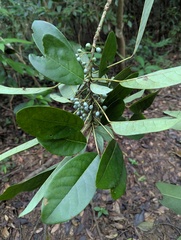 Daphniphyllum calycinum Calyx-shaped Tigernanmu Photo: CC BY, Kalvin Chan
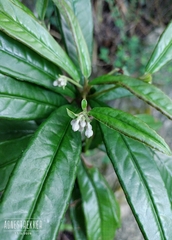 Ardisia lindleyana Spotted Ardisia Photo: CC0, author not stated
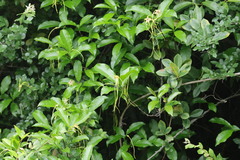 Strophanthus divaricatus Goat-horns Photo: CC BY, 林正文
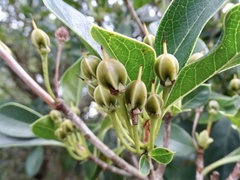 Enkianthus quinqueflorus Chinese New Year Flower Photo: CC BY, Toby Y
Other Phyllanthus 53 in the reference
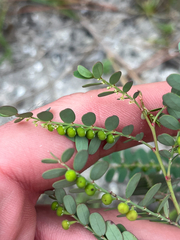 Phyllanthus abnormis Drummond's leaf-flower Photo: CC0, author not stated
 Phyllanthus acidus Otaheite gooseberry Photo: CC BY, Annika Lindqvist
 Phyllanthus albiflorus Phyllanthaceae Photo: CC BY, Ethel Aardvark
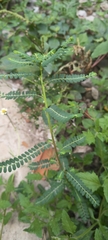 Phyllanthus amarus Carry me seed Photo: CC BY, Raja Sekhar Chimirala
 Phyllanthus anamalayanus Phyllanthaceae Photo: CC BY, Srinivasan Kasinathan
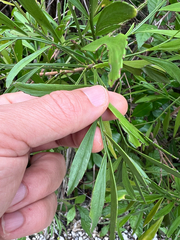 Phyllanthus angustifolius Foliage flower Photo: CC0, author not stated
 Phyllanthus arbuscula Phyllanthaceae Photo: CC BY-SA, User:BotBln
 Phyllanthus assamicus Phyllanthaceae Photo: CC BY-SA, Vinayaraj
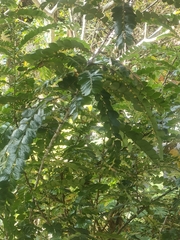 Phyllanthus buxifolius Phyllanthaceae Photo: CC0, author not stated
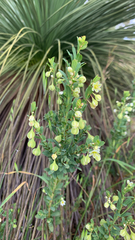 Phyllanthus calycinus Phyllanthaceae Photo: CC BY, Millie Brady
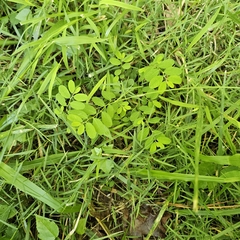 Phyllanthus caroliniensis Carolina leaf-flower Photo: CC BY, Christopher Evans
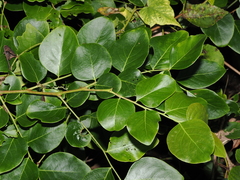 Phyllanthus cernuus Phyllanthaceae Photo: CC BY, Thomas Mesaglio all 54 ›
Names & registers
Also known as Diasperus eriocarpus; Glochidion eriocarpum; Glochidion esquirolii; Diasperus villicaulis; Glochidion villicaule. (WCVP, RBG Kew)
The record
Every figure here is derived from public data by a stated rule and names its source; nothing about this species is written for its page by a person or by AI, apart from the marked, credited quotations. How →
Where this page came from built 2026-10-22
kew.names answeredas of 2026-06-04Kew's entry Phyllanthus eriocarpus (Champ. ex Benth.) Müll.Arg. (plant_name_id 153803), read from Kew's names filegbif.species not askedGBIF's backbone holds no one accepted species of this name, and a name it holds only as another species' synonym is not taken for this one, so GBIF's records were not askedgbif.synonyms not askedGBIF's backbone holds no one accepted species of this name, and a name it holds only as another species' synonym is not taken for this one, so GBIF's records were not askedgbif.vernacular not askedGBIF's backbone holds no one accepted species of this name, and a name it holds only as another species' synonym is not taken for this one, so GBIF's records were not askedwcvp.distribution answeredas of 2026-06-04gbif.occurrences answeredas of 2026-10-21this species has no GBIF key of its own; its records are read under GBIF's keys for the names Kew's file holds as this plant, never by a name matched; GBIF occurrence download https://doi.org/10.15468/dl.hbdw64, of 2026-10-21; 1114 records of GBIF's key 3080301, Glochidion eriocarpum Champ. ex Benth. (Kew's file holds it as Glochidion eriocarpum Champ. ex Benth. (synonym under Phyllanthus eriocarpus (Champ. ex Benth.) Müll.Arg.)): the GBIF download; 14 records within 1 km of a botanic garden, herbarium or zoo left out (10 at a botanic garden or arboretum, 4 at a zoo; Wikidata's list)climate answeredasked 2026-10-22climate.extremes answeredasked 2026-10-22NASA POWER (MERRA-2) daily 1981–2024, cell 22.50_114.375, lapse-corrected +174 m at 6.5 °C/kmwikidata answeredasked 2026-10-22found by Kew's IPNI identifier 353849-1, POWO 353849-1wikipedia answeredasked 2026-10-22inat.taxon not askedinat.photos.wild not askedinat.photos.cultivated not askedgbif.media not askedGBIF's backbone holds no one accepted species of this name, and a name it holds only as another species' synonym is not taken for this one, so GBIF's records were not askedcommons answeredasked 2026-10-22openalex not askednot yet asked for this reference; a later fill takes the papers from OpenAlex's snapshotEvery source is recorded as having answered, reported nothing, refused, failed, not been asked, or answered twice where one answer is taken (“not taken: two items answered”), and, for a source asked when this page was built, when: the figures are as the source held them that day; a source read from a file (Kew's World Checklist, a GBIF download) says "as of" the file's day instead; a row carried from an earlier build of the page names that build instead. Only “nothing to report” is ever shown as an absence. Records came from 26 datasets via GBIF.org; each carries its own licence.