
Phyllanthus sphaerogynus Müll.Arg.
English names not checked: Wikidata's common names were not read for this page.

 3 photographs ›
About the genus · Phyllanthus
Phyllanthus is the largest genus in the plant family Phyllanthaceae. Estimates of the number of species in this genus vary widely, from 750 to 1200. Phyllanthus has a remarkable diversity of growth forms including annual and perennial herbs, shrubs, climbers, floating aquatics, and pachycaulous succulents. More on Wikipedia ›
Quoted from Wikipedia, "Phyllanthus", CC BY-SA 4.0.
Cultivation
Climate across the habitat
Natural habitat
This species has no GBIF key of its own. Its records are GBIF's under the key of the name Kew's World Checklist holds as this plant: 3080312 (Glochidion sphaerogynum (Müll.Arg.) Kurz, 313 records). No name was matched to GBIF; the keys are read from Kew's synonymy. How.
How this section is made
Photographs


Photographs: Raffi Kojian, CC BY-SA 3.0, via Wikimedia Commons (2).
Related
Other Phyllanthus 53 in the reference
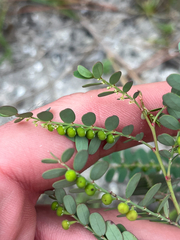 Phyllanthus abnormis Drummond's leaf-flower Photo: CC0, author not stated
 Phyllanthus acidus Otaheite gooseberry Photo: CC BY, Annika Lindqvist
 Phyllanthus albiflorus Phyllanthaceae Photo: CC BY, Ethel Aardvark
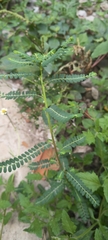 Phyllanthus amarus Carry me seed Photo: CC BY, Raja Sekhar Chimirala
 Phyllanthus anamalayanus Phyllanthaceae Photo: CC BY, Srinivasan Kasinathan
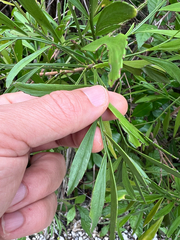 Phyllanthus angustifolius Foliage flower Photo: CC0, author not stated
 Phyllanthus arbuscula Phyllanthaceae Photo: CC BY-SA, User:BotBln
 Phyllanthus assamicus Phyllanthaceae Photo: CC BY-SA, Vinayaraj
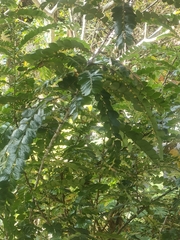 Phyllanthus buxifolius Phyllanthaceae Photo: CC0, author not stated
 Phyllanthus calycinus Phyllanthaceae Photo: CC BY, Millie Brady
 Phyllanthus caroliniensis Carolina leaf-flower Photo: CC BY, Christopher Evans
 Phyllanthus cernuus Phyllanthaceae Photo: CC BY, Thomas Mesaglio all 54 ›
Names & registers
Also known as Diasperus sphaerogynus; Glochidion mandakatense; Glochidion sphaerogynum. (WCVP, RBG Kew)
The record
Every figure here is derived from public data by a stated rule and names its source; nothing about this species is written for its page by a person or by AI, apart from the marked, credited quotations. How →
Where this page came from built 2026-10-22
kew.names answeredas of 2026-06-04Kew's entry Phyllanthus sphaerogynus Müll.Arg. (plant_name_id 154938), read from Kew's names filegbif.species not askedGBIF's backbone holds no one accepted species of this name, and a name it holds only as another species' synonym is not taken for this one, so GBIF's records were not askedgbif.synonyms not askedGBIF's backbone holds no one accepted species of this name, and a name it holds only as another species' synonym is not taken for this one, so GBIF's records were not askedgbif.vernacular not askedGBIF's backbone holds no one accepted species of this name, and a name it holds only as another species' synonym is not taken for this one, so GBIF's records were not askedwcvp.distribution answeredas of 2026-06-04gbif.occurrences answeredas of 2026-10-21this species has no GBIF key of its own; its records are read under GBIF's keys for the names Kew's file holds as this plant, never by a name matched; GBIF occurrence download https://doi.org/10.15468/dl.hbdw64, of 2026-10-21; 313 records of GBIF's key 3080312, Glochidion sphaerogynum (Müll.Arg.) Kurz (Kew's file holds it as Glochidion sphaerogynum (Müll.Arg.) Kurz (synonym under Phyllanthus sphaerogynus Müll.Arg.)): the GBIF downloadclimate nothing to reportasked 2026-10-22only 1 distinct land cell of the climate grid holds an in-range record placed to within 10 km; three are needed for an envelopewikidata answeredasked 2026-10-22found by Kew's IPNI identifier 354694-1, POWO 354694-1wikipedia nothing to reportasked 2026-10-22inat.taxon not askedinat.photos.wild not askedinat.photos.cultivated not askedgbif.media not askedGBIF's backbone holds no one accepted species of this name, and a name it holds only as another species' synonym is not taken for this one, so GBIF's records were not askedcommons answeredasked 2026-10-22openalex not askednot yet asked for this reference; a later fill takes the papers from OpenAlex's snapshotEvery source is recorded as having answered, reported nothing, refused, failed, not been asked, or answered twice where one answer is taken (“not taken: two items answered”), and, for a source asked when this page was built, when: the figures are as the source held them that day; a source read from a file (Kew's World Checklist, a GBIF download) says "as of" the file's day instead; a row carried from an earlier build of the page names that build instead. Only “nothing to report” is ever shown as an absence. Records came from 18 datasets via GBIF.org; each carries its own licence.