
Phytolacca octandra L.
English names not checked: Wikidata's common names were not read for this page.
GBIF's records not checked. GBIF's backbone holds no one accepted species of this name, and a name it holds only as another species' synonym is not taken for this one, so GBIF's records were not asked. So this page has no points on its map, no map marker, no habitat climate, no cultivation sheet and no species of nearest climate; the range is Kew's. Not a statement that none exist. How.


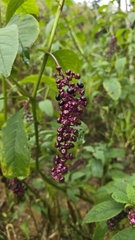
 12 photographs ›
Summary
Phytolacca octandra, also known as inkweed or red inkplant, is a herbaceous perennial plant in the pokeweed family Phytolaccaceae, originating from the Neotropical realm of the Americas.
Quoted from Wikipedia, "Phytolacca octandra", CC BY-SA 4.0.
About the genus · Phytolacca
Phytolacca is a genus of perennial plants native to North America, South America and East Asia. Some members of the genus are known as pokeweeds or similar names such as pokebush, pokeberry, pokeroot or poke sallet. Other names for species of Phytolacca include inkberry and ombú. More on Wikipedia ›
Quoted from Wikipedia, "Phytolacca", CC BY-SA 4.0.
Cultivation
Climate across the habitat
Natural habitat
Photographs


Photographs: Mark Marathon, CC BY-SA 4.0, via Wikimedia Commons; Ewen Cameron, CC BY 4.0, via Wikimedia Commons (3); Juan Carlos Fonseca Mata, CC BY-SA 4.0, via Wikimedia Commons (2).
Related
Similar habitat climate Not checked: GBIF's records were not asked (why, under the name), and the nearest habitat climates are read from the climate they give.
Other Phytolacca 12 in the reference
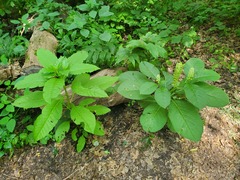 Phytolacca acinosa Indian pokeweed Photo: CC0, author not stated
 Phytolacca americana American pokeweed Photo: CC BY, Sandy Wolkenberg
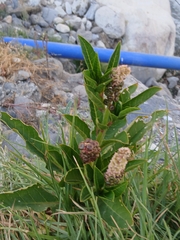 Phytolacca bogotensis Southern pokeweed Photo: CC BY-SA, Noemi Guerrero
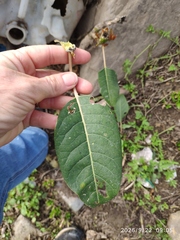 Phytolacca dioica Belhambra Photo: CC BY-SA, Antoinette Eyssell Knox
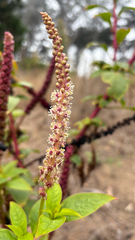 Phytolacca heterotepala Mexican pokeweed Photo: CC BY, Mary Jantsch
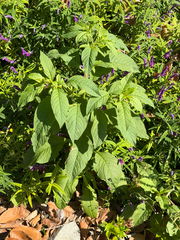 Phytolacca icosandra Tropical pokeweed Photo: CC BY, Mark Valen
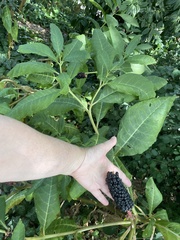 Phytolacca polyandra Chinese Pokeweed Photo: CC BY, Mary E. Macaulay, P.Eng.
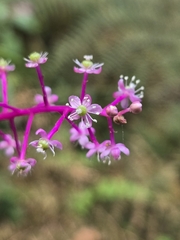 Phytolacca rivinoides Venezuelan pokeweed Photo: CC BY, Cen_Bamper
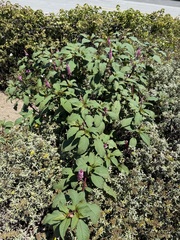 Phytolacca rugosa Phytolaccaceae Photo: CC BY, lazarus
 Phytolacca tetramera Phytolaccaceae Photo: CC0, author not stated
 Phytolacca thyrsiflora Brazilian Pokeweed Photo: CC BY, Paulo Mascaretti
 Phytolacca weberbaueri Phytolaccaceae Photo: CC BY, Dick Culbert from Gibsons, B.C., Canada
Names & registers
Also known as Phytolacca americana var. mexicana; Phytolacca octandra var. grandifolia. (WCVP, RBG Kew)
The record
Every figure here is derived from public data by a stated rule and names its source; nothing about this species is written for its page by a person or by AI, apart from the marked, credited quotations. How →
Where this page came from built 2026-10-22
kew.names answeredas of 2026-06-04Kew's entry Phytolacca octandra L. (plant_name_id 2562609), read from Kew's names filegbif.species not askedGBIF's backbone holds no one accepted species of this name, and a name it holds only as another species' synonym is not taken for this one, so GBIF's records were not askedgbif.synonyms not askedGBIF's backbone holds no one accepted species of this name, and a name it holds only as another species' synonym is not taken for this one, so GBIF's records were not askedgbif.vernacular not askedGBIF's backbone holds no one accepted species of this name, and a name it holds only as another species' synonym is not taken for this one, so GBIF's records were not askedgbif.occurrences not askedGBIF's backbone holds no one accepted species of this name, and a name it holds only as another species' synonym is not taken for this one, so GBIF's records were not askedwcvp.distribution answeredas of 2026-06-04climate not askedGBIF's backbone holds no one accepted species of this name, and a name it holds only as another species' synonym is not taken for this one, so GBIF's records were not asked, and the habitat climate is read only from themwikidata answeredasked 2026-10-22found by Kew's IPNI identifier 323293-2, POWO 323293-2wikipedia answeredasked 2026-10-22inat.photos.wild not askedinat.photos.cultivated not askedgbif.media not askedGBIF's backbone holds no one accepted species of this name, and a name it holds only as another species' synonym is not taken for this one, so GBIF's records were not askedcommons answeredasked 2026-10-22openalex not askednot yet asked for this reference; a later fill takes the papers from OpenAlex's snapshotEvery source is recorded as having answered, reported nothing, refused, failed, not been asked, or answered twice where one answer is taken (“not taken: two items answered”), and, for a source asked when this page was built, when: the figures are as the source held them that day; a source read from a file (Kew's World Checklist, a GBIF download) says "as of" the file's day instead; a row carried from an earlier build of the page names that build instead. Only “nothing to report” is ever shown as an absence.