Araliaceae › Plerandra › 1 of 2
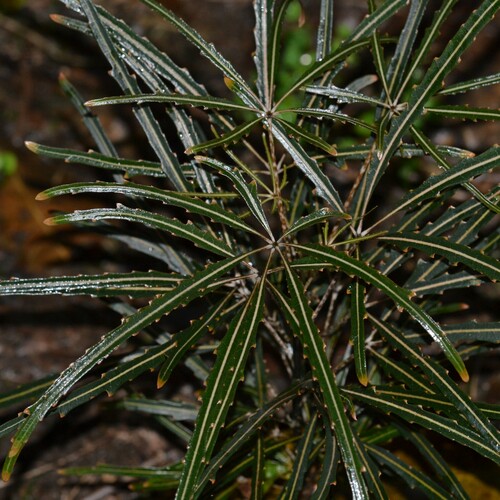
Plerandra elegantissima (H.J.Veitch ex Mast.) Lowry, G.M.Plunkett & Frodin
False aralia
Also called Aralia elegantissima, Dizygotheca elegantissima, and 3 more.
| Family | Araliaceae |
|---|---|
| Native to | New Caledonia · Kew's World Checklist, file of 2026-06-04 |
| Your plants | Add one · related species |
Araliaceae · New Caledonia
Family Araliaceae
Native to New Caledonia
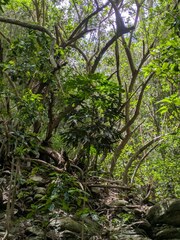


 20 photographs ›
Summary
Plerandra elegantissima, the false aralia, is a species of flowering plant in the family Araliaceae. It is native to New Caledonia.
Quoted from Wikipedia, "Plerandra elegantissima", its opening paragraph, revision 1340065793, read 2026-11-08, CC BY-SA 4.0.
About the genus · Plerandra
Plerandra is a genus of flowering plants in the family Araliaceae that has long been considered a synonym of Schefflera, which has been a polyphyletic group.
Quoted from Wikipedia, "Plerandra", its opening paragraph, revision 1354647307, read 2026-11-08, CC BY-SA 4.0.
Cultivation
Climate across the habitat
Natural habitat
Flowering by monthfrom few records: 0
No research-grade observation of a wild plant that iNaturalist shares with GBIF is annotated flowering under this page's GBIF keys, in GBIF's download.
Flowering observations of wild plants on iNaturalist, as iNaturalist shares them with GBIF: GBIF.org (2026-11-15) GBIF Occurrence Download https://doi.org/10.15468/dl.y8zpkp: 0 observations, research grade, openly licensed (CC0, CC BY or CC BY-NC), counted under the page's GBIF keys. Calendar months, as each plant was observed; not moved to your hemisphere.
How this section is made
Photographs
 did not load
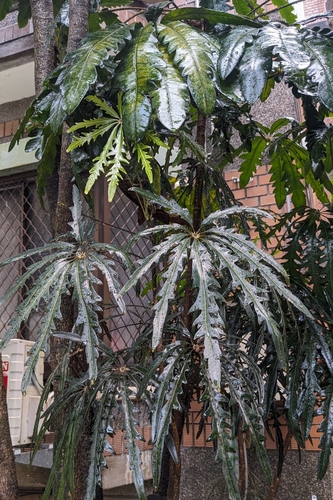 cultivateddid not load
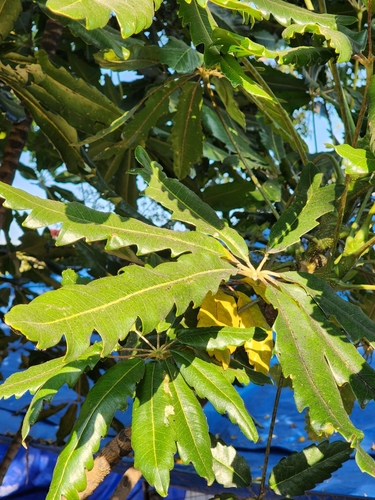 cultivateddid not load
 cultivateddid not load
 did not load
 did not load
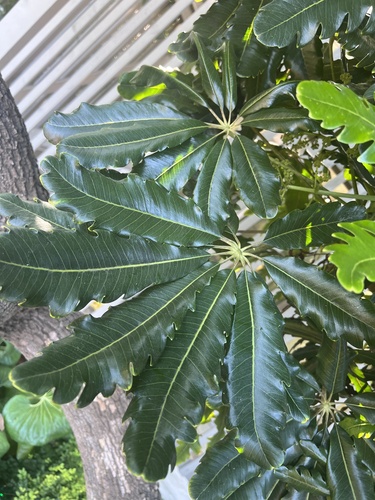
The photograph at the top: kbkash, no rights reserved (CC0), in cultivation, observed 2023-02-22. Photographs: (c) Kevin Faccenda, some rights reserved (CC BY); (c) 許文俊, some rights reserved (CC BY-SA); Dillon Alexander, no rights reserved (CC0); (c) Mark Richman, some rights reserved (CC BY); Eric in SF, CC BY-SA 4.0, via Wikimedia Commons; Forest & Kim Starr, CC BY 3.0, via Wikimedia Commons. Credits as read from iNaturalist on 2026-11-04 and from Wikimedia Commons on 2026-11-03. What each licence allows.
Related
Other Plerandra 1 in the reference

Names & registers
Also known as Aralia elegantissima; Dizygotheca elegantissima; Dizygotheca faguetii; Schefflera elegantissima; Schefflera faguetii. (GBIF Backbone)
WFO Plant List (2026-06) accepted. World Flora Online, CC0; read 2026-11-13.
Published in Brittonia 65: 49 (2013) (WCVP, RBG Kew, file of 2026-06-04)
Elsewhere Tropicos · Catalogue of Life · IUCN Red List · Reflora · Missouri Plant Finder · NCBI (identifiers from Wikidata's item Q80685380, read 2026-11-13, CC0)
Chromosomes no count in ChromoDB's IAPT/IOPB set (the file holds no count under IPNI id 77131172-1). ChromoDB, IAPT/IOPB chromosome data (Simon, Bosch & Blanché), version 3.1 of 8 November 2026, CC BY 4.0; read 2026-11-13.
The record
Predicted extinction risk 35% probability of being threatened (95% interval 30% to 42%); predicted not threatened, the model is confident of this class. A model's prediction, not an assessment. The IUCN Red List has assessed this species; its assessment comes before this prediction: its page at IUCN. Bachman et al. 2024, New Phytologist; Kew's data of 1 February 2024, CC BY 4.0; read 2026-11-13.
CITES Not in the CITES Appendices (the edition in force from 5 March 2026): no listing of its name, its genus or its family. CITES Appendices I, II and III, valid from 5 March 2026; read 2026-11-13. The Appendices
Every figure here is derived from public data by a stated rule and names its source; nothing about this species is written for its page by a person or by AI, apart from the marked, credited quotations. How →
Where this page came from built 2026-11-18
gbif.species answeredkept from this page's build of 2026-11-02gbif.synonyms answeredkept from this page's build of 2026-11-02gbif.vernacular answeredasked 2026-11-18names fetched 2026-10-22; carried by an offline re-derivation of 2026-11-18wcvp.distribution answeredas of 2026-06-04gbif.occurrences answeredas of 2026-10-21GBIF occurrence download https://doi.org/10.15468/dl.hbdw64, of 2026-10-21; 3 records at a dataset's default point left out (a coordinate where the records of 20 species or more of this reference lie, nearly all of them with no year, as the reference lists them; a record there its dataset states to within 10 km is kept); records tested against the native regions' shapes, openly licensed and restricted alike (Natural Earth's provinces, placed in TDWG's regions; shapes rule r87); a record within the margin, off a coast or on an island too small to draw counted only when it states the region's country, and only on no other region's land but within 0.02° of a native shape across a border, where its stated state or province does not name the other region (read by Natural Earth's name, its ISO 3166-2 code or an old province's name); 19 records within 1 km of a botanic garden, herbarium or zoo left out (14 at a botanic garden or arboretum, 3 at a herbarium, 2 at a zoo; Wikidata's list)climate nothing to reportasked 2026-11-1893 in-range records at 34 places, none placed to within 10 km by the climate's rule (none states an accuracy of 10 km or better, and none is a person's observation given to three decimals)wikidata answeredkept from this page's build of 2026-10-22wikipedia answeredkept from this page's build of 2026-10-22; not asked againinat.taxon answerediNaturalist's taxon 499120 (Plerandra elegantissima), kept from an earlier build, checked 2026-10-23: active and this species' own (kept from this page's build of 2026-10-22)inat.photos.wild answeredasked 2026-10-28from iNaturalist's open data of 2026-09-27: research-grade observations with an open-licence photograph, the 24 whose photographs iNaturalist received last (the open data holds no votes); filled 2026-10-28; kept by the build of 2026-11-18 (this build: not asked: this build left iNaturalist to the daily fill, which asks for the photographs once the page's taxon is known)inat.photos.cultivated answeredasked 2026-10-28observations marked captive or cultivated whose identifications agree; filled 2026-10-28; kept by the build of 2026-11-18 (this build: not asked: this build left iNaturalist to the daily fill, which asks for the photographs once the page's taxon is known)gbif.media answeredas of 2026-10-21from the GBIF download https://doi.org/10.15468/dl.hbdw64, of 2026-10-21; none of the photographs on this page is credited to GBIF: those shown are other sources', and GBIF's were the same photographs or were set aside by the photograph rulescommons answeredkept from this page's build of 2026-10-22; not asked againopenalex not askedthe reference does not ask OpenAlex for papersEvery source is recorded as having answered, reported nothing, refused, failed, not been asked, or answered twice where one answer is taken (“not taken: two items answered”), and, for a source asked when this page was built, when: the figures are as the source held them that day; a source read from a file (Kew's World Checklist, a GBIF download) says "as of" the file's day instead; a row carried from an earlier build of the page names that build instead. Only “nothing to report” is ever shown as an absence. Records came from 20 datasets via GBIF.org; each carries its own licence.