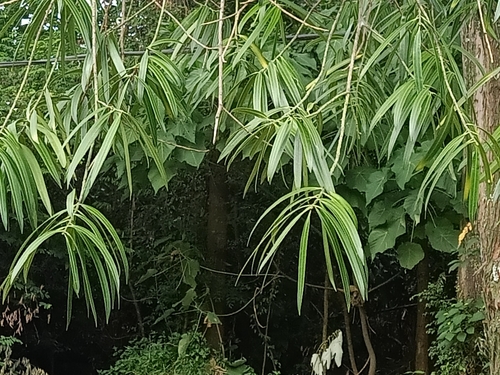


 6 photographs ›
Summary
Podocarpus rumphii is a species of conifer in the family Podocarpaceae. It is native to Hainan (southern China), Malesia (Indonesia, Malaysia, and the Philippines) and New Guinea (Indonesia and Papua New Guinea).
Quoted from Wikipedia, "Podocarpus rumphii", CC BY-SA 4.0.
About the genus · Podocarpus
Podocarpus is a large genus of conifers, the most numerous and widely distributed of the family Podocarpaceae. Podocarpus species are shrubs or trees, usually from 1 to 25 m tall, known to reach 40 m (130 ft) at times. The cones have two to five fused cone scales, which form a fleshy, berry-like, brightly coloured receptacle at maturity. More on Wikipedia ›
Quoted from Wikipedia, "Podocarpus", CC BY-SA 4.0.
Cultivation
Climate across the habitat
Natural habitat
How this section is made
Photographs
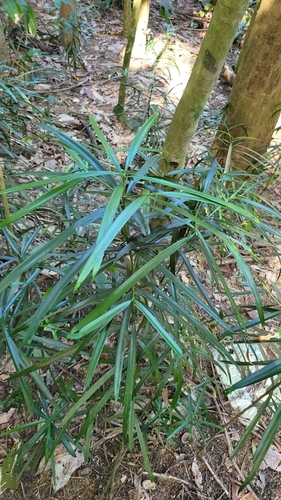
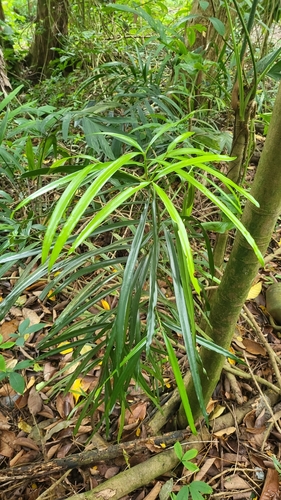


Photographs: (c) Cheongweei Gan, some rights reserved (CC BY) (2); (c) Ong Jyh Seng, some rights reserved (CC BY-SA); Daderot, CC0, via Wikimedia Commons (2).
Related
Other Podocarpus 47 in the reference
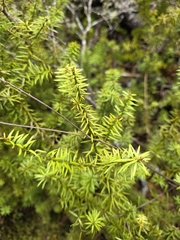 Podocarpus acutifolius Westland Totara Photo: CC0, author not stated
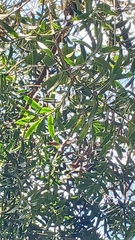 Podocarpus angustifolius Podocarpaceae Photo: CC BY, Mario Guzmán Podocarpus brassii Podocarpaceae
 Podocarpus brevifolius Podocarpaceae Photo: CC BY-SA, Yercaud-elango Podocarpus chingianus Podocarpaceae
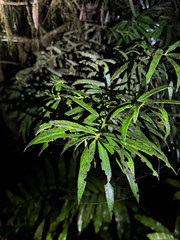 Podocarpus coriaceus Yucca plum pine Photo: CC BY, Matteo Bellucci
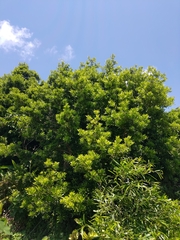 Podocarpus costalis Arius Photo: CC BY, 林正文
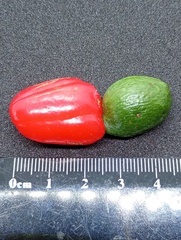 Podocarpus dispermus Broad-leaved Brown Pine Photo: CC BY, Wairambar Rainforest
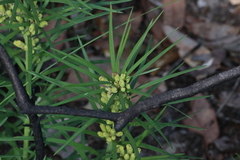 Podocarpus drouynianus Emu Berry Photo: CC BY, Hugo Innes
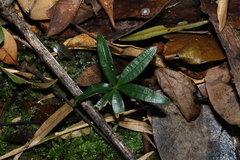 Podocarpus elatus Plum pine Photo: CC BY-SA, Greg Tasney
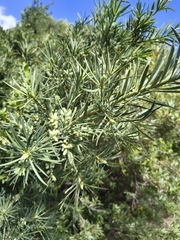 Podocarpus elongatus Breede River yellowwood Photo: CC BY, jeanjacquesgodon
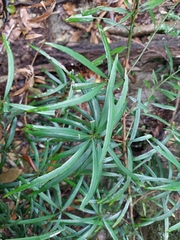 Podocarpus fasciculus Thitmin Photo: CC BY, Jason all 48 ›
Names & registers
Also known as Cerbera nereifolia; Cerbera neriifolia; Margbensonia koordersii; Margbensonia philippinense; Margbensonia philippinensis and 10 more. (GBIF Backbone)
The record
Every figure here is derived from public data by a stated rule and names its source; nothing about this species is written for its page by a person or by AI, apart from the marked, credited quotations. How →
Where this page came from built 2026-10-22
gbif.species answeredasked 2026-10-22gbif.synonyms answeredasked 2026-10-22gbif.vernacular answeredasked 2026-10-22names fetched 2026-10-22wcvp.distribution answeredas of 2026-06-04gbif.occurrences answeredas of 2026-10-21GBIF occurrence download https://doi.org/10.15468/dl.hbdw64, of 2026-10-21; 2 records within 1 km of a botanic garden, herbarium or zoo left out (2 at a botanic garden or arboretum; Wikidata's list)climate nothing to reportasked 2026-10-2260 in-range records, none placed to within 10 kmwikidata answeredasked 2026-10-22wikipedia answeredasked 2026-10-22inat.photos.wild answeredasked 2026-10-22from iNaturalist's open data of 2026-09-27: research-grade observations with an open-licence photograph, the 24 whose photographs iNaturalist received last (the open data holds no votes); filled 2026-10-22inat.photos.cultivated not askedgbif.media answeredasked 2026-10-22none of the photographs on this page is credited to GBIF: those shown are other sources', and GBIF's were the same photographs or were set aside by the photograph rulescommons answeredasked 2026-10-22openalex not askednot yet asked for this reference; a later fill takes the papers from OpenAlex's snapshotEvery source is recorded as having answered, reported nothing, refused, failed, not been asked, or answered twice where one answer is taken (“not taken: two items answered”), and, for a source asked when this page was built, when: the figures are as the source held them that day; a source read from a file (Kew's World Checklist, a GBIF download) says "as of" the file's day instead; a row carried from an earlier build of the page names that build instead. Only “nothing to report” is ever shown as an absence. Records came from 12 datasets via GBIF.org; each carries its own licence.