
Pritchardia remota (Kuntze) Becc.
Nihoa Fan Palm; Nihoa Palm; Nihoa fan palm / Nihoa palm / Nihoa pritchardia; Nihoa pritchardia


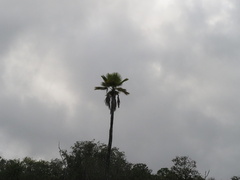
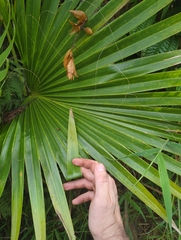
 12 photographs ›
Summary
Pritchardia remota, the Nīhoa pritchardia, Nīhoa fan palm, or Loulu, is a species of palm endemic on the island of Nīhoa in the state of Hawaii, and later transplanted to the island of Laysan. It is a smaller tree than most other species of Pritchardia, typically reaching only 4–5 metres (13–16 ft) tall and with a trunk diameter of 15 centimetres (5.9 in). It is the only type of tree on the island and used to be abundant. In 1885 a wildfire ravaged the island, destroying most of the palms. More on Wikipedia ›
Quoted from Wikipedia, "Pritchardia remota", CC BY-SA 4.0.
About the genus · Pritchardia
The genus Pritchardia consists of between 24 and 40 species of fan palms found on tropical Pacific Ocean islands in Fiji, Samoa, Tonga, Tuamotus, and most diversely in Hawaii. The generic name honors William Thomas Pritchard (1829–1907), a British consul at Fiji.
Quoted from Wikipedia, "Pritchardia", CC BY-SA 4.0.
Cultivation
Climate across the habitat
Natural habitat
How this section is made
Photographs


Photographs: David Eickhoff from Pearl City, Hawaii, USA, CC BY 2.0, via Wikimedia Commons (6).
Related
Other Pritchardia 24 in the reference
 Pritchardia arecina Maui pritchardia Photo: CC BY, Forest & Kim Starr
 Pritchardia bakeri Arecaceae Photo: CC BY, Kevin Faccenda
 Pritchardia beccariana Kilauea pritchardia Photo: CC BY, Kevin Faccenda Pritchardia flynnii Flynn's Loulu
 Pritchardia forbesiana Mt. Eke pritchardia Photo: CC BY, Forest and Kim Starr
 Pritchardia glabrata Lana'i Pritchardia Photo: CC BY, Forest & Kim Starr Pritchardia gordonii Arecaceae
 Pritchardia hardyi Hardy's Loulu Photo: CC BY, Drew Avery
 Pritchardia hillebrandii Hillebrand's Loulu Photo: Public domain, Stickpen
 Pritchardia kaalae Waianae Range pritchardia Photo: CC0, author not stated
 Pritchardia lanigera Lo'ulu Photo: CC BY, David Eickhoff from Pearl City, Hawaii…
 Pritchardia lowreyana Lowrey's loulu Photo: CC BY, David Eickhoff from Pearl City, Hawaii… all 25 ›
Names & registers
Also known as Eupritchardia remota; Pritchardia aylmer-robinsonii; Pritchardia remota subsp. aylmer-robinsonii; Pritchardia remota subsp. remota; Styloma remota and 1 more. (GBIF Backbone)
The record
Every figure here is derived from public data by a stated rule and names its source; nothing about this species is written for its page by a person or by AI, apart from the marked, credited quotations. How →
Where this page came from built 2026-10-22
gbif.species answeredasked 2026-10-22gbif.synonyms answeredasked 2026-10-22gbif.vernacular answeredasked 2026-10-22names fetched 2026-10-22wcvp.distribution answeredas of 2026-06-04gbif.occurrences answeredas of 2026-10-21GBIF occurrence download https://doi.org/10.15468/dl.hbdw64, of 2026-10-21climate nothing to reportasked 2026-10-227 in-range records, none placed to within 10 kmwikidata answeredasked 2026-10-22wikipedia answeredasked 2026-10-22inat.photos.wild nothing to reportasked 2026-10-22from iNaturalist's open data of 2026-09-27: research-grade observations with an open-licence photograph, the 24 whose photographs iNaturalist received last (the open data holds no votes); filled 2026-10-22inat.photos.cultivated not askedgbif.media nothing to reportasked 2026-10-22commons answeredasked 2026-10-22openalex not askednot yet asked for this reference; a later fill takes the papers from OpenAlex's snapshotEvery source is recorded as having answered, reported nothing, refused, failed, not been asked, or answered twice where one answer is taken (“not taken: two items answered”), and, for a source asked when this page was built, when: the figures are as the source held them that day; a source read from a file (Kew's World Checklist, a GBIF download) says "as of" the file's day instead; a row carried from an earlier build of the page names that build instead. Only “nothing to report” is ever shown as an absence. Records came from 2 datasets via GBIF.org; each carries its own licence.