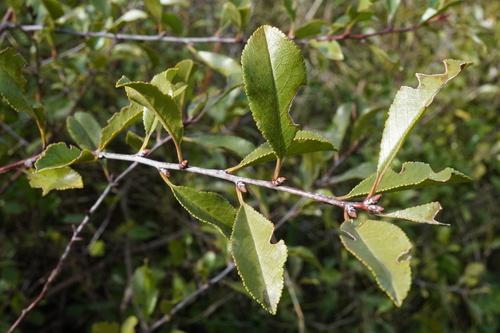
Prunus × eminens Beck
A hybrid: P. cerasus × P. fruticosa, the parents Kew's World Checklist states for it (WCVP, RBG Kew).
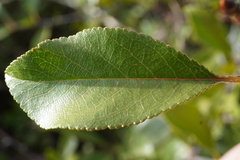
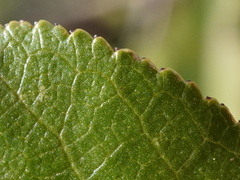
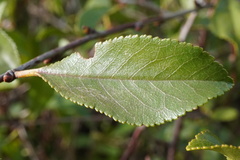
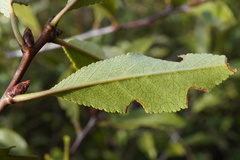
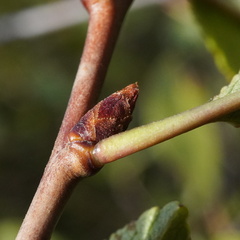
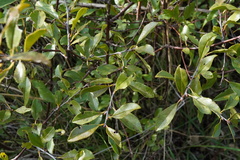 9 photographs ›
Summary
Prunus × eminens or Prunus eminens is a species of small cherry tree native to central Europe. It is a naturally occurring hybrid of sour cherry, Prunus cerasus, and dwarf cherry, Prunus fruticosa, occasionally found where their ranges overlap. Like its parents, it is a tetraploid with 32 chromosomes. It is forming a hybrid swarm with, and threatening to extirpate, P. fruticosa in much of its western range through genetic pollution.
Quoted from Wikipedia, "Prunus × eminens", CC BY-SA 4.0.
About the genus · Prunus
Prunus is a genus of flowering trees and shrubs from the rose family (Rosaceae) that produce stone fruits, or drupes. As of March 2024, the genus has about 340 accepted species, including almonds, apricots, cherries, peaches, and plums. It has a cosmopolitan distribution, being native to the temperate regions of North America, the neotropics of South America, and temperate and tropical regions of Eurasia and Africa.
Quoted from Wikipedia, "Prunus", CC BY-SA 4.0.
Cultivation
Grouped as a temperate garden plant, listed under the genus Prunus in the archetype table, and Kew describes it as “shrub or tree”, “temperate”.
How this section is made
Each card states this species' habitat figures with their sources, and what two fixed rules read from them; nothing here says what the plant does, wants or tolerates. The rules · the terms.
Group. Listed under the genus Prunus in the archetype table, and Kew describes it as “shrub or tree”, “temperate”. A group is taken only where Kew's description of the species agrees with the table's listing. The table gives no figure and no prose; the cold floor is the habitat's alone.
Climate across the habitat
Natural habitat
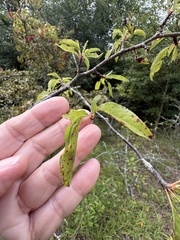
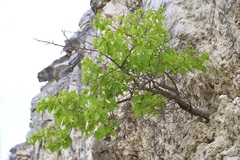
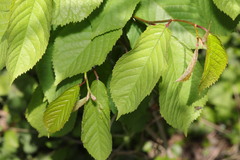
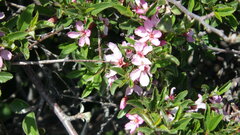
Photographs
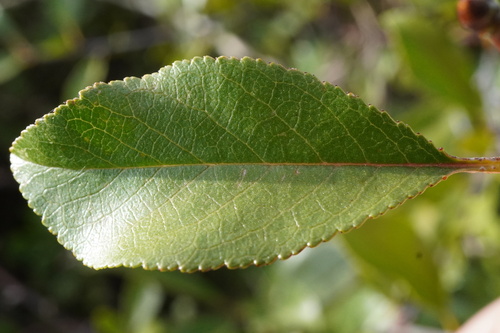
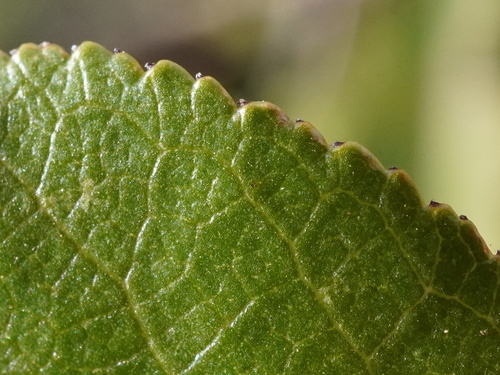
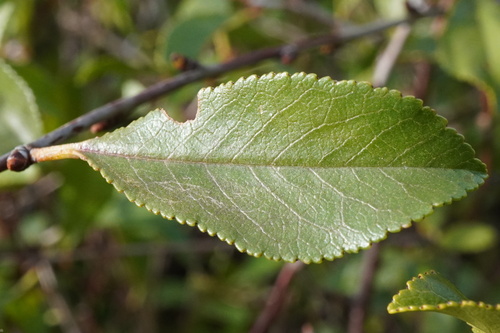
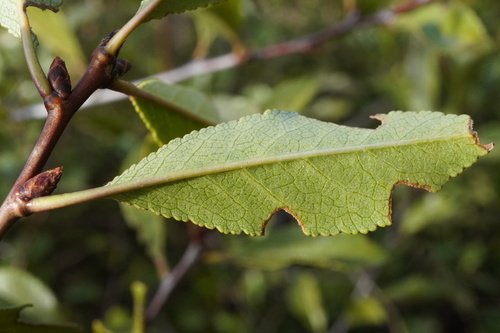
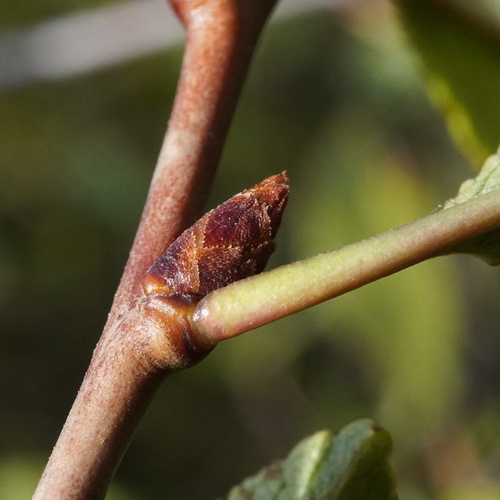
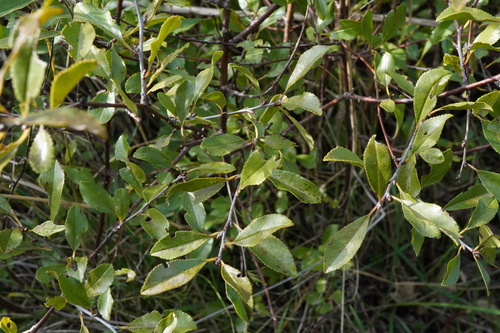
Photographs: Patrick Hacker, CC BY, iNaturalist via GBIF (6).
Related
Other Prunus 125 in the reference
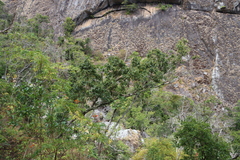 Prunus africana African cherry Photo: CC BY-SA, Tony Rebelo Prunus alaica Rosaceae
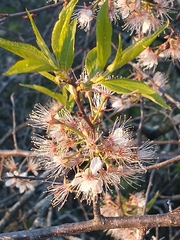 Prunus americana American plum Photo: CC BY, Tom Norton
 Prunus amygdalus Almond Photo: CC BY-SA, Ken Young
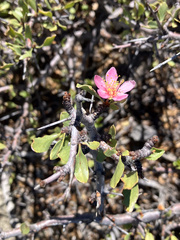 Prunus andersonii Desert peach Photo: CC BY, Tom Wainwright
 Prunus angustifolia Cherokee plum Photo: CC0, author not stated Prunus apetala Taiwan cherry
 Prunus armeniaca Apricot Photo: CC BY, Michelle W. (鍾偉瑋)
 Prunus avium Wild cherry Photo: CC0, author not stated
 Prunus bifrons Rosaceae Photo: CC0, Andreas Manz Prunus brachypetala Kurdish mountain cherry Prunus brachystachya Rosaceae all 126 ›
Names & registers
Also known as Prunus cerasus var. frutescens. (GBIF Backbone)
The record
Every figure here is derived from public data by a stated rule and names its source; nothing about this species is written for its page by a person or by AI, apart from the marked, credited quotations. How →
Where this page came from built 2026-10-22
gbif.species answeredasked 2026-10-22gbif.synonyms answeredasked 2026-10-22gbif.vernacular answeredasked 2026-10-22names fetched 2026-10-22wcvp.distribution answeredas of 2026-06-04Kew's entry lists no native region, only 3 where it is introducedgbif.occurrences answeredas of 2026-10-21GBIF occurrence download https://doi.org/10.15468/dl.hbdw64, of 2026-10-21climate nothing to reportasked 2026-10-22native range not verified: no WCVP distribution with native status for this name, so records cannot be told from cultivation and no habitat climate is derivedwikidata answeredasked 2026-10-22wikipedia answeredasked 2026-10-22inat.taxon not askedinat.photos.wild not askedinat.photos.cultivated not askedgbif.media answeredasked 2026-10-22commons nothing to reportasked 2026-10-22openalex not askednot yet asked for this reference; a later fill takes the papers from OpenAlex's snapshotEvery source is recorded as having answered, reported nothing, refused, failed, not been asked, or answered twice where one answer is taken (“not taken: two items answered”), and, for a source asked when this page was built, when: the figures are as the source held them that day; a source read from a file (Kew's World Checklist, a GBIF download) says "as of" the file's day instead; a row carried from an earlier build of the page names that build instead. Only “nothing to report” is ever shown as an absence. Records came from 14 datasets via GBIF.org; each carries its own licence.