
 2 photographs ›
Summary
Pyrus korshinskyi, also known as the Kazak pear or Bukharan pear, is a wild species of pear tree native to Central Asia, including Afghanistan, Kyrgyzstan, Tajikistan, and Uzbekistan. The Kazak pear is in the genus Pyrus (Rosaceae). The IUCN categorises the pear as critically endangered, with it surviving in remote areas with threats including over grazing, harvesting, and use for rootstock. Genetically the pear has potential use for reducing the impact of disease on domesticated pears. More on Wikipedia ›
Quoted from Wikipedia, "Pyrus korshinskyi", CC BY-SA 4.0.
About the genus · Pyrus
Pears are a genus of trees, Pyrus, in the family Rosaceae, that bear an edible apple-like fruit of the same name. Several species of pears are cultivated for their fruit and juices, while others are grown as ornamental flowering trees.
Quoted from Wikipedia, "Pear", CC BY-SA 4.0.
Cultivation
Climate across the habitat
Natural habitat
How this section is made
Photographs

Photographs: Mike Shaw, CC BY-SA 4.0, via Wikimedia Commons.
Related
Other Pyrus 19 in the reference
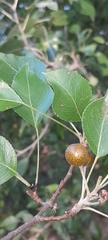 Pyrus betulifolia Birch-leaf pear Photo: CC0, ÖkopatóPál Pyrus boissieriana Rosaceae
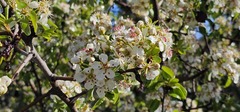 Pyrus bourgaeana Iberian pear Photo: CC BY, Barry Stewart
 Pyrus bretschneideri Chinese white pear Photo: CC BY-SA, Honmingjun
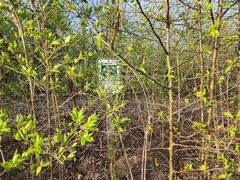 Pyrus calleryana Callery pear Photo: CC BY, Kaden Slone
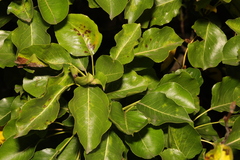 Pyrus communis Pear Photo: CC0, author not stated
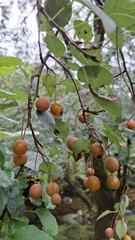 Pyrus cordata Plymouth pear Photo: CC BY, Carminda Santos
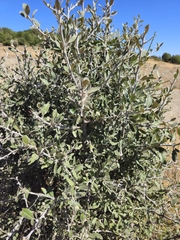 Pyrus elaeagrifolia Oleaster-leafed Pear Photo: CC0, author not stated
 Pyrus georgica Rosaceae Photo: CC BY, Zübeyde Uğurlu & Ali Aslan Dönmez Pyrus grossheimii Rosaceae Pyrus × michauxii Rosaceae
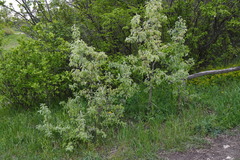 Pyrus nivalis Snow pear Photo: CC BY, Patrick Hacker all 20 ›
Names & registers
Also known as Pyrus bucharica; Pyrus bucharica subsp. daschtidshumica; Pyrus bucharica subsp. korshinskyi; Pyrus bucharica var. diversifolia; Pyrus bucharica var. hissarica and 10 more. (GBIF Backbone)
The record
Every figure here is derived from public data by a stated rule and names its source; nothing about this species is written for its page by a person or by AI, apart from the marked, credited quotations. How →
Where this page came from built 2026-10-22
gbif.species answeredasked 2026-10-22gbif.synonyms answeredasked 2026-10-22gbif.vernacular answeredasked 2026-10-22names fetched 2026-10-22wcvp.distribution answeredas of 2026-06-04gbif.occurrences answeredas of 2026-10-21GBIF occurrence download https://doi.org/10.15468/dl.hbdw64, of 2026-10-21climate nothing to reportasked 2026-10-22only 1 distinct land cell of the climate grid holds an in-range record placed to within 10 km; three are needed for an envelopewikidata answeredasked 2026-10-22wikipedia answeredasked 2026-10-22inat.photos.wild nothing to reportasked 2026-10-22from iNaturalist's open data of 2026-09-27: research-grade observations with an open-licence photograph, the 24 whose photographs iNaturalist received last (the open data holds no votes); filled 2026-10-22inat.photos.cultivated not askedgbif.media nothing to reportasked 2026-10-22commons answeredasked 2026-10-22openalex not askednot yet asked for this reference; a later fill takes the papers from OpenAlex's snapshotEvery source is recorded as having answered, reported nothing, refused, failed, not been asked, or answered twice where one answer is taken (“not taken: two items answered”), and, for a source asked when this page was built, when: the figures are as the source held them that day; a source read from a file (Kew's World Checklist, a GBIF download) says "as of" the file's day instead; a row carried from an earlier build of the page names that build instead. Only “nothing to report” is ever shown as an absence. Records came from 7 datasets via GBIF.org; each carries its own licence.