Quercus × bimundorum E.J.Palmer
A hybrid: Q. alba × Q. robur, the parents Kew's World Checklist states for it (WCVP, RBG Kew).
Photographs not checked
iNaturalist was skipped (not asked) when this page was built. Not asked, or not answered, is not "none": nothing here claims there is none. Why the site says it this way.Summary
Quercus × bimundorum (or Quercus bimundorum), known as two worlds oak, is a naturally occurring hybrid of white oak, Quercus alba (from the New World), and pedunculate oak, Quercus robur (introduced from the Old World). It occurs sporadically where they come in contact in the United States. Its parents are both placed in Quercus sect. Quercus.
Quoted from Wikipedia, "Quercus × bimundorum", CC BY-SA 4.0.
Cultivation
Climate across the habitat
Natural habitat
Photographs
Related
Other Quercus 220 in the reference
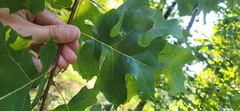 Quercus acerifolia Fagaceae Photo: CC BY, Laurel Meredyk
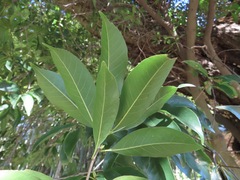 Quercus acuta Red-wood evergreen oak Photo: CC BY, Marco Mussita
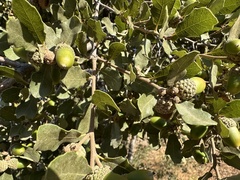 Quercus × acutidens Fagaceae Photo: CC BY, Eric Alan Isaacson
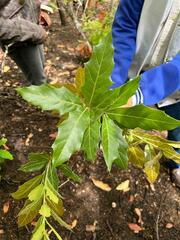 Quercus acutifolia Fagaceae Photo: CC BY, Neptalí Ramírez Marcial
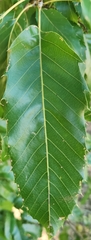 Quercus acutissima Sawtooth oak Photo: CC BY, Will Burnside
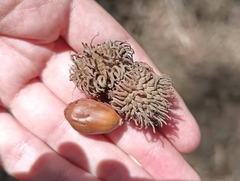 Quercus afares African Oak Photo: CC BY, Mehdi Chetibi
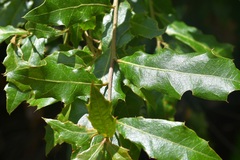 Quercus affinis Fagaceae Photo: CC BY, Neptalí Ramírez Marcial
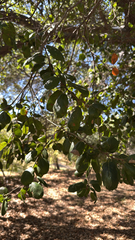 Quercus agrifolia Coast live oak Photo: CC BY, Gregory Wada
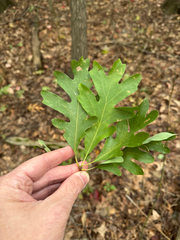 Quercus alba White oak Photo: CC BY, Jeff Clark
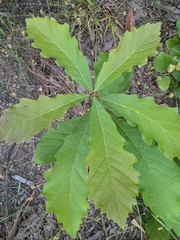 Quercus aliena Oriental white oak Photo: CC BY, plant 0302
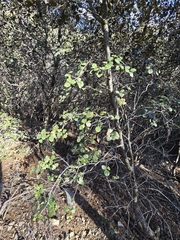 Quercus alnifolia Golden Oak Photo: CC BY, Aurelijus Narbutas Quercus × andegavensis Fagaceae all 221 ›
Names & registers
The record
Every figure here is derived from public data by a stated rule and names its source; nothing about this species is written for its page by a person or by AI, apart from the marked, credited quotations. How →
Where this page came from built 2026-10-22
gbif.species answeredasked 2026-10-22gbif.synonyms answeredasked 2026-10-22gbif.vernacular answeredasked 2026-10-22names fetched 2026-10-22wcvp.distribution answeredas of 2026-06-04Kew's entry lists no native region, only 3 where it is introducedgbif.occurrences answeredas of 2026-10-21GBIF occurrence download https://doi.org/10.15468/dl.hbdw64, of 2026-10-21; 2 records within 1 km of a botanic garden, herbarium or zoo left out (2 at a botanic garden or arboretum; Wikidata's list)climate nothing to reportasked 2026-10-22native range not verified: no WCVP distribution with native status for this name, so records cannot be told from cultivation and no habitat climate is derivedwikidata answeredasked 2026-10-22wikipedia answeredasked 2026-10-22inat.photos.wild nothing to reportasked 2026-10-22from iNaturalist's open data of 2026-09-27: research-grade observations with an open-licence photograph, the 24 whose photographs iNaturalist received last (the open data holds no votes); filled 2026-10-22inat.photos.cultivated not askedgbif.media nothing to reportasked 2026-10-22commons nothing to reportasked 2026-10-22openalex not askednot yet asked for this reference; a later fill takes the papers from OpenAlex's snapshotEvery source is recorded as having answered, reported nothing, refused, failed, not been asked, or answered twice where one answer is taken (“not taken: two items answered”), and, for a source asked when this page was built, when: the figures are as the source held them that day; a source read from a file (Kew's World Checklist, a GBIF download) says "as of" the file's day instead; a row carried from an earlier build of the page names that build instead. Only “nothing to report” is ever shown as an absence. Records came from 1 datasets via GBIF.org; each carries its own licence.